Bad Shabbos (2025)
Story overview
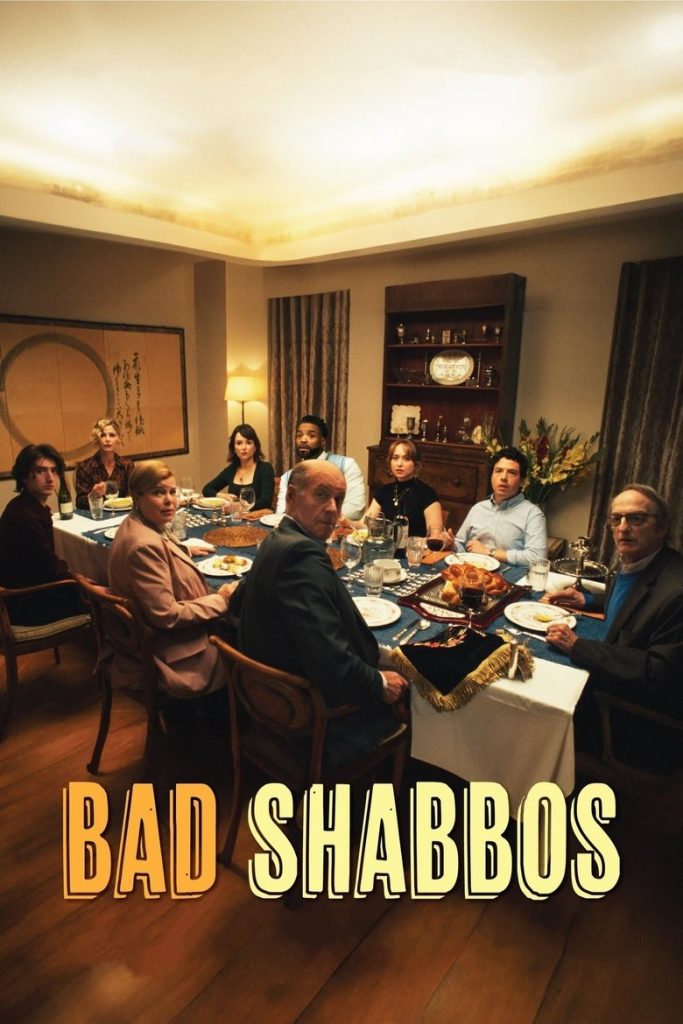
Bad Shabbos is a 2025 comedy about an interfaith couple whose parents meet for the first time over a Shabbat dinner. The evening takes an unexpected turn when an accidental manslaughter occurs, creating chaotic and humorous situations as the characters navigate this unusual predicament.
Parent Guide
A dark comedy with mature themes suitable for teens who can understand satirical humor about serious situations. Contains comedic violence and family tension.
Content breakdown
Comedic depiction of accidental manslaughter (off-screen or implied), characters dealing with a dead body in humorous ways, no graphic violence shown but the premise revolves around death
Dark humor about death might be unsettling for sensitive viewers, tense family confrontations, but overall presented in comedic tone
Occasional mild profanity typical of comedy films, nothing extreme
No sexual content or nudity mentioned in available information
Likely social drinking during dinner scene (wine for Shabbat), but no emphasis on substance abuse
High-stress family dynamics, cultural tensions, and dealing with accidental death create emotional tension, though balanced with comedy
Parent tips
This comedy features dark humor around an accidental death, which might confuse or disturb younger viewers. The film includes comedic violence, mild language, and tense family interactions. Best for mature children who can understand satirical humor and distinguish between fictional scenarios and real-life consequences.
Parent chat guide
Parent follow-up questions
—
- What was the funniest part of the movie?
- How did the families try to work together when something went wrong?
- Why do you think the movie made a serious situation funny?
- How did the different family members react to the accident?
- What did you learn about Shabbat traditions from the movie?
- How does the film use dark humor to comment on family expectations?
- What cultural differences did you notice between the families?
- Do you think the comedic approach to manslaughter was effective or inappropriate? Why?
- How did the movie portray problem-solving under pressure?
🎭 Story Kernel
Bad Shabbos explores the friction between the sanctity of religious observance and the messy, often violent unpredictability of secular life. At its heart, the film is a meditation on the lengths to which a family will go to preserve the appearance of righteousness while navigating a moral crisis. When an accidental death occurs during a Shabbat dinner, the characters are forced to reconcile their strict adherence to Halakha with the immediate need to dispose of a body. It is not just a farce; it is an examination of the internal hypocrisies that surface when faith is tested by extreme circumstances. The narrative uses the constraints of the Sabbath—no phones, no driving, no work—to escalate the stakes, turning a religious ritual into a high-stakes survival game where the characters must navigate divine law and human error simultaneously.
🎬 Visual Aesthetics
Director Daniel Robbins utilizes the claustrophobic confines of an Upper West Side apartment to mirror the stifling pressure of the family’s predicament. The cinematography leans into a kinetic, almost breathless energy, using tight framing to emphasize the lack of escape for the characters. This visual language traps the audience alongside the family, making the apartment feel like a pressure cooker. Lighting plays a subtle role, contrasting the warm, ritualistic glow of the Shabbat candles with the harsh, unflattering reality of the crime scene in the next room. The visual pacing mimics the rapid-fire dialogue, creating a screwball aesthetic that feels both modern and rooted in classic ensemble comedies. Symbolism is found in the domestic objects of faith which suddenly become obstacles or tools in a cover-up, effectively stripping them of their traditional sanctity.
🔍 Details & Easter Eggs
💡 Behind the Scenes
Bad Shabbos made a significant impact at the 2024 Tribeca Film Festival, where it won the prestigious Audience Award for Narrative Feature. The film marks a tonal shift for director Daniel Robbins, moving from his previous work in horror into the realm of dark ensemble comedy. The production features a remarkably diverse cast, bringing together veteran actors like Kyra Sedgwick and David Paymer with unexpected choices like Method Man. The script was noted for its authentic depiction of Jewish customs, balanced with a frantic narrative structure that appeals to a broad audience beyond the religious community.
Where to watch
Choose region:
- Netflix
- Netflix Standard with Ads
- Amazon Video
- Apple TV Store
- Google Play Movies
- YouTube
- Fandango At Home
Trailer
Trailer playback is unavailable in your region.