Badhaai Do (2022)
Story overview
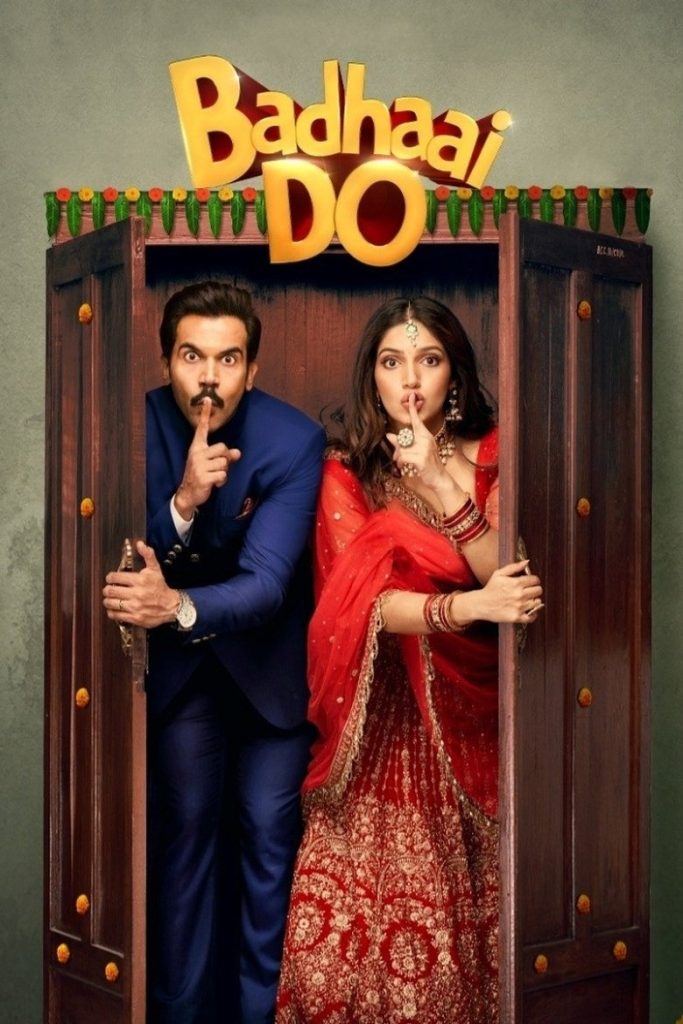
Badhaai Do is a 2022 Indian comedy-drama about a gay police officer and a lesbian teacher who enter into a marriage of convenience to satisfy their traditional families' expectations. The film explores their journey as they navigate societal pressures, family dynamics, and the complexities of maintaining their secret while developing an unexpected friendship. Through humor and heartfelt moments, it addresses themes of LGBTQ+ identity, family acceptance, and personal authenticity in contemporary India.
Parent Guide
This thoughtful comedy-drama addresses mature themes of LGBTQ+ identity and societal pressure with humor and sensitivity. While not containing graphic content, it deals with adult relationships and emotional situations that require maturity to understand. Best for teens who can appreciate the social commentary and emotional complexity.
Content breakdown
Some minor physical comedy and brief scenes of police work without graphic violence. No weapons shown in threatening ways. Some emotional tension from characters hiding their identities.
No horror elements. Some emotional distress as characters struggle with hiding their true identities from families. Mild social anxiety situations related to deception and family pressure.
Occasional mild language in Hindi. No strong profanity. Some conversational references to relationships and sexuality in context.
Discussion of LGBTQ+ relationships and sexuality throughout the plot. Some kissing and romantic situations between same-sex couples. No explicit sexual scenes or nudity. Themes of marriage, relationships, and sexual identity are central to the story.
No depiction of alcohol, drugs, or tobacco use shown in the film.
Significant emotional themes around identity, family pressure, and authenticity. Characters experience anxiety, deception, and emotional conflict. Positive resolution with messages of acceptance and honesty. Some tense family dynamics and emotional revelations.
Parent tips
This film deals with mature themes including LGBTQ+ relationships, societal pressure, and family expectations. While presented with humor, it contains discussions about sexuality, deception, and emotional struggles that may require parental guidance for younger viewers. The movie portrays positive messages about self-acceptance and authenticity, but includes some adult situations and conversations. Best suited for mature teens who can understand the social context and emotional complexity.
Parent chat guide
Parent follow-up questions
—
—
- What did you think about the main characters pretending to be married? Why do you think they did that?
- How do you think the characters felt when they couldn't tell their families the truth about themselves?
- What does it mean to be 'true to yourself' like the characters learn to be?
- How does the film portray the conflict between personal identity and family expectations?
- What did you think about how Indian society's views on marriage and sexuality are depicted?
- How do the characters' professional roles (police officer and teacher) contrast with their personal lives?
- What messages does the film send about honesty in relationships?
- How does the film use humor to address serious social issues?
🎭 Story Kernel
At its core, 'Badhaai Do' is a profound exploration of found family and societal performance versus authentic selfhood. It's not merely about a gay man and a lesbian woman entering a marriage of convenience; it's about two people building a sanctuary within a hostile world. The driving force isn't just external pressure from family and society, but their shared, desperate need for a safe harbor—a 'home' where they can momentarily drop the exhausting act. The film's real conflict shifts from 'how to hide' to 'how to live,' examining what constitutes a real family when biological ties are suffocating. The characters are propelled by a deep-seated yearning for acceptance without conditions, ultimately finding it not in broad societal change, but in the microcosm of their carefully constructed partnership.
🎬 Visual Aesthetics
The film employs a grounded, observational visual style that contrasts with its bold premise. The camera often uses medium shots and close-ups within the cramped apartments and offices, visually reinforcing the characters' feeling of being boxed in by societal expectations. The color palette is largely muted and realistic—earthy tones, police khaki, and domestic whites—making the rare moments of vibrancy, like the Holi sequence or the pride parade, emotionally potent explosions of color. The symbolism is subtle yet effective: the recurring motif of doors (the police station door, their apartment door) represents thresholds between public performance and private truth. The action is minimal and physical comedy is understated, relying on the tension of the situation rather than broad gestures, which amplifies the emotional realism.
🔍 Details & Easter Eggs
💡 Behind the Scenes
Rajkummar Rao and Bhumi Pednekar reportedly spent time with real-life LGBTQ+ individuals and allies to understand the nuances of their characters' experiences beyond the script. The film's director, Harshavardhan Kulkarni, has stated that the title 'Badhaai Do' (Congratulations Two) is a direct sequel reference to 'Badhaai Ho' (Congratulations), but flips the premise from an unexpected pregnancy to an unexpected marriage of a different kind. Several scenes were shot in real locations in Dehradun to capture the authentic, small-town atmosphere that pressures the protagonists. The script went through multiple workshops to ensure the portrayal of the lavender marriage and the characters' emotional journeys felt authentic and avoided stereotypes.
Where to watch
Choose region:
- Netflix
- Netflix Standard with Ads
Trailer
Trailer playback is unavailable in your region.