
Baghdad ER (2006)
Story overview
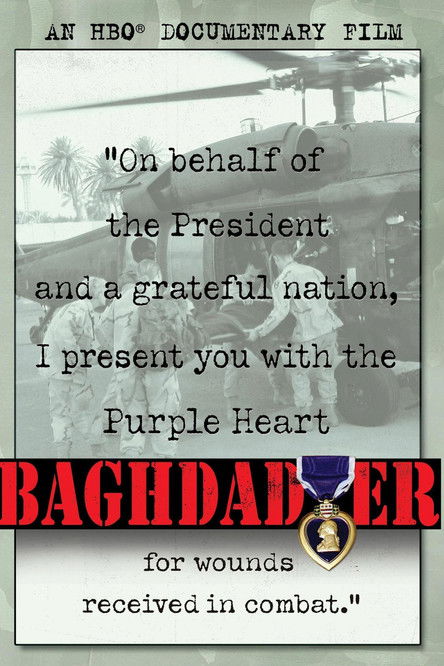
Baghdad ER is a 2006 documentary that provides an unflinching, real-time look inside the U.S. Army's main medical facility in Iraq during the war. Filmed over two months in 2005, it follows doctors and nurses as they treat severely wounded soldiers evacuated by helicopter, putting human faces behind the war's casualty statistics. The documentary captures the intense, high-pressure environment of combat medicine without narration or editorializing, showing both medical procedures and emotional moments.
Parent Guide
A raw, documentary look at combat medicine with intense real-world medical trauma. Not suitable for children; recommended for mature teens 16+ with adult discussion.
Content breakdown
Extensive real footage of war injuries: gunshot wounds, amputations, burns, and emergency surgeries. Shows blood, exposed tissue, medical procedures, and injured soldiers in visible pain. No combat scenes but graphic aftermath.
Very disturbing medical content including severe injuries, life-threatening situations, and emotional distress of patients and staff. Real people in crisis without fictional buffer. May be particularly upsetting for sensitive viewers.
Occasional military/medical terminology and possible mild expletives in unscripted moments, but not a focus. Most dialogue is professional medical communication.
Partial nudity during medical procedures for treatment purposes only (e.g., chest exposure for wound care). Clinical context without sexual content.
No depiction of recreational substance use. Shows medical use of anesthesia and pain medications in clinical settings.
High emotional intensity throughout: anxiety of emergency medicine, grief over lost patients, relief when soldiers survive, and stress of medical staff. Real human suffering and professional emotional labor are central themes.
Parent tips
This documentary contains graphic medical footage of war injuries including blood, wounds, amputations, and emergency surgeries. It shows real soldiers in extreme pain and distress, and includes emotional scenes with medical staff and patients. The content is intense and unedited, with no fictional elements to provide distance. Best suited for mature teenagers who can process realistic depictions of war's consequences, and should be watched with adult guidance for younger viewers.
Parent chat guide
Parent follow-up questions
—
—
- What do you think was hardest for the doctors and nurses in the film?
- How do you think soldiers feel when they get hurt far from home?
- How does this documentary change your understanding of war compared to news coverage or fictional films?
- What ethical questions does wartime medical care raise?
- How do medical professionals maintain compassion in such high-stress environments?
- What long-term impacts might these injuries have on soldiers' lives?
🎭 Story Kernel
Baghdad ER isn't about the politics of the Iraq War but about the brutal, intimate mechanics of trauma—both physical and psychological. The film exposes how military medicine becomes a frontline of its own, where doctors and nurses wage a desperate battle against time, limited resources, and the sheer volume of human wreckage. It's driven by the quiet heroism of medical staff who must compartmentalize horror to function, and the shattered soldiers whose bodies become the landscape of the conflict. The core theme is the collision between clinical professionalism and overwhelming human suffering, revealing war as a medical emergency in perpetuity.
🎬 Visual Aesthetics
The cinematography is stark, vérité, and unflinching. Handheld cameras plunge us into the chaos of the ER, with shaky, urgent movements mirroring the panic of trauma surgery. The color palette is dominated by sterile whites, metallic grays, and the vivid, shocking red of blood—a constant visual reminder of the violence outside. There are no composed, beautiful shots; instead, the camera lingers on close-ups of wounds, medical instruments, and exhausted faces. This raw, documentary style strips away any Hollywood gloss, making the viewer a witness rather than a spectator. The visual language is one of immersion and visceral impact.
🔍 Details & Easter Eggs
💡 Behind the Scenes
Directed by Jon Alpert and Matthew O'Neill, the film was shot over two months in 2005 at the 86th Combat Support Hospital, the real U.S. Army medical facility in the Green Zone. The filmmakers, veterans of hard-hitting documentary, embedded with the unit, gaining unprecedented access. It faced initial resistance from the Pentagon before airing on HBO, where it won multiple Emmy Awards. The medical personnel and patients are not actors but real soldiers and caregivers, with many sequences filmed during actual mass casualty events, contributing to its harrowing authenticity.
Where to watch
Choose region:
- HBO Max
- HBO Max Amazon Channel
- Amazon Video
- Apple TV Store
- Google Play Movies
- YouTube
- Fandango At Home