
Bajrangi Bhaijaan (2015)
Story overview
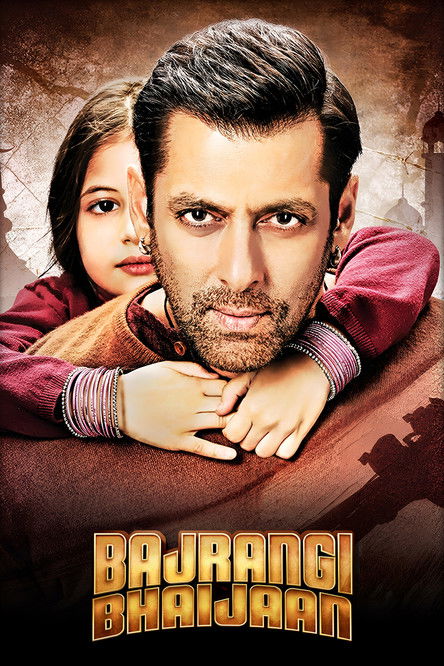
Bajrangi Bhaijaan is a 2015 Indian film blending comedy, drama, and action. It follows a devout man who discovers a lost, mute Pakistani girl in India and embarks on a heartfelt journey to reunite her with her family across the border. The story explores themes of compassion, cultural differences, and human connection through their adventures and challenges.
Parent Guide
A heartwarming story with mild action and emotional moments suitable for family viewing with guidance for younger children.
Content breakdown
Contains chase scenes, mild confrontations, and perilous situations without graphic violence.
Some tense moments involving separation and dangerous situations, but nothing overly frightening.
No offensive language noted in the available information.
No sexual content or nudity indicated.
No substance use shown or mentioned.
Contains emotional scenes involving separation, cultural tension, and heartfelt moments that may affect sensitive viewers.
Parent tips
This film contains mild action sequences and perilous situations that might be intense for younger viewers, including scenes of pursuit and confrontations. Some emotional moments deal with separation and cultural tensions that could require explanation for children. The overall message promotes kindness and cross-cultural understanding, making it a good conversation starter about empathy and helping others.
Parent chat guide
Parent follow-up questions
- How did the man help the little girl?
- What was your favorite part of their adventure?
- How do you think the girl felt when she was lost?
- Why was it important to help her get home?
- What does it mean to be a good friend?
- What challenges did they face on their journey?
- How did they communicate without speaking the same language?
- Why was it difficult for them to cross the border?
- What did you learn about helping others from this story?
- How did the characters show kindness to each other?
- How does the film show differences between cultures?
- What does the story teach about overcoming obstacles?
- Why do you think the man risked so much to help the girl?
- How did the characters handle difficult situations?
- What messages about humanity did you take from the film?
- How does the film address political and cultural tensions?
- What commentary does it make about borders and divisions?
- How are themes of faith and compassion explored?
- What does the journey symbolize about human connection?
- How does the film balance entertainment with social messages?
🎭 Story Kernel
Bajrangi Bhaijaan transcends its surface-level 'lost child' premise to explore how rigid ideologies crumble before simple human decency. Pawan Kumar Chaturvedi's transformation from a devout, rule-following Hanuman bhakt to a border-defying humanitarian reveals the film's true thesis: faith isn't about blind ritual but compassionate action. His journey mirrors Munni's—both are displaced souls seeking belonging, one geographically, the other spiritually. The film cleverly uses geopolitical tension as backdrop for a more intimate conflict: the battle between institutionalized prejudice and innate empathy. The climax isn't the border crossing but Pawan's realization that true devotion means protecting the vulnerable, even if it means defying everything he was taught to revere.
🎬 Visual Aesthetics
Director Kabir Khan employs a deliberate visual dichotomy: India is rendered in warm, saturated tones of orange and yellow, evoking both temple marigolds and dusty plains, while Pakistan initially appears in cooler blues and grays, reflecting Pawan's preconceived fears. The camera lingers on faces during moments of silent understanding—Munni's wordless gestures, Chand Nawab's weary eyes—making dialogue secondary to visual communication. Action sequences avoid Bollywood extravagance for gritty, handheld urgency during border scenes, emphasizing physical struggle over spectacle. Symbolism is subtle: Pawan's ever-present Hanuman locket doesn't magically protect him but serves as a weighty reminder of the values he must reinterpret through action, not just worship.
🔍 Details & Easter Eggs
💡 Behind the Scenes
Salman Khan, often typecast in hyper-masculine roles, reportedly insisted on playing Pawan as physically vulnerable—he performs most stumbles and struggles without body doubles. Child actress Harshaali Malhotra (Munni) didn't speak Urdu; her lines were dubbed, but her expressive silence became the film's emotional anchor. The climactic border scene was shot at the actual Wagah border during a real retreat ceremony, with thousands of extras from both sides participating—the charged atmosphere is genuine, not staged. Kabir Khan drew from his documentary background to cast real Pakistani journalists and locals, lending authenticity often missing in cross-border narratives.
Where to watch
Choose region:
- Netflix
- Netflix Standard with Ads