
Bambi (1942)
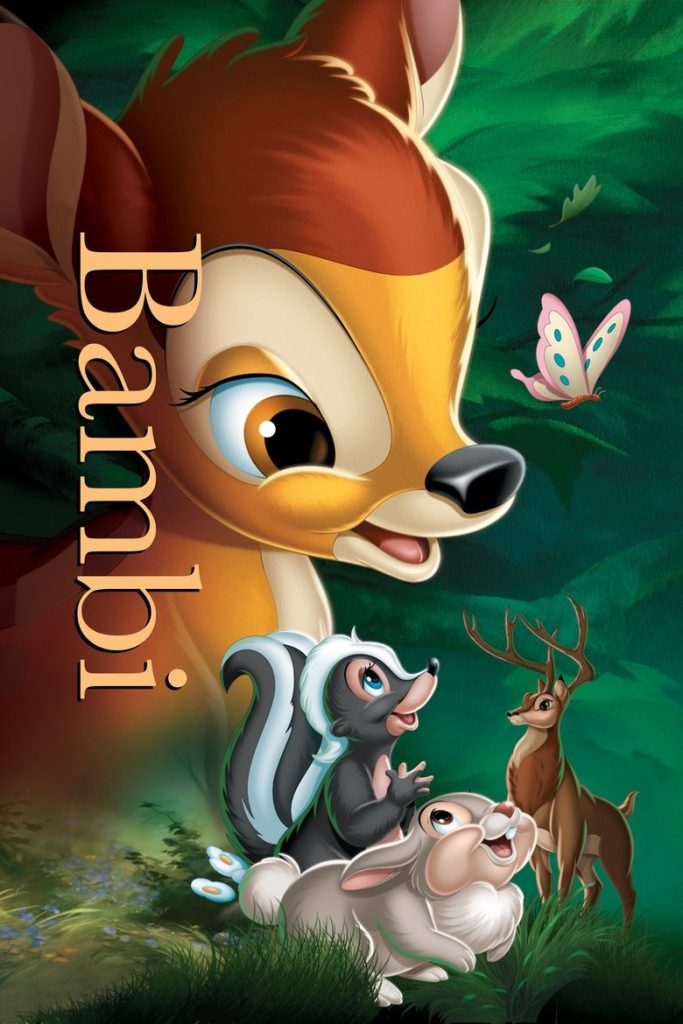
Story overview
Bambi is a classic animated film that follows the life of a young deer from birth through adulthood. The story explores his experiences growing up in the forest, making friends, and learning about the natural world. Through changing seasons and life events, Bambi discovers the beauty and challenges of forest life while developing relationships with other animals.
Parent Guide
A classic animated film with emotional depth and natural themes suitable for most children with parental guidance.
Content breakdown
Hunting scenes and forest fire create peril; no graphic violence shown
Emotional scenes involving loss and separation may upset sensitive viewers
No inappropriate language
No sexual content or nudity
No substance use depicted
Themes of loss, growing up, and natural dangers create emotional moments
Parent tips
Bambi contains emotional moments that may be upsetting for young children, particularly scenes involving loss and peril. The film's themes of growing up, friendship, and nature's cycles provide good discussion opportunities about life changes. While generally gentle, some forest fire and hunting scenes create tension that sensitive viewers might find distressing.
Parent chat guide
Parent follow-up questions
- Which animal friend did you like best?
- How did Bambi feel when he met new friends?
- What sounds did you hear in the forest?
- What was your favorite part with the baby animals?
- How did the seasons change in the movie?
- How did Bambi learn about the forest?
- What made Bambi brave when he was scared?
- How did the animals help each other?
- What did you learn about how animals live?
- How did the movie show that growing up can be both happy and sad?
- What responsibilities come with growing up like Bambi did?
- How did the movie show the balance between beauty and danger in nature?
- What did the different animal friendships teach about relationships?
- How did the changing seasons represent different stages of life?
- What lessons about courage did the characters demonstrate?
- How does the film use nature as a metaphor for life's journey?
- What commentary does the movie make about human impact on natural environments?
- How are themes of loss and resilience handled in the story?
- What does the film suggest about the transition from childhood to adulthood?
- How do the animal characters represent different personality types or roles in a community?
🎭 Story Kernel
Bambi is less a coming-of-age story and more a stark meditation on the cyclical, indifferent nature of existence. The film's true driver isn't Bambi's growth but the relentless, impersonal force of 'Man'—an off-screen, godlike terror that reshapes the forest's reality. Characters are motivated by primal instincts: survival, reproduction, and the transmission of trauma. Thumper's lessons and the Great Prince's stoicism aren't just guidance; they're the hard-coded programming for enduring a world where beauty and brutality are inseparable. The narrative arc follows the erosion of innocence not through personal failure, but through confrontation with an ecosystem where death is as fundamental as spring.
🎬 Visual Aesthetics
The film's visual language masterfully uses painterly backgrounds and simplified character animation to create emotional contrast. The lush, detailed forests and changing seasons (the soft pastels of spring, the fiery autumn, the stark white winter) establish a world of profound beauty. Against this, the characters are drawn with cleaner lines, making their vulnerability and emotions pop. The infamous 'Man was in the forest' sequence uses disjointed, chaotic cuts, violent red hues, and unsettling silence to visualize pure terror. Symbolism is direct yet powerful: the meadow represents dangerous openness, the thicket safety, and the recurring use of vertical space (like the owl's tree) emphasizes the forest's layered hierarchy.
🔍 Details & Easter Eggs
💡 Behind the Scenes
Based on a 1923 Austrian novel by Felix Salten, the story was significantly softened for Disney; the original was a darker, more explicit allegory about anti-Semitism and persecution. The animators studied real deer at the Los Angeles Zoo and filmed live-action reference footage of animals to achieve realistic movement. Voice actor Peter Behn (Young Thumper) was a child with no prior experience who was hired because his awkward, natural delivery charmed the producers. The film was a commercial failure on initial release in 1942, due to WWII limiting the European market, but later became a classic through re-releases.
Where to watch
Choose region:
- Disney Plus
- Amazon Video
- Apple TV
- Google Play Movies
- YouTube
- Fandango At Home
Trailer
Trailer playback is unavailable in your region.