
Bambi II (2006)
Story overview
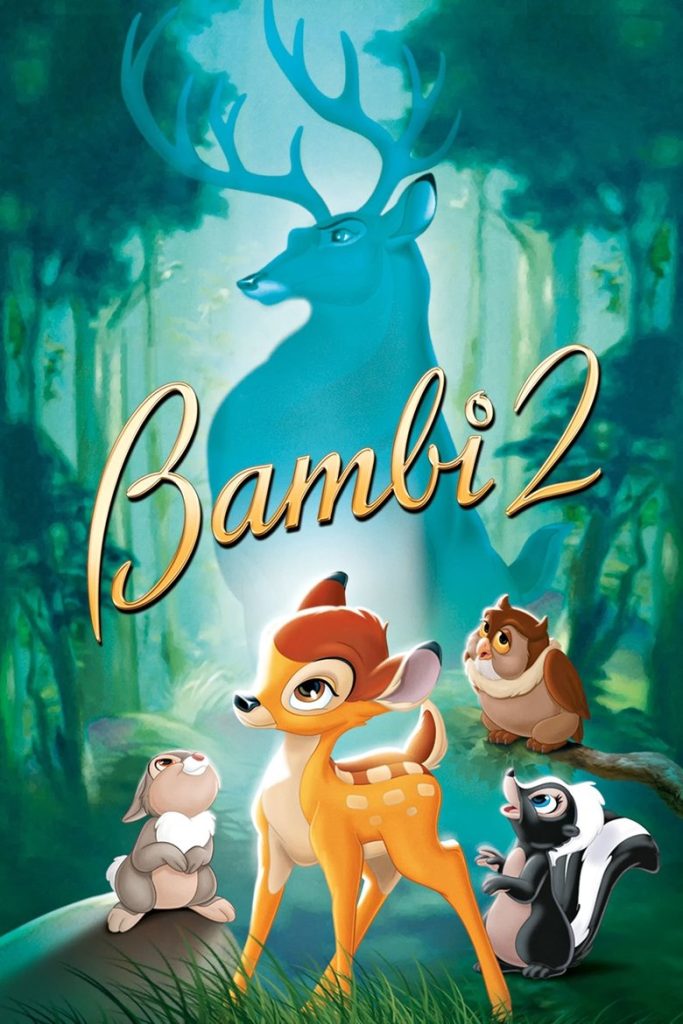
Bambi II is a direct-to-video animated sequel that bridges the gap between Bambi's infancy and adulthood, focusing on his relationship with his father, The Great Prince, after his mother's death. The film explores themes of grief, parental responsibility, and growing up through gentle forest adventures with familiar characters like Thumper and Flower.
Parent Guide
A gentle, emotionally resonant sequel suitable for most children, though themes of parental loss may require preparation for sensitive viewers.
Content breakdown
Some tense moments with forest predators (wolves/hunting dogs) chasing animals, but no graphic violence. Bambi faces mild peril in a few scenes.
References to Bambi's mother's death (not shown). Some intense forest fire scenes and predator chases might briefly frighten very young children.
No offensive language. Clean, family-friendly dialogue throughout.
No sexual content or nudity. Animal characters are naturally depicted.
No substance use depicted.
Themes of grief, parental loss, and father-son reconciliation create emotional depth. Some children may feel sad about Bambi missing his mother.
Parent tips
This G-rated sequel maintains the gentle tone of the original Bambi but deals directly with parental loss and father-son relationships. The mother's death (from the first film) is referenced but not shown. Best for children who have seen the original or are prepared for themes of loss. The animation quality is good but not theatrical-level.
Parent chat guide
Parent follow-up questions
- Which animal friend did you like best?
- What sounds did the forest animals make?
- How did Bambi's father protect him?
- How did Bambi and his father feel about each other at the beginning vs. the end?
- What did Thumper teach Bambi about being brave?
- Why do you think the Great Prince was so strict at first?
- How does the film show different parenting styles?
- What does the film suggest about overcoming grief?
- How does Bambi's journey compare to growing up in real life?
- How does the film handle themes of masculinity and emotional expression?
- What cultural values about family does the film reinforce or challenge?
- How does this sequel compare to the original in terms of storytelling and themes?
🎭 Story Kernel
Bambi II explores the emotional labor of single fatherhood through the Great Prince's reluctant guardianship. The film's core isn't Bambi's growth but the Prince's transformation from distant monarch to engaged parent. Their relationship mirrors real-world blended family dynamics, with the Prince learning that leadership means vulnerability, not just authority. Bambi's quest for approval becomes a catalyst for his father's emotional thaw, suggesting that parenting requires unlearning stoicism to build genuine connection. The narrative subverts expectations by making the adult's journey more compelling than the child's coming-of-age.
🎬 Visual Aesthetics
The animation employs a muted, earthy palette that grounds the forest in tangible reality, contrasting with the original's painterly romanticism. Camera movements mimic documentary intimacy during emotional scenes, using tight close-ups on characters' eyes to convey unspoken tensions. Action sequences utilize dynamic angles and rapid cuts reminiscent of adventure films, particularly during predator chases. Symbolism appears in lighting choices—Bambi and his father often share scenes in golden-hour glow, visually warming their cold relationship. The forest itself becomes a character through detailed texturing that makes every leaf and shadow feel lived-in.
🔍 Details & Easter Eggs
💡 Behind the Scenes
Originally titled 'Bambi and the Great Prince,' this direct-to-video sequel was produced by Disney's Australian animation studio, explaining its distinct visual texture. Voice actor Patrick Stewart recorded his lines remotely from England, never meeting the other cast. The film's score incorporates motifs from the 1942 original but reorchestrates them with contemporary instrumentation. Production reused some background layouts from the first film but redrew all character animation to match modern proportions. Interestingly, it was the last Disney sequel released on VHS in North America.
Where to watch
Choose region:
- Disney Plus
- Amazon Video
- Apple TV Store
- Google Play Movies
- YouTube
- Fandango At Home
Trailer
Trailer playback is unavailable in your region.