
Barry Lyndon (1975)
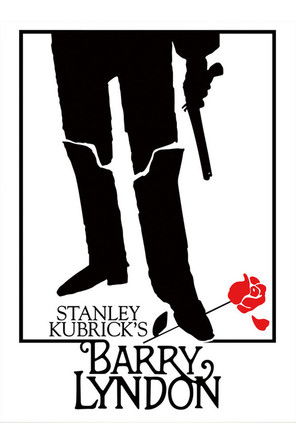
Story overview
Barry Lyndon is a historical drama set in 18th-century Europe that follows an ambitious Irishman's journey through society. The film explores themes of social climbing, romance, and the consequences of one's choices against the backdrop of war and aristocracy. With its deliberate pacing and visual artistry, it presents a thoughtful examination of human nature and societal structures.
Parent Guide
A thoughtful historical drama with mature themes and emotional complexity suitable for older children and teenagers.
Content breakdown
Includes historical warfare scenes, duels, and some physical confrontations typical of the period, though not graphically depicted.
Some tense situations and emotional conflicts, but no horror elements or jump scares.
Period-appropriate dialogue with no strong modern profanity.
Implied romantic relationships and some suggestive situations, but no explicit content.
Historical depiction of social drinking typical of the era.
Explores complex emotions around ambition, betrayal, and social status with some dramatic moments.
Parent tips
This PG-rated film from 1975 has a very long runtime of over three hours, which may challenge younger viewers' attention spans. The historical setting and complex themes about social class and morality require some maturity to appreciate. While not graphic, the film includes mature situations and emotional intensity that parents should consider for their children.
Parent chat guide
Parent follow-up questions
- What clothes did people wear in the old days?
- Did you see any horses or carriages?
- What was your favorite part of the movie?
- How were the houses different from ours?
- Was the music nice to listen to?
- Why do you think the main character wanted to become important?
- How did people settle arguments in the old days?
- What did you learn about how people lived long ago?
- How do you think traveling was different back then?
- What makes someone a good friend in the story?
- What does the film show about social class in history?
- How do the characters' ambitions affect their relationships?
- What historical details did you notice about 18th-century life?
- How does the movie portray the consequences of choices?
- What themes about society did you notice in the story?
- How does the film critique social climbing and ambition?
- What commentary does the movie make about class systems?
- How does the historical setting influence the characters' options?
- What does the film suggest about morality and consequences?
- How does the visual style contribute to the storytelling?
🎭 Story Kernel
Barry Lyndon is a profound meditation on the impossibility of social mobility in a rigidly structured world. Redmond Barry's journey isn't about ambition, but about the relentless, indifferent forces of class, fate, and societal convention that crush individual agency. His rise and catastrophic fall are not driven by grand villainy or heroic flaw, but by a series of petty gambles, social faux pas, and the cold arithmetic of inheritance. The film posits that in the 18th-century aristocratic world, character is irrelevant; one is merely a placeholder in a preordained social and economic system. Barry's tragedy is that he believes he can play the game, only to discover the rules are written to ensure he loses.
🎬 Visual Aesthetics
Kubrick's visual strategy is one of sublime detachment, achieved through painterly composition and revolutionary technical choices. The infamous use of NASA-derived f/0.7 lenses for candlelit scenes creates a unique, deep-focus intimacy that makes the characters seem like specimens under glass. The static, symmetrical frames—often mimicking Gainsborough or Hogarth—present the drama as a series of frozen tableaux, emphasizing the characters' entrapment within social rituals and landscapes. The color palette is muted and naturalistic, with action deliberately restrained to slow zooms and pans, making every emotional outburst feel shocking against the composed background. The visuals don't dramatize; they observe with the cold eye of history.
🔍 Details & Easter Eggs
💡 Behind the Scenes
To achieve the authentic candlelit interiors, Kubrick sourced three ultra-fast Carl Zeiss Planar 50mm f/0.7 lenses originally developed for NASA's Apollo moon missions. The film was shot almost entirely on location in stately homes across England and Ireland, with Kubrick famously obtaining permission to film in historic properties by agreeing to use only natural light or candles, causing incredibly long exposure times. Ryan O'Neal, an American actor known for lighter roles, was a controversial casting choice, with Kubrick deliberately seeking his 'blank' quality to portray Barry as a passive vessel for fate's whims.
Where to watch
Choose region:
- Amazon Video
- Apple TV
- Google Play Movies
- YouTube
- Fandango At Home
Trailer
Trailer playback is unavailable in your region.