Beasts of the Southern Wild (2012)
Story overview
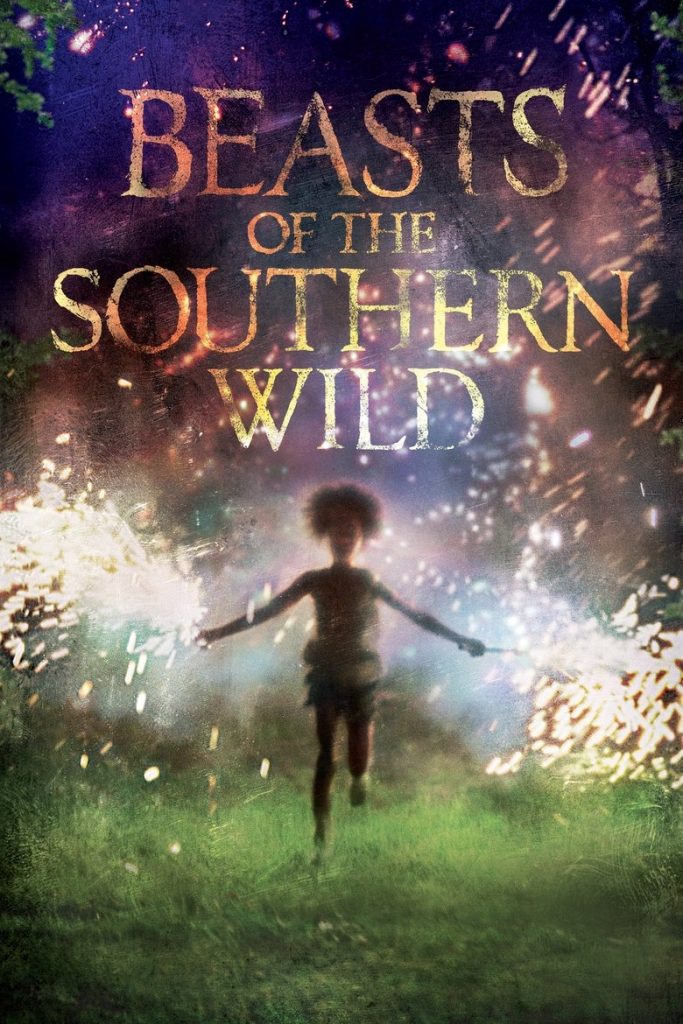
Beasts of the Southern Wild is a 2012 fantasy drama that follows Hushpuppy, a resilient six-year-old girl living with her father Wink in a remote Louisiana bayou community called 'the Bathtub.' The film explores themes of family, survival, and environmental change through Hushpuppy's imaginative perspective as she faces her father's illness, rising floodwaters, and mythical prehistoric creatures called aurochs.
Parent Guide
A poetic but intense film about a young girl facing multiple challenges including parental illness, environmental disaster, and mythical threats. Contains strong emotional themes that require maturity to process.
Content breakdown
Characters face life-threatening situations including rising floodwaters, dangerous storms, and mythical creatures. The father occasionally uses physical discipline (slapping, rough handling). Medical procedures shown including injections. Characters drink heavily and behave recklessly.
Large prehistoric creatures (aurochs) may frighten young viewers. The father's serious illness and deteriorating health are central to the plot. Abandonment themes and the child's fear of being alone are emotionally intense. Realistic depictions of poverty and harsh living conditions.
Some mild profanity including 'hell' and 'damn.' Occasional crude references. The overall language level is appropriate for PG-13.
Brief non-sexual nudity (young girl shown briefly from behind while changing). Some suggestive dancing at a celebration. Overall minimal sexual content.
Frequent alcohol consumption by adult characters, including heavy drinking. Characters shown drinking from bottles and appearing intoxicated. No drug use depicted.
High emotional intensity throughout. Central themes of parental illness, potential abandonment, and survival against environmental threats. The father-daughter relationship is complex with moments of tenderness and conflict. The child protagonist faces multiple traumatic situations.
Parent tips
This film contains intense emotional themes including parental illness, abandonment fears, and environmental peril. The fantasy elements (aurochs) may be frightening for young children. The father's tough parenting style includes occasional yelling and physical discipline. Poverty and harsh living conditions are depicted realistically. Best for mature children who can process metaphorical storytelling about loss and resilience.
Parent chat guide
Parent follow-up questions
- What animals did you see in the movie?
- How did Hushpuppy feel when she couldn't find her mom?
- What was your favorite part of Hushpuppy's home?
- Why do you think Hushpuppy's dad was so strict with her?
- What do you think the big ice animals (aurochs) represented?
- How did the community help each other when the water rose?
- How does the film use fantasy elements to talk about real problems like climate change?
- What did you think about the way Hushpuppy's father prepared her for life without him?
- How does the movie show different ways people cope with difficult situations?
- How does the film explore themes of poverty and marginalization through magical realism?
- What commentary does the film make about environmental justice and vulnerable communities?
- How does Hushpuppy's journey represent coming-of-age in the face of systemic challenges?
🎭 Story Kernel
The film's core is a raw exploration of defiant, joyful sovereignty in the face of erasure. Hushpuppy's journey isn't about survival; it's about the fierce assertion of a right to exist on her own terms, within her flawed but fiercely loved community, The Bathtub. Her father Wink's harsh love is a brutal curriculum in resilience, teaching her that to be 'the man' is to be unbreakable. The narrative rejects the paternalistic 'salvation' offered by the authorities, framing their evacuation not as rescue but as cultural annihilation. The aurochs, mythical beasts thawed by a melting world, become the physical manifestation of all the terrifying, inevitable forces—climate change, poverty, death—that Hushpuppy must learn to stare down without blinking.
🎬 Visual Aesthetics
The film's visual language is a breathtaking alchemy of magical realism and gritty documentary. Cinematographer Ben Richardson employs handheld, intimate camerawork that places us at Hushpuppy's eye level, making her monumental world feel tangible. The color palette is a symphony of mud, rust, and fire—earthy tones of The Bathtub contrasted with the sterile, sickly blues and whites of the evacuation facility. This isn't picturesque poverty; it's vibrantly, messily alive. The mythical aurochs are rendered with a tangible, heaving physicality, their slow-motion charge intercut with real-world calamity, blurring the line between Hushpuppy's internal mythology and external catastrophe in a way that feels profoundly true to a child's consciousness.
🔍 Details & Easter Eggs
💡 Behind the Scenes
The film was shot on location in the fragile, disappearing communities of the Louisiana bayou, with many non-professional actors from the area. Quvenzhané Wallis, who played Hushpuppy, was only five years old during auditions and six during filming. Her astonishing, untrained performance was guided largely through improvisation and play. The production design was deeply integrated with the environment; Hushpuppy's dress, for instance, was made from found materials by locals. The mythical aurochs were created using a combination of real pigs in costumes for close-ups and CGI for the wider shots, grounding the fantasy in a tactile reality.
Where to watch
Choose region:
- HBO Max
- HBO Max Amazon Channel
- Amazon Video
- Apple TV Store
- Google Play Movies
- YouTube
- Fandango At Home
Trailer
Trailer playback is unavailable in your region.