
Beau Travail (2000)
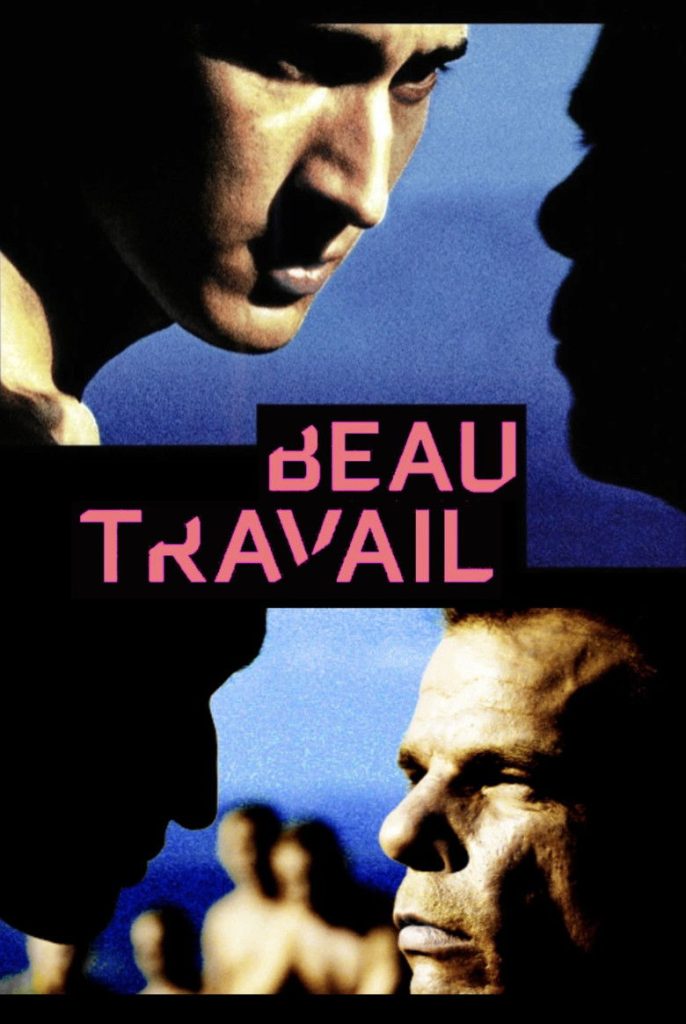
Story overview
Beau Travail is a 2000 French drama film that explores themes of masculinity, discipline, and isolation within a Foreign Legion outpost in Djibouti. The film follows the intense dynamics between soldiers as they navigate strict military routines and interpersonal tensions in a remote desert landscape. Through minimal dialogue and striking visual storytelling, it examines the psychological effects of rigid hierarchy and repressed emotions in an austere environment.
Parent Guide
Artistic drama with mature themes suitable for older teens and adults
Content breakdown
Military training scenes and tense confrontations without graphic violence
Psychological tension and emotional repression create an intense atmosphere
Minimal dialogue with occasional military terminology
Implied themes without explicit content
No substance use depicted
Strong themes of isolation, repression, and psychological tension
Parent tips
This film contains mature themes and artistic elements that may not engage younger viewers. The slow pacing, abstract storytelling, and focus on psychological tension make it more suitable for older teens and adults who appreciate contemplative cinema. Parents should be aware that while there's no graphic content, the film's atmosphere of repressed emotions and military discipline creates an emotionally intense viewing experience.
Parent chat guide
Parent follow-up questions
- What colors did you see in the desert?
- Did you see any animals in the movie?
- How did the soldiers move together?
- What sounds did you hear in the movie?
- What did the uniforms look like?
- Why do you think the soldiers followed so many rules?
- How did the desert setting make you feel?
- What did you notice about how the soldiers worked together?
- What was different about this movie compared to other army stories?
- How did the music make you feel during the movie?
- What do you think the movie was saying about following rules?
- How did the setting affect the characters' relationships?
- What emotions did you notice the characters trying to hide?
- Why do you think there wasn't much talking in the movie?
- How did the camera work help tell the story?
- How does the film challenge traditional ideas of masculinity?
- What commentary does the movie make about military discipline and human nature?
- How does the minimalist storytelling affect your interpretation of the characters?
- What role does the landscape play as a character in the film?
- How does the film use physical movement to express emotional states?
🎭 Story Kernel
At its core, 'Beau Travail' is less about military discipline than about the suffocating performance of masculinity within rigid hierarchies. The film explores how desire—specifically Commandant Galoup's repressed, obsessive fixation on the beautiful, effortless recruit Sentain—becomes channeled into ritualized violence and self-destruction. Galoup's narration from exile frames the story as a confession, revealing his actions as a perverse form of love and envy. The plot is driven not by external conflict but by the internal corrosion of a man whose identity is so bound to a code that the only expression left for his turmoil is to meticulously orchestrate his own downfall and that of his object of fascination.
🎬 Visual Aesthetics
Claire Denis and cinematographer Agnès Godard craft a hypnotic, tactile world. The camera lingers on bodies in motion—during grueling training drills that resemble dance, or in moments of idle repose under the Djibouti sun. The color palette is dominated by arid yellows, the deep blue of the sea, and the crisp whites and khakis of the legionnaires' uniforms, creating a stark, almost abstract beauty. The infamous final scene in the empty nightclub, where Galoup breaks into a frenetic, liberating dance to 'The Rhythm of the Night,' uses movement as a sudden, explosive release of all the pent-up emotion the film's rigid formalism has contained.
🔍 Details & Easter Eggs
💡 Behind the Scenes
The film is a loose adaptation of Herman Melville's novella 'Billy Budd,' transposing its tale of innocence, envy, and authority from a 19th-century British warship to the French Foreign Legion in Djibouti. Denis Lavant, who plays Galoup, performed his own stunning, improvised dance in the finale. Much of the film was shot on location in Djibouti, with real Legionnaires as extras, lending an authentic, sun-scorched physicality to the proceedings. The haunting, minimalist score by British group Tindersticks is a key character, often emphasizing the silence and isolation between the men rather than their camaraderie.
Where to watch
Choose region:
- HBO Max
- HBO Max Amazon Channel
- Criterion Channel
- Amazon Video
- Apple TV
- Google Play Movies
- YouTube
- Fandango At Home
Trailer
Trailer playback is unavailable in your region.