
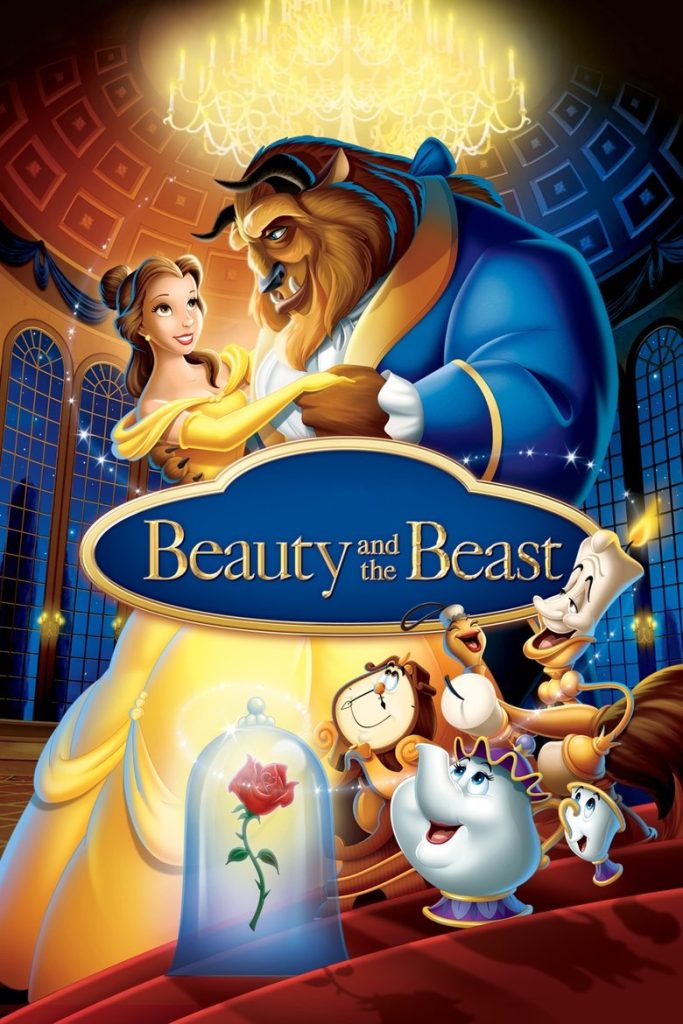
Beauty and the Beast (1991)
Story overview
Beauty and the Beast is a classic animated musical about a kind young woman who finds herself living in an enchanted castle with a prince transformed into a beast. Through her interactions with the castle's magical inhabitants, she discovers that genuine beauty lies in one's character rather than appearance. The story emphasizes themes of compassion, looking beyond surface judgments, and the transformative power of love.
Parent Guide
A family-friendly animated musical with positive messages about inner beauty and kindness, suitable for most children with some mild intense moments.
Content breakdown
Some scenes show characters in peril, including a chase sequence and confrontations where characters express anger, but no graphic violence.
The beast's appearance might initially startle very young children, and some tense moments occur, but these are balanced by the story's positive resolution.
No offensive language is present in the film.
No sexual content or nudity appears in this animated film.
No depiction of substance use occurs in the film.
Some emotional moments involve characters feeling lonely, angry, or scared, but these are resolved positively by the story's end.
Parent tips
This G-rated film is generally appropriate for most children, featuring positive messages about inner beauty and kindness. Parents should be aware that some scenes might be intense for very young viewers, including moments where characters face peril or express anger. The film's themes about not judging by appearances and the importance of personal growth provide excellent discussion opportunities for families.
Parent chat guide
Parent follow-up questions
- Which character was your favorite and why?
- How did the characters help each other in the story?
- What made the castle special?
- What did you learn about being kind to others?
- How did the characters show they cared about each other?
- Why do you think the main character was able to see beyond appearances?
- How did the characters change from the beginning to the end of the story?
- What does it mean to have 'inner beauty'?
- How did music help tell the story?
- What would you do if you met someone who looked different from you?
- What lessons about prejudice does this story teach?
- How do the characters demonstrate personal growth throughout the film?
- What role does forgiveness play in the story?
- How does the setting contribute to the magical atmosphere?
- What does this story suggest about the nature of true love?
- How does this film challenge traditional fairy tale conventions?
- What commentary does the story make about societal expectations and appearances?
- How do the characters' motivations evolve throughout the narrative?
- What literary or cinematic techniques enhance the storytelling?
- How do the themes remain relevant to modern audiences?
🎭 Story Kernel
At its core, 'Beauty and the Beast' explores the transformative power of empathy over superficial judgment. The Beast isn't cursed for his appearance but for his inability to love—a flaw Gaston shares despite his conventional beauty. Belle's journey isn't about finding romance but about recognizing humanity where society sees none. The film argues that true monstrosity lies in cruelty and entitlement, not physical difference. The enchanted objects represent the consequences of the Beast's initial selfishness, their humanity literally trapped by his failure to grow.
🎬 Visual Aesthetics
The film masterfully uses color psychology: Belle's blue dress represents her individuality against the village's earthy browns, while the Beast's world shifts from cold blues to warm golds as he softens. The ballroom sequence's sweeping camera movements and glittering palette create a visual metaphor for emotional opening. Gothic architecture emphasizes the Beast's isolation, while intimate close-ups during the library scene build connection. The transformation sequence uses light as purification, washing away the curse's visual darkness.
🔍 Details & Easter Eggs
💡 Behind the Scenes
Paige O'Hara (Belle) was specifically chosen because her voice had a unique 'spunky' quality unlike typical Disney princesses. The ballroom floor was hand-painted to resemble marble but with a rose pattern visible only in certain lights. Angela Lansbury recorded 'Beauty and the Beast' in a single take while fighting a cold, giving the song its slightly raspy, emotional quality. The film was the first animated feature nominated for Best Picture at the Oscars.
Where to watch
Choose region:
- Disney Plus
- Amazon Video
- Apple TV
- Google Play Movies
- YouTube
- Fandango At Home
Trailer
Trailer playback is unavailable in your region.