
Before Sunrise (1995)
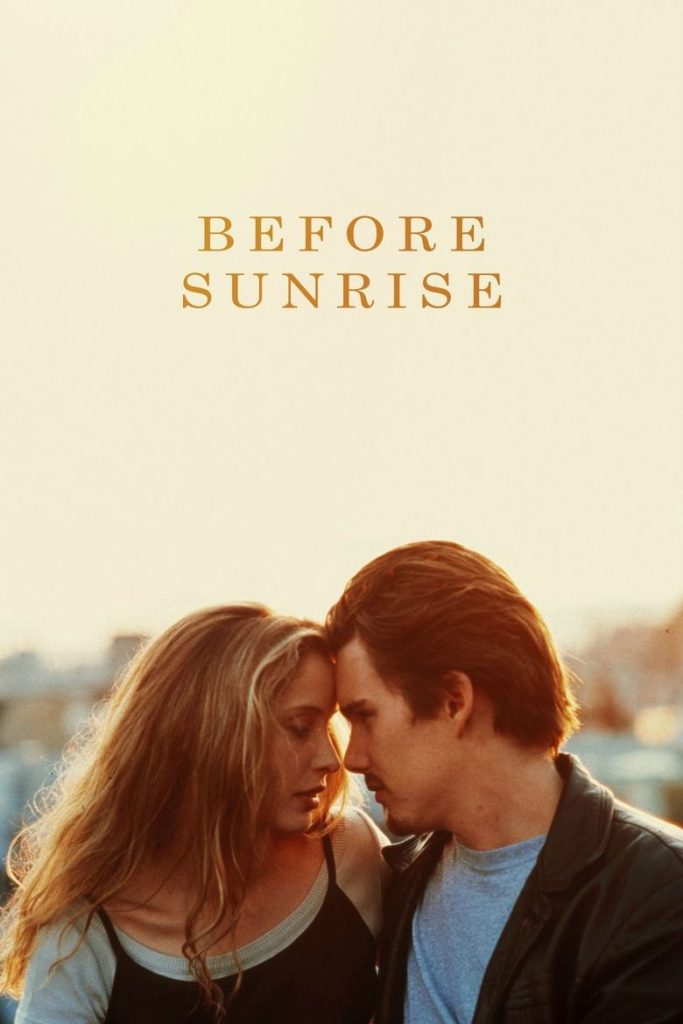
Story overview
Before Sunrise follows two young strangers who meet on a train and spontaneously decide to spend one evening exploring Vienna together. As they wander through the city, they engage in deep conversations about life, love, and personal experiences, forming a meaningful connection. The film captures the fleeting nature of their encounter and the emotional intimacy that develops during their single night together.
Parent Guide
A thoughtful, dialogue-driven romance exploring emotional intimacy between strangers during one evening in Vienna.
Content breakdown
No violence, physical conflict, or perilous situations.
No frightening or disturbing imagery; the tone is contemplative and romantic.
Some strong language including profanity, consistent with the R rating.
Conversations about relationships and sexuality, but no explicit sexual content or nudity shown.
Characters drink wine in social settings; no intoxication or substance abuse depicted.
Emotional vulnerability, intimate conversations, and bittersweet awareness of fleeting connection.
Parent tips
This thoughtful romantic drama focuses entirely on conversation and character development rather than action or plot. Parents should note the R rating primarily stems from mature themes, frank discussions about relationships, and some strong language. The film's slow pace and dialogue-driven nature may not hold younger viewers' attention, but it offers rich material for discussions about human connection, spontaneity, and emotional vulnerability with older teens.
While there are no explicit scenes of violence or substance abuse, the characters do discuss adult topics including past relationships, sexuality, and personal philosophies. The film's emotional intensity comes from the characters' willingness to be vulnerable with each other and the bittersweet awareness that their time together is limited.
Parent chat guide
This film provides excellent opportunities to talk about emotional intelligence, how people share personal stories, and the balance between living in the moment and considering consequences. The characters' philosophical discussions about love, destiny, and human nature can spark meaningful conversations about your family's values and beliefs.
Parent follow-up questions
- What did you notice about how the two people talked to each other?
- How do you think they felt when they first met?
- What places did they visit in the city?
- What makes someone a good friend to talk to?
- How do you feel when you meet new people?
- Why do you think the characters decided to spend the evening together?
- What did you learn about their lives from their conversations?
- How did their feelings change throughout the night?
- What makes a conversation interesting or meaningful?
- What would you do if you had one evening in a new city?
- How did the characters show they were listening to each other?
- What did their conversations reveal about their personalities and values?
- Why do you think they were so honest with each other despite being strangers?
- How did the setting of Vienna contribute to the story's mood?
- What does the film suggest about taking chances in relationships?
- How did the film portray the development of emotional intimacy between strangers?
- What philosophical ideas about love and life did the characters explore?
- How did the awareness of their limited time together affect their interactions?
- What did you think about their decision-making process throughout the evening?
- How does this film's approach to romance differ from typical romantic movies?
🎭 Story Kernel
The film is less a traditional love story and more a philosophical exploration of connection in a transient world. It expresses the beautiful, terrifying freedom of a relationship unburdened by future obligations. Jesse and Céline are driven not by destiny or grand passion, but by a shared, urgent curiosity about life and a desire to be truly seen by another person, if only for one night. Their dialogue isn't foreplay to a relationship; the dialogue *is* the relationship. The core tension comes from their mutual agreement to part, making every moment vibrate with the bittersweet knowledge of its impending end. It's about the purity of a connection that exists entirely in the present tense.
🎬 Visual Aesthetics
The visual language is one of intimate, unadorned realism, mimicking the spontaneous feel of a documentary. Director Richard Linklater and cinematographer Lee Daniel use long, fluid takes during the walking-and-talking sequences, making Vienna itself a silent third character. The camera stays at eye level, often in close-up or medium shot, trapping us in the bubble of their conversation. There's no grandiose cinematography; the color palette is naturalistic, dominated by the grays and muted tones of a European night. The visual symbolism is subtle: the changing backdrops of Vienna's streets and cafes mirror the evolving, deepening layers of their conversation, moving from public spaces to more private, intimate ones as the night progresses.
🔍 Details & Easter Eggs
💡 Behind the Scenes
The film's concept originated from an actual night director Richard Linklater spent wandering Philadelphia with a woman, a conversation he later fictionalized. The script was heavily improvised from a detailed treatment; Ethan Hawke and Julie Delpy contributed significantly to their characters' dialogues, blending their own personalities with the writers' outlines. Many scenes were shot guerrilla-style in real Viennese locations with minimal crew to preserve authenticity. The famous listening booth scene in the record store was filmed in a real shop, and the song 'Come Here' was chosen by Linklater for its perfect, melancholic tone.
Where to watch
Choose region:
- Amazon Video
- Apple TV
- Google Play Movies
- YouTube
- Fandango At Home
Trailer
Trailer playback is unavailable in your region.