
Before the Flood (2016)
Story overview
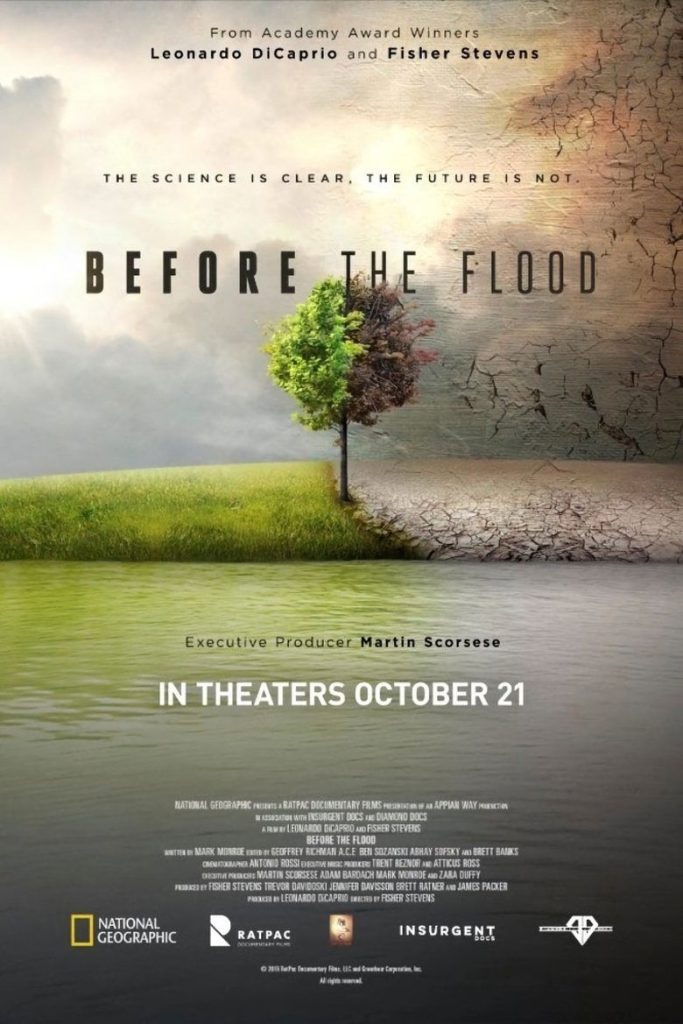
Before the Flood is a 2016 documentary that follows Leonardo DiCaprio as he travels the world to investigate the impacts of climate change. The film explores how rising temperatures, melting ice caps, deforestation, and pollution threaten ecosystems, wildlife, and human communities globally. It features interviews with scientists, activists, and political figures like Barack Obama and Elon Musk, discussing solutions such as renewable energy and policy changes. The documentary aims to educate viewers about the urgency of environmental action while highlighting both the challenges and hopeful initiatives underway.
Parent Guide
Before the Flood is an educational documentary that raises awareness about climate change through global exploration and expert interviews. It is appropriate for children aged 8 and older, with parental guidance recommended to discuss its themes and address any concerns. The film contains no violence, strong language, or sexual content, but it does include some disturbing images of environmental degradation that might be unsettling for sensitive viewers. It promotes positive messages about conservation and innovation.
Content breakdown
No violence or peril is depicted; the film focuses on environmental issues without scenes of conflict or danger to characters.
Includes images of deforestation, polluted areas, and melting ice caps that might be concerning or sad for some children, but these are presented in a documentary context without graphic intensity.
Occasional mild language, such as 'hell' or 'damn,' used in interviews or discussions, but no strong profanity.
No sexual content or nudity; the film is strictly focused on environmental topics.
No depiction of substance use; the content is centered on climate change and solutions.
Emotional intensity arises from the serious subject matter, including concerns about planetary future and impacts on communities, which might evoke worry or sadness, balanced by hopeful messages about action.
Parent tips
This documentary is suitable for children aged 8 and up, but parents should consider these tips: Watch together to explain complex topics like climate science and politics. The film includes some distressing images of environmental damage, such as deforestation and polluted landscapes, which might worry sensitive viewers. Use it as a springboard for discussions on eco-friendly habits, like recycling or conserving energy. Note that it has a PG rating for thematic elements and brief mild language. For younger kids, focus on the hopeful aspects, such as clean energy innovations. It's a great tool for teaching about global issues in an engaging way.
Parent chat guide
Parent follow-up questions
- What animals did you see in the movie?
- How can we help keep our planet clean?
- What is your favorite part of nature?
- Why is it important to protect forests?
- What are some ways we use energy at home?
- How do you think climate change affects animals?
- What solutions did the film suggest for climate change?
- How can individuals make a difference in environmental issues?
- What role do governments play in addressing climate change?
- Do you think the film effectively communicated the urgency of climate action?
- What are the pros and cons of renewable energy sources?
- How can we balance economic growth with environmental protection?
🎭 Story Kernel
The film's core isn't about climate change data—it's about the psychology of denial in the face of overwhelming evidence. DiCaprio serves as our proxy, moving from concerned observer to frustrated witness as he encounters politicians, scientists, and citizens who all acknowledge the crisis yet remain trapped in systems that perpetuate it. The real drama unfolds in the spaces between interviews, where we see how cognitive dissonance becomes our primary coping mechanism. The film suggests we're not lacking information but rather the emotional capacity to process what we already know.
🎬 Visual Aesthetics
Fisher Stevens employs a deliberate visual dichotomy: sweeping aerial shots of melting glaciers and burning forests contrast with claustrophobic, handheld interviews in sterile offices. The color palette shifts from the vibrant blues of healthy oceans to the sickly browns of polluted landscapes, creating a visual timeline of degradation. Most striking are the lingering shots on faces—the micro-expressions of politicians dodging questions, the weary determination of scientists. The camera often holds on empty spaces after interviews end, suggesting the void between awareness and action.
🔍 Details & Easter Eggs
💡 Behind the Scenes
DiCaprio was appointed UN Messenger of Peace for Climate Change just before filming began, lending official weight to his informal interview style. The crew traveled to five continents in under a year, with several locations (like Greenland's melting glaciers) changing visibly between scouting and filming. Director Fisher Stevens initially planned a more traditional documentary structure but shifted to DiCaprio's personal journey after realizing climate fatigue had set in with audiences. The title references both the biblical story and a Bob Dylan song about societal collapse.
Where to watch
Choose region:
- Disney Plus
- Amazon Video
- Apple TV Store
- Google Play Movies
- YouTube
- Fandango At Home
Trailer
Trailer playback is unavailable in your region.