
Beyond Hubble: Launching the Telescope of Tomorrow (2021)
Story overview
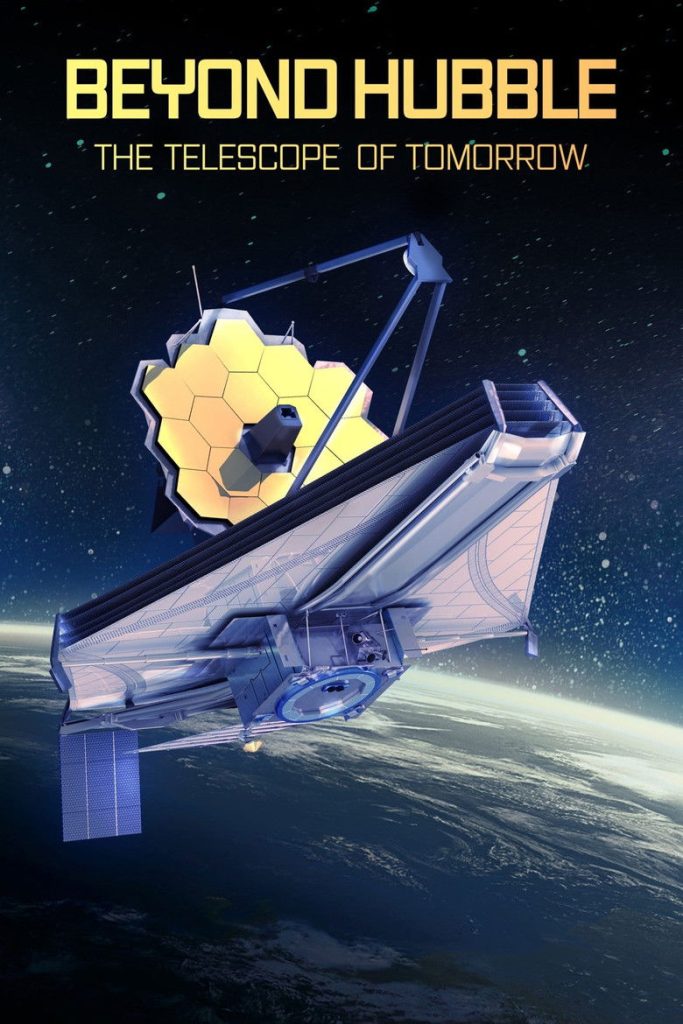
This 2021 documentary follows the international team of engineers and scientists as they design, build, test, and launch the James Webb Space Telescope—the most powerful space observatory ever created. The film captures the technical challenges, meticulous preparations, and collaborative efforts behind this groundbreaking mission while exploring the profound cosmological questions about the origins of the universe that this telescope aims to answer.
Parent Guide
Educational documentary about space exploration with no concerning content. Suitable for all ages with parental guidance for very young viewers who might need help understanding scientific concepts.
Content breakdown
No violence or peril depicted. The film shows engineering challenges and high-stakes moments during testing and launch, but these are presented as factual scientific processes rather than dramatic danger.
Nothing scary or disturbing. Contains awe-inspiring imagery of space and scientific equipment. Some children might find discussions about the vastness of space conceptually overwhelming but not frightening.
No offensive language. Professional scientific and engineering terminology used throughout.
No sexual content or nudity.
No depiction of substance use.
Mild emotional intensity during moments of engineering tension and successful launch celebrations. The overall tone is educational and inspirational rather than emotionally charged.
Parent tips
This educational documentary is suitable for most children, especially those interested in space, science, and engineering. It focuses on factual scientific content with no fictional elements, violence, or inappropriate material. Younger viewers might find some technical discussions complex, but the visual storytelling of rocket launches and space imagery is engaging. Consider watching together to explain concepts like deep space observation or international scientific collaboration.
Parent chat guide
Parent follow-up questions
- What was your favorite part of the rocket?
- Can you draw the telescope in space?
- What do you think scientists learn by looking at stars?
- Why do you think it took so many years to build the telescope?
- How do you think scientists felt when the telescope launched successfully?
- What would you want the telescope to discover?
- What engineering challenges shown in the film seemed most difficult to overcome?
- How does this telescope differ from the Hubble it's replacing?
- Why is international cooperation important for big science projects?
- What ethical considerations might arise from discovering Earth-like exoplanets?
- How does this mission demonstrate the relationship between technological innovation and scientific discovery?
- What economic and political factors might influence such large-scale scientific endeavors?
🎭 Story Kernel
The film isn't really about a telescope—it's about the human obsession with seeing beyond our limitations. The driving force isn't plot but process: the meticulous, years-long dance between ambition and physics. We witness how scientific pursuit becomes a form of faith, with engineers as modern-day monks dedicating lives to a machine that might fail. The real tension comes from watching brilliant minds confront the terrifying possibility that their life's work could be destroyed in minutes during launch. It's a meditation on patience in an impatient world, where the payoff (if it comes) arrives years after the struggle begins.
🎬 Visual Aesthetics
The cinematography masterfully contrasts scales—extreme close-ups of delicate mirror segments against vast clean room expanses, then shrinking the entire Earth to a marble during launch sequences. A muted palette of whites, grays, and metallic blues dominates the engineering scenes, making the sudden burst of orange flame during launch feel almost violent. The camera often adopts a documentary-style intimacy during human moments, then switches to godlike wide shots when capturing machinery. Most striking is how they visualize the invisible: using animation not as spectacle but as necessary translation of wavelengths human eyes can't perceive.
🔍 Details & Easter Eggs
💡 Behind the Scenes
The film crew gained unprecedented access to NASA's Goddard Space Flight Center clean rooms—some shots required 40-minute decontamination procedures per person. Several engineers featured are actual James Webb team members, not actors. Most striking: the launch footage combines multiple camera angles from the actual December 2021 launch with carefully recreated sound design, since space launches are mostly silent in vacuum. The 'golden mirror' segments were filmed using the actual flight spares, worth millions, handled under strict supervision.
Where to watch
Choose region:
- HBO Max