
Big (1988)
Story overview
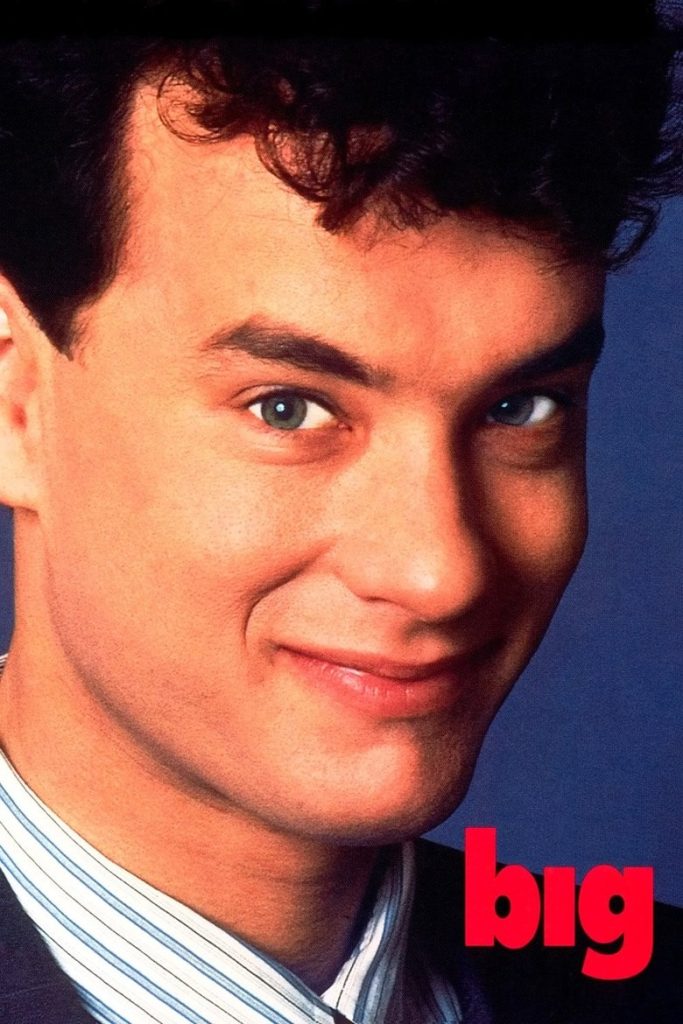
Big is a 1988 fantasy comedy-drama about 13-year-old Josh Baskin who, after being denied access to a carnival ride for being too short, makes a wish to be 'big' at a mysterious fortune-telling machine. The next morning, he wakes up in the body of a 30-year-old man (played by Tom Hanks) while retaining his childlike mind and personality. The film follows Josh as he navigates adult life in New York City, getting a job at a toy company, living independently, and experiencing his first romantic relationship, all while trying to find a way to return to his normal age.
Parent Guide
A charming family film that thoughtfully explores childhood and adulthood through a fantasy premise. While dealing with adult themes like work and romance, it does so through the innocent perspective of a child in an adult's body, making complex topics accessible for children. The tone remains light and humorous throughout.
Content breakdown
No physical violence. Some mild peril when Josh is chased by bullies early in the film (before transformation) and when he's nearly discovered as not being a real adult. One scene shows Josh sleeping on the floor of a sketchy New York City hotel, which might cause mild concern for younger viewers.
The initial transformation scene might be slightly startling for very young children as Josh wakes up in an adult body. Some children might find the concept of suddenly being an adult unsettling. The fortune-telling machine has a slightly mysterious/magical quality but isn't frightening.
Very mild language including 'hell' and 'damn' used sparingly. No strong profanity. The language is appropriate for the PG rating.
Implied romantic relationship between Josh and Susan (Elizabeth Perkins) including kissing and sleeping in the same bed (no sexual activity shown). One scene shows Josh's adult body shirtless (non-sexual, when he's examining his transformation). Some mild innuendo that will likely go over younger children's heads.
Adults are shown drinking alcohol socially at parties and business functions. One scene shows Josh trying champagne at a party and making a face (he doesn't like it). No drunkenness or substance abuse depicted.
Some emotional moments when Josh misses his family and childhood, and during the bittersweet ending when he must choose between staying as an adult or returning to being a child. The tone remains generally upbeat and humorous throughout, with emotional moments handled gently.
Parent tips
This film explores themes of childhood innocence versus adult responsibilities in a gentle, humorous way. Key discussion points include: the value of maintaining childlike wonder and creativity in adulthood; the complexities of adult relationships and workplace dynamics; and the importance of honesty in relationships. The movie presents adult situations (work, romance, independence) through the lens of a child's perspective, making them accessible for family viewing. The fantasy premise allows for meaningful conversations about growing up without being overly intense.
Parent chat guide
Parent follow-up questions
- What was your favorite toy in the movie?
- How did Josh feel when he woke up big?
- Would you like to be big like Josh?
- Why was it hard for Josh to act like a grown-up?
- What was the funniest part when Josh didn't know how to be an adult?
- What would you do if you were big for a day?
- What did Josh learn about being an adult versus being a kid?
- How did being a kid help Josh at his job?
- What would be the hardest part about suddenly being grown up?
- What does the film suggest about losing childhood innocence as we grow up?
- How does the movie portray the differences between childlike and adult perspectives on life?
- What commentary does the film make about corporate culture versus creative freedom?
🎭 Story Kernel
At its heart, 'Big' explores the fantasy of skipping childhood's powerlessness while exposing adulthood's hollow victories. Josh Baskin's wish isn't for maturity itself, but for the agency denied to him as a child—the ability to make his own choices and be taken seriously. The film cleverly inverts the typical coming-of-age narrative: instead of a child learning adult lessons, we see an adult re-learning childhood's genuine joys. Tom Hanks' performance captures the tragedy of someone who achieves his dream only to realize it was never what he truly wanted. The movie suggests that childhood's magic isn't in innocence but in authenticity—something easily lost when we trade play for prestige.
🎬 Visual Aesthetics
Penny Marshall's direction uses visual contrasts to emphasize Josh's dual existence. The corporate office's sterile grays and blues clash with the vibrant colors of his childhood bedroom and the carnival. Key scenes employ low-angle shots when Josh is physically adult but emotionally childlike, making spaces feel imposing. The FAO Schwarz piano sequence—the film's visual centerpiece—uses wide shots to capture the pure, unselfconscious joy missing from his adult life. Costuming subtly tracks his transformation: the ill-fitting suit gradually replaced by clothes that actually fit his borrowed body, mirroring his uncomfortable adaptation to a world he never truly wanted to join.
🔍 Details & Easter Eggs
💡 Behind the Scenes
Tom Hanks studied his 8-year-old co-star David Moscow's movements to perfect his childlike physicality, even copying how Moscow ate and ran. The iconic floor piano was a real custom-built instrument that cost $100,000 in 1988 money. Robert De Niro was originally considered for the adult Josh role before Hanks was cast. The famous 'shrimp cocktail' scene was almost cut for being too silly but became one of the film's most memorable moments. Penny Marshall became the first female director to helm a film that grossed over $100 million.
Where to watch
Choose region:
- Disney Plus
- Hulu
- Amazon Video
- Apple TV Store
- Google Play Movies
- YouTube
- Fandango At Home
Trailer
Trailer playback is unavailable in your region.