
Big Hero 6 (2014)
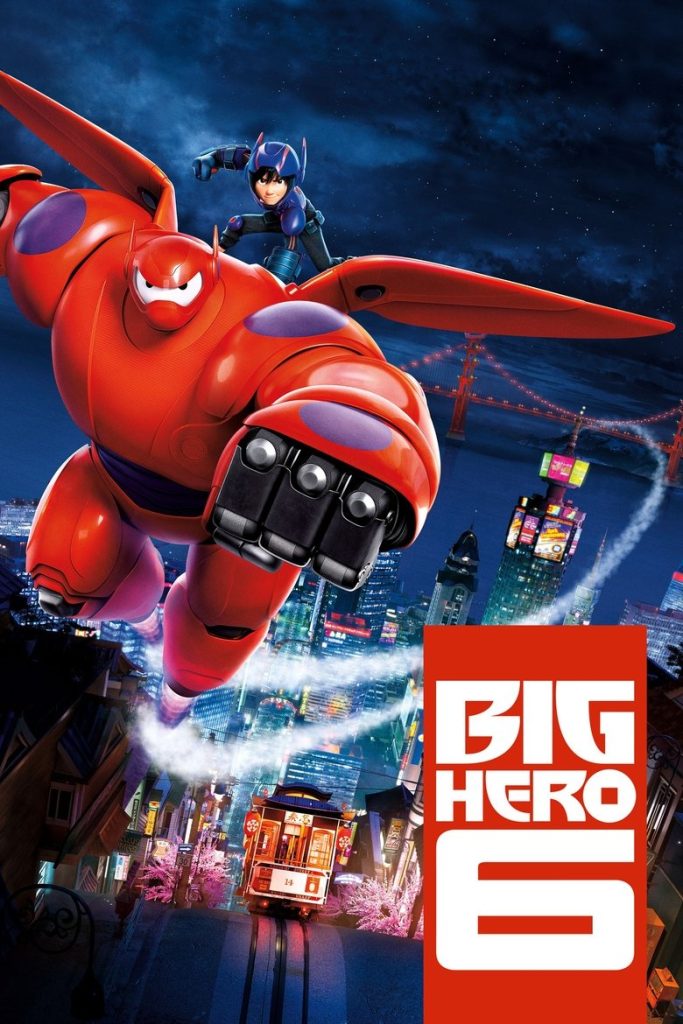
Story overview
Big Hero 6 is an animated adventure about Hiro Hamada, a brilliant young inventor who forms an unlikely friendship with Baymax, a gentle healthcare robot. After a tragic event, Hiro and Baymax team up with Hiro's friends to create high-tech suits and become superheroes. Together they investigate a mysterious threat to their city, learning about teamwork, loss, and using technology for good along the way.
Parent Guide
A superhero adventure with positive messages about friendship and innovation, but contains moderate action violence and emotional themes of loss.
Content breakdown
Superhero battles with robots, explosions, and combat scenes. Characters are in peril but injuries are generally non-graphic. Some destruction of property.
A masked villain might be intimidating to younger viewers. Some intense action sequences and emotional moments involving loss.
No offensive language noted.
No sexual content or nudity.
No substance use depicted.
Themes of grief and loss, including a significant character death. Emotional moments of sadness and anger that might be intense for sensitive viewers.
Parent tips
This PG-rated film contains moderate action violence with superhero battles, robots fighting, and explosions, though injuries are generally non-graphic. There's emotional intensity around themes of loss and grief, including a significant character death that might be upsetting for sensitive viewers. The film promotes positive messages about friendship, innovation, and using intelligence to solve problems rather than violence.
Parent chat guide
Parent follow-up questions
- What was your favorite robot in the movie?
- How did Baymax help people feel better?
- What colors did you see in the city?
- How did the friends help each other?
- What made you laugh in the movie?
- How did Hiro change from the beginning to the end of the movie?
- What made Baymax a good friend?
- Why was it important for the characters to work as a team?
- How did the characters use science and technology to help people?
- What would you invent if you could make anything?
- What different ways did characters deal with their feelings of loss?
- How did the movie show that intelligence can be more powerful than strength?
- What responsibilities come with creating new technology?
- How did the characters balance their personal goals with helping their community?
- What makes someone a true hero in this story?
- How does the film explore the ethics of technology and innovation?
- What commentary does the movie make about grief and healing processes?
- How do the characters' different personalities contribute to their team's success?
- What real-world parallels can you draw to the film's themes of scientific responsibility?
- How does the movie challenge traditional superhero tropes?
🎭 Story Kernel
At its core, 'Big Hero 6' is about channeling grief into creation rather than destruction. Hiro's journey begins with revenge—using his genius to hunt down the man he believes killed his brother. The film's true conflict isn't superhero versus villain, but Hiro's internal struggle between Tadashi's compassionate legacy (embodied by Baymax's programming) and his own rage. The resolution comes when Hiro realizes Tadashi's true invention wasn't the microbots, but Baymax—a caregiver designed to heal. The team becomes Hiro's new support system, transforming individual trauma into collective purpose.
🎬 Visual Aesthetics
San Fransokyo's hybrid aesthetic—cable cars weaving through pagoda rooftops—visually represents the film's theme of synthesis. The color palette shifts dramatically with emotional tone: warm golds and reds dominate the domestic scenes with Aunt Cass, while Krei's corporate lair uses sterile blues and whites. Baymax's design is genius in its simplicity—a blank canvas that reflects emotional states (his red armor literally emerges from Hiro's anger). The microbots' fluid, organic movement contrasts with the team's clunky, homemade suits, emphasizing that true power comes from adaptability, not polished technology.
🔍 Details & Easter Eggs
💡 Behind the Scenes
San Fransokyo was created by digitally merging San Francisco with Tokyo landmarks, requiring artists to study both cities' architecture and light. Baymax's voice actor, Scott Adsit, recorded lines while holding a balloon to mimic the character's breathing rhythm. The microbots' movement was inspired by swarm behavior in nature, with animators studying bird flocks and fish schools. Director Don Hall discovered Baymax's design in a robotics lab at Carnegie Mellon—the original inflatable vinyl robot was designed for healthcare.
Where to watch
Choose region:
- Disney Plus
- fuboTV
- Amazon Video
- Apple TV
- Google Play Movies
- YouTube
- Fandango At Home
Trailer
Trailer playback is unavailable in your region.