
Big Sharks Rule (2018)
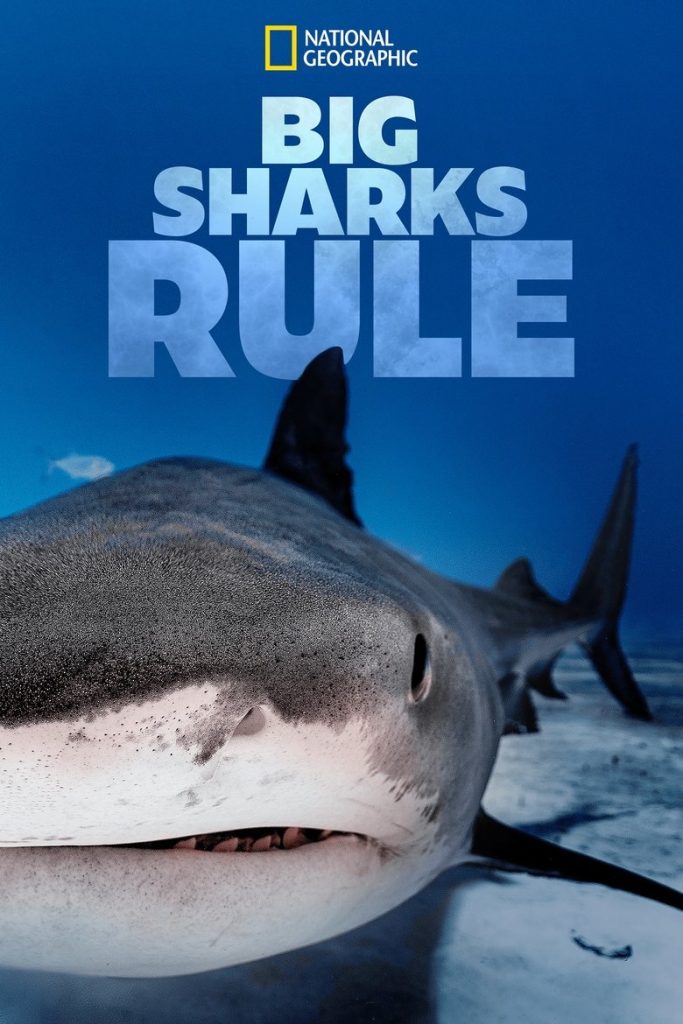
Story overview
Big Sharks Rule is a 2018 documentary TV movie that explores the dramatic coastal waters of South Africa, known as 'shark central.' The film showcases various giant shark species, including great whites, tiger sharks, bull sharks, ragged tooth sharks, and whale sharks, highlighting their dominance in these nutrient-rich, turbulent ocean environments. It focuses on the natural behaviors and ecological roles of these apex predators without dramatizing or sensationalizing their presence.
Parent Guide
This documentary is generally family-friendly, focusing on educational content about sharks in their natural environment. It lacks dramatized violence, strong language, or inappropriate themes, but the realistic footage of large sharks might be intense for younger children. Recommended for ages 8 and up with parental guidance for sensitive viewers.
Content breakdown
Sharks are shown hunting and feeding in their natural habitat, which includes scenes of them catching prey like fish. This is presented factually without graphic or gory details. No human peril or aggressive behavior towards humans is depicted.
The sight of large sharks, such as great whites, might be frightening to some children, especially in close-up shots. The documentary maintains a calm, informative tone without jump scares or intense music to heighten fear. Disturbing content is minimal.
No offensive or strong language is present. The narration is educational and suitable for all ages.
No sexual content or nudity. The focus is solely on marine wildlife.
No depiction of alcohol, drugs, or tobacco use.
Emotional intensity is low, centered on wonder and education about sharks. Some children might feel awe or slight anxiety during shark footage, but it is not designed to be emotionally overwhelming.
Parent tips
This documentary is educational and suitable for children interested in marine life, but parents should note that it features realistic footage of large sharks in their natural habitat, which might be intense for very young or sensitive viewers. Consider watching together to discuss the sharks' behaviors and the ocean ecosystem. The film presents factual information without graphic violence or frightening dramatizations, making it a good choice for family viewing with appropriate age guidance.
Parent chat guide
Parent follow-up questions
- Did you see the big fish in the water?
- What colors were the sharks?
- Can you make a shark sound?
- What did you learn about how sharks find food?
- Why do you think the water in South Africa is called 'shark central'?
- How are different sharks shown in the movie?
- How do the ocean currents in South Africa support such large shark populations?
- What ecological roles do the sharks play in their habitat?
- What conservation messages, if any, did the documentary imply?
- Analyze how the documentary portrays sharks compared to common media stereotypes.
- Discuss the filmmaking techniques used to capture shark behavior without interference.
- What are the implications of shark conservation for marine ecosystems?
🎭 Story Kernel
Beneath its aquatic monster-movie veneer, 'Big Sharks Rule' is a surprisingly blunt allegory for corporate predation. The film's true conflict isn't between humans and sharks, but between two predatory systems: the primal, instinct-driven ecosystem of the sharks and the cold, calculated greed of the marine research corporation funding the expedition. The protagonist, Dr. Arlen, is driven not by scientific curiosity but by career-saving desperation, willing to risk his team to secure funding. The sharks themselves are less mindless killers and more a force of natural consequence, attacking only when their territory is violated by human hubris and technological intrusion. The climax reveals the corporation engineered the sharks' aggression to create a crisis they could profitably 'solve,' making the humans the true architects of the carnage.
🎬 Visual Aesthetics
The film employs a stark, desaturated blue-grey palette for surface and lab scenes, evoking clinical detachment, which violently clashes with the warm, vibrant reds that bloom during attacks—a visual shorthand for life bleeding back into a sterile narrative. Director Carlo uses shaky, claustrophobic POV shots within the shark cages, making the audience feel trapped alongside the characters, but switches to smooth, majestic wide shots for the sharks themselves, granting them an unsettling, balletic grace. The CGI, while occasionally showing its seams, cleverly uses scale; the sharks are often shown in fragments (a tail, a shadow, a gaping maw) to emphasize their pervasive, unseen threat rather than relying solely on full-body reveals. The final shot, a slow pull-back from the bloodied water to the corporation's gleaming skyscraper logo reflected on the surface, is the film's most potent piece of visual symbolism.
🔍 Details & Easter Eggs
💡 Behind the Scenes
The lead shark animatronic, used for close-up shots, was nicknamed 'Bruce Jr.' by the crew in homage to the original 'Jaws' shark. Several key underwater sequences were filmed in a massive tank at Nu Boyana Film Studios in Bulgaria, with actors performing alongside real bull sharks (safely separated by reinforced plexiglass). Composer Elena Varga incorporated manipulated recordings of actual great white shark vocalizations and ship hull creaks into her minimalist, percussive score to create a deeply organic sense of dread.
Where to watch
Choose region:
- Disney Plus