
Black Panther (2018)
Story overview
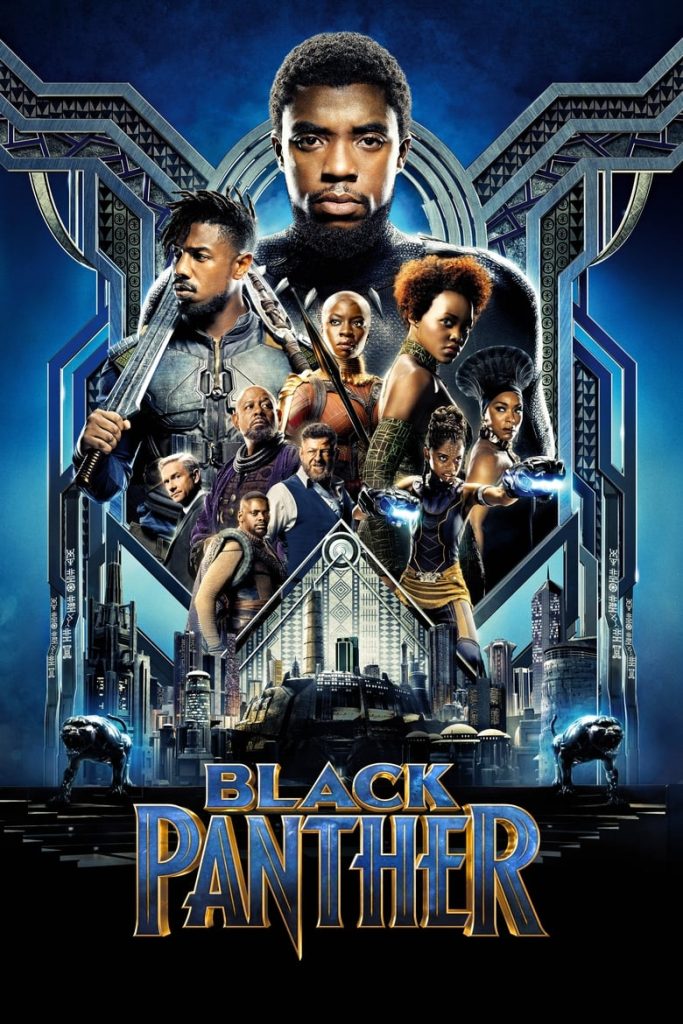
Black Panther follows T'Challa, the newly crowned king of the technologically advanced African nation of Wakanda, as he must defend his throne and country from a powerful challenger. The film explores themes of leadership, heritage, and responsibility while featuring spectacular action sequences and advanced technology. T'Challa must balance his duties as king with protecting Wakanda's secrets from those who would exploit them.
Parent Guide
Black Panther is a superhero film with positive messages about leadership and cultural pride, but contains action violence and mature themes suitable for older children and teens.
Content breakdown
Stylized action violence including hand-to-hand combat, car chases, and battles with futuristic weapons. Several characters die, though without graphic gore. Some intense fight scenes and perilous situations.
Some tense moments during battles and confrontations. A few scenes show characters in peril. The villain's backstory involves difficult themes that might be disturbing for sensitive viewers.
Minimal strong language. May include mild insults or brief rude gestures consistent with PG-13 rating.
No sexual content or nudity. Some characters wear traditional clothing that shows shoulders and arms.
No substance use shown. Traditional ceremonial drinks are consumed in cultural contexts.
Themes of grief, betrayal, and responsibility create emotional weight. Several character deaths and family conflicts may be impactful for sensitive viewers.
Parent tips
Black Panther is rated PG-13 for sequences of action violence and a brief rude gesture. The film contains intense combat scenes, including hand-to-hand fighting, car chases, and battles with futuristic weapons. While the violence is largely stylized without graphic gore, some scenes may be too intense for younger children.
Parents should be aware that the film deals with mature themes including political conflict, family betrayal, and the ethics of power. The story includes several character deaths that might be emotionally impactful for sensitive viewers. The film's positive messages about leadership, cultural pride, and responsibility make it excellent for family discussions.
Parent chat guide
You could also explore the moral dilemmas characters face, particularly around isolationism versus global responsibility. Discuss how the characters handle grief and loss throughout the story. These conversations can help children process the film's themes while developing critical thinking skills.
Parent follow-up questions
- What was your favorite part of the movie?
- Which character did you like best and why?
- What colors did you see in Wakanda?
- How did the Black Panther suit help T'Challa?
- What makes someone a good king or queen?
- What makes Wakanda special compared to other countries?
- Why was it important for T'Challa to protect his people?
- How did the characters show bravery in the movie?
- What did you learn about African culture from the film?
- How do you think technology can help people?
- What responsibilities come with being a leader like T'Challa?
- How does the movie show the importance of family and heritage?
- What are the pros and cons of Wakanda keeping its technology secret?
- How do the characters deal with loss and grief in the story?
- What messages about power and responsibility does the film convey?
- How does Black Panther address themes of colonialism and global responsibility?
- What commentary does the film make about isolationism versus international engagement?
- How are traditional values balanced with technological progress in Wakanda?
- What does the film suggest about the ethics of power and leadership?
- How does the movie challenge stereotypes about Africa and African culture?
🎭 Story Kernel
At its core, 'Black Panther' interrogates the ethics of isolationism versus global responsibility through the lens of a technologically advanced African nation that has never been colonized. The film's central conflict isn't just T'Challa versus Killmonger; it's Wakanda's centuries-old policy of secrecy versus the moral imperative to help oppressed people worldwide. Killmonger's radical vision—using Wakanda's resources to arm global revolutions—forces T'Challa to evolve from a traditionalist king into a leader who recognizes that true strength lies in compassionate outreach, not just defensive power. The movie ultimately argues that preserving culture doesn't require isolation, and that global justice requires shared resources and vulnerability.
🎬 Visual Aesthetics
The film's visual language masterfully contrasts tradition and futurism. Wakanda's design blends Afrofuturist architecture with tribal patterns, using a vibrant color palette where purples and golds signify royalty and spirituality, while cooler blues represent technology. The action sequences are distinctly choreographed: T'Challa's fights are fluid and ceremonial, honoring Wakandan tradition, while Killmonger's movements are raw, military-efficient, and brutal, visually embodying his outsider status. Director Ryan Coogler uses intimate close-ups during ritual scenes to emphasize emotional weight, while wide shots of Wakanda's landscapes celebrate African beauty without exoticization. The ancestral plane sequences, with their purple-hued astral landscapes, visually separate spiritual reality from physical world.
🔍 Details & Easter Eggs
💡 Behind the Scenes
The Wakandan language heard throughout the film is isiXhosa, a real South African language, chosen because its click consonants felt authentically African to director Ryan Coogler. Ruth E. Carter's Oscar-winning costume design incorporated 3D printing, traditional African weaving techniques, and beadwork from across the continent. The waterfall challenge scenes were filmed at Iguazu Falls in Brazil, while most Wakandan cityscapes were CGI built upon plates shot in South Africa. Letitia Wright (Shuri) performed many of her own stunt scenes, including the car chase in Busan.
Where to watch
Choose region:
- Disney Plus
- YouTube TV
- Amazon Video
- Apple TV
- Google Play Movies
- YouTube
- Fandango At Home
Trailer
Trailer playback is unavailable in your region.