
Bleed Out (2018)
Story overview
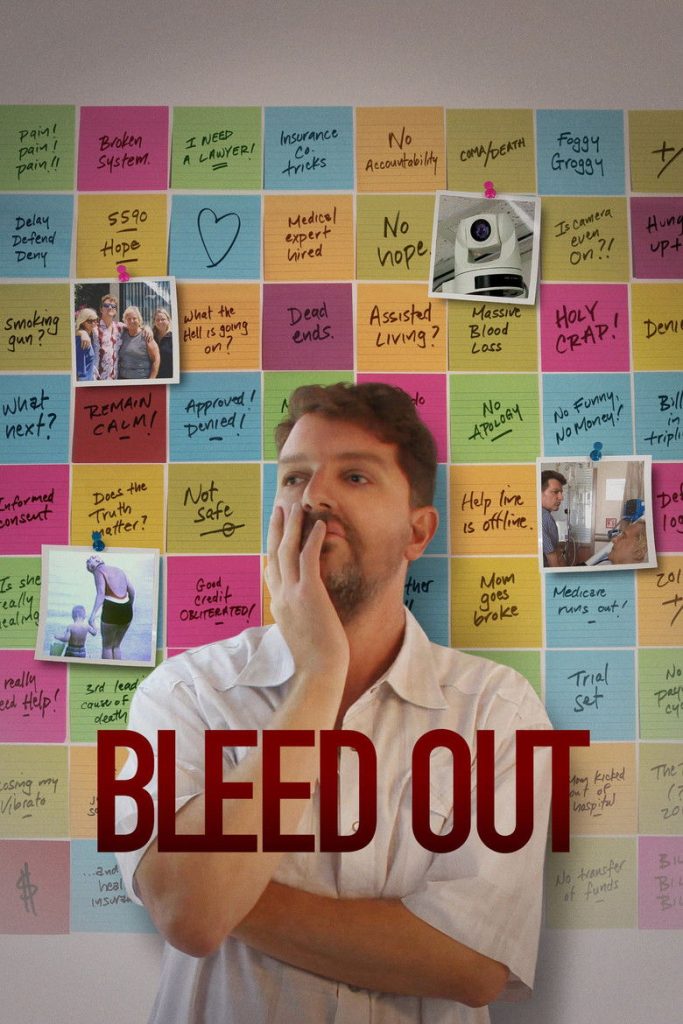
This documentary follows a son's personal journey after his mother suffers severe medical complications from a routine hip surgery, leading him to investigate systemic issues in the U.S. healthcare system. It combines personal video diary footage with investigative journalism elements.
Parent Guide
A serious documentary about medical malpractice and healthcare system investigation with strong emotional content but no graphic imagery.
Content breakdown
No violence or physical peril depicted. The peril is medical/emotional rather than physical danger.
Disturbing themes of medical trauma, permanent brain damage, and healthcare system failure. Includes footage of a comatose patient and discussions of life-altering medical outcomes. No jump scares or horror elements.
Occasional mild language related to frustration with the medical system. No strong profanity.
No sexual content or nudity.
No depiction of substance use.
High emotional intensity due to the personal story of a son watching his mother suffer permanent brain damage from medical treatment. Themes of grief, frustration with institutions, and family trauma are central.
Parent tips
This documentary deals with serious medical trauma and healthcare system failures. It's best suited for mature teens who can handle discussions about medical ethics, permanent disability, and institutional accountability. The emotional content is intense but presented in a factual documentary style.
Parent chat guide
Parent follow-up questions
—
—
- What did you learn about how families support each other during difficult times?
- Why do you think the son kept making videos about what happened to his mother?
- What systemic issues in healthcare does this documentary highlight?
- How does the film balance personal emotion with factual investigation?
- What responsibilities do healthcare providers have toward patients?
- How might this situation have been prevented?
🎭 Story Kernel
At its core, 'Bleed Out' is less about medical malpractice and more about the erosion of trust in institutions meant to protect us. The film follows Judd Burrows as his mother suffers a routine hip replacement that goes catastrophically wrong, leading to brain damage. What drives Judd isn't just justice but the desperate need to reclaim agency in a system that treats patients as statistics. The real antagonist isn't a single doctor but a healthcare bureaucracy that prioritizes liability over humanity. The movie expresses how medical trauma extends beyond the operating room, poisoning family dynamics and forcing ordinary people to become experts in systems designed to exclude them.
🎬 Visual Aesthetics
The cinematography employs a stark, documentary-like realism with handheld shots that create visceral intimacy during hospital scenes. A cold, sterile blue palette dominates medical settings, contrasting sharply with warmer tones in home flashbacks, visually emphasizing what was lost. The camera often lingers on medical equipment and paperwork, making bureaucracy feel ominously present. During the trial sequences, tight framing on faces captures micro-expressions of frustration and defeat. The visual style avoids melodrama, using restrained compositions that make the procedural details feel more horrifying through their mundanity.
🔍 Details & Easter Eggs
💡 Behind the Scenes
Director Steve Burrows based the film on his own family's experience with his mother's medical crisis, incorporating actual court documents and medical records. Many hospital scenes were shot in functioning medical facilities during off-hours to maintain authenticity. The legal dialogue was workshopped with real malpractice attorneys to ensure procedural accuracy. Judd Burrows is played by Steve Burrows himself, adding a layer of autobiographical intensity to the performance. The film's editing intentionally mirrors the fragmented, confusing nature of medical trauma through discontinuous narrative pacing.
Where to watch
Choose region:
- HBO Max
- HBO Max Amazon Channel