
Blood Brothers: Malcolm X & Muhammad Ali (2021)
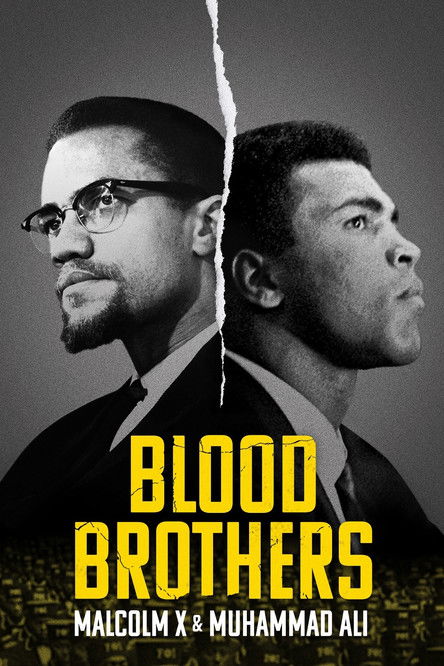
Story overview
This documentary explores the complex relationship between civil rights leader Malcolm X and boxing champion Muhammad Ali during the 1960s. It examines their friendship, ideological differences, and eventual estrangement against the backdrop of the Civil Rights Movement. The film uses archival footage and interviews to show how their interactions influenced both their personal lives and their public roles in American history.
Parent Guide
A historical documentary exploring complex relationships and social issues that requires maturity to understand context.
Content breakdown
Historical footage includes civil rights protests and tense situations, but no graphic violence is shown.
Discussions of racial injustice and historical conflicts may be emotionally challenging for sensitive viewers.
May include historical quotes with mild language, but nothing excessive or graphic.
No sexual content or nudity present in this documentary.
No depiction or discussion of substance use.
Deals with serious themes of racial injustice, political conflict, and personal betrayal that require emotional maturity.
Parent tips
This documentary deals with mature themes including racial injustice, political activism, and religious conflict that may require context for younger viewers. While there's no graphic violence, the historical footage includes tense situations and discussions of systemic racism that could be emotionally challenging. Parents should be prepared to discuss the historical context of the Civil Rights Movement and the different approaches to social change represented by these two iconic figures.
Parent chat guide
Parent follow-up questions
- What did you notice about how the people in the movie talked to each other?
- What colors or sounds did you remember from the movie?
- How did the music make you feel during different parts?
- What was your favorite part of watching this movie?
- Did you see any people being kind to each other?
- What did you learn about how Malcolm X and Muhammad Ali were friends?
- Why do you think people sometimes disagree even when they want similar things?
- What does it mean to stand up for what you believe in?
- How do you think cameras and TV changed how people saw these men?
- What questions do you have about the time period shown in the movie?
- How did Malcolm X and Muhammad Ali's approaches to civil rights differ?
- What role did religion play in their relationship and public lives?
- How did media coverage affect public perception of these figures?
- What historical events shown in the film still impact society today?
- Why is it important to understand different perspectives in history?
- How did the political climate of the 1960s shape the relationship between Malcolm X and Muhammad Ali?
- What can we learn about leadership and activism from their differing approaches?
- How does this documentary handle the complexity of historical interpretation?
- In what ways did their friendship challenge or reinforce their public personas?
- How do contemporary movements compare to the Civil Rights Movement shown in the film?
🎭 Story Kernel
The film's core isn't just a biographical overlap; it's a profound study of how ideology shapes, and ultimately strains, the bonds of brotherhood. It expresses the tension between personal loyalty and a higher calling to a movement. We see both men driven by a shared hunger for Black liberation and dignity, but Muhammad Ali is animated by a performative, public-facing faith and ambition, while Malcolm X is consumed by a more austere, intellectual, and ultimately questioning devotion. The movie's real engine is their diverging paths within the Nation of Islam—Ali's ascent as its global champion versus Malcolm's disillusionment and exile—showing how political and religious dogma can become the wedge that splits even the most powerful alliances.
🎬 Visual Aesthetics
The film employs a gritty, archival-rich aesthetic, blending crisp recreations with grainy historical footage to create a palpable sense of time and urgency. The camera often adopts an intimate, observational style in private moments, contrasting with wide, reverent shots during public speeches, visually mirroring the divide between the private man and the public icon. A subdued, sometimes desaturated color palette grounds the period, with warmer tones reserved for scenes of camaraderie that gradually cool as the rift widens. The editing rhythm mirrors their relationship—initially fluid and synchronous, becoming more jarring and discontinuous as ideological fractures emerge.
🔍 Details & Easter Eggs
💡 Behind the Scenes
The film is directed by Marcus A. Clarke, known for his documentary work, which informed the project's heavily researched, vérité-style approach. Key scenes were shot in locations that closely mirrored the actual settings, including recreations of the Hotel Theresa in Harlem. Actors Eli Goree (Ali) and Kingsley Ben-Adir (Malcolm X) underwent extensive physical and vocal training, with Ben-Adir studying Malcolm's speeches for months to capture his specific cadence and intensity. The production consulted with historians and surviving associates of both men to ensure narrative accuracy in depicting their complex relationship.
Where to watch
Choose region:
- Netflix
- Netflix Standard with Ads
Trailer
Trailer playback is unavailable in your region.