
Blood & Gold (2023)
Story overview
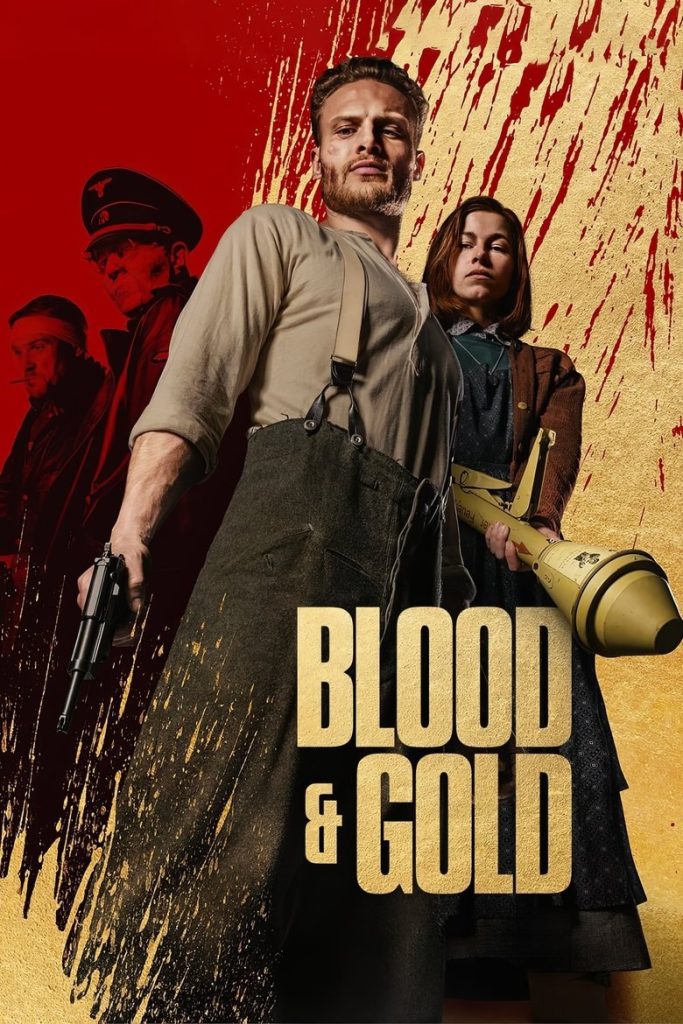
Set in the final days of World War II, this German action-drama follows a German soldier desperately searching for his missing daughter while evading a ruthless SS troop hunting for hidden Jewish treasure. The film explores themes of survival, morality, and the human cost of war through intense combat sequences and dramatic confrontations.
Parent Guide
Mature war drama with intense violence and adult themes. Suitable only for older teens and adults who can handle graphic combat and historical context.
Content breakdown
Frequent and graphic war violence including gun battles, explosions, hand-to-hand combat, blood, injuries, and death. Characters are shot, stabbed, and killed. Intense peril throughout as characters evade capture and face life-threatening situations.
War-related disturbing content including Nazi symbolism, persecution themes, and tense survival situations. Some scenes may be emotionally intense due to family separation and wartime brutality.
Some strong language likely present given the war setting and TV-MA rating, though specific content may vary. Expect wartime expletives and aggressive dialogue.
Minimal sexual content expected in a war film. Possibly some suggestive situations or brief romantic elements, but not the focus.
Possible wartime drinking or smoking typical of the period, but not a prominent element of the film.
High emotional intensity due to wartime survival themes, family separation, moral dilemmas, and life-or-death situations throughout the film.
Parent tips
This is a mature war film with significant violence and intense themes. Not suitable for younger children. Best for older teens and adults who can handle graphic war content and historical context. Watch with teens to discuss the historical realities of WWII and ethical dilemmas presented.
Parent chat guide
Parent follow-up questions
—
—
- What do you know about World War II?
- Why do you think the soldier is looking for his daughter?
- How do you think war affects families?
- How does the film handle the moral ambiguity of German soldiers during WWII?
- What commentary does the treasure hunt provide about greed and ideology?
- How realistic do you find the combat scenes compared to historical accounts?
- What ethical dilemmas did the main character face?
🎭 Story Kernel
Set in the dying gasps of World War II, the film strips away the grandiosity of war to reveal a gritty, localized struggle where the 'gold' represents both a curse and a catalyst for violence. It follows Heinrich, a German deserter, and Elsa, a resilient farmer, as they collide with an SS unit hunting for hidden Jewish treasure. The movie is less about the geopolitics of 1945 and more about the corrosive nature of greed and the primal instinct for survival. It explores how the moral vacuum created by a collapsing regime is filled by scavengers. Heinrich isn't fighting for a cause; he is fighting for the simple, human goal of returning to his daughter, making the film a subversion of the heroic soldier trope in favor of a desperate, personal odyssey.
🎬 Visual Aesthetics
Director Peter Thorwarth and cinematographer Christian Huck adopt a distinct 'Spaghetti Western' aesthetic, utilizing wide shots of the German countryside that mimic the desolate frontiers of Sergio Leone’s films. The visual palette is high-contrast, pitting the muddy, grey reality of the war's end against the vibrant, almost garish yellow of the hidden gold and the operatic deep reds of stylized violence. The framing often emphasizes isolation, positioning characters against vast, uncaring landscapes to highlight their vulnerability. Symbolism is heavy in the use of the village church and square, transforming communal spaces into arenas of carnage. This visual language bridges the gap between historical drama and grindhouse cinema, making the action feel visceral yet choreographed with a rhythmic, cinematic flair that elevates it above standard war fare.
🔍 Details & Easter Eggs
💡 Behind the Scenes
Director Peter Thorwarth, following the success of his high-concept horror film 'Blood Red Sky,' continues his collaboration with Netflix to bring a genre-heavy lens to German history. The film was primarily shot in the Czech Republic, specifically around the town of Výsluní, which provided the weathered, historical backdrop for the fictional village of Sonnenberg. Lead actor Robert Maaser, a former world champion in wheel gymnastics and a seasoned stuntman, performed many of his own physical sequences, lending an authentic, heavy-hitting physicality to Heinrich’s fight scenes. The production design meticulously recreated the 1945 setting while maintaining a stylized, cinematic edge.
Where to watch
Choose region:
- Netflix
- Netflix Standard with Ads
Trailer
Trailer playback is unavailable in your region.