Blue Giant (2023)
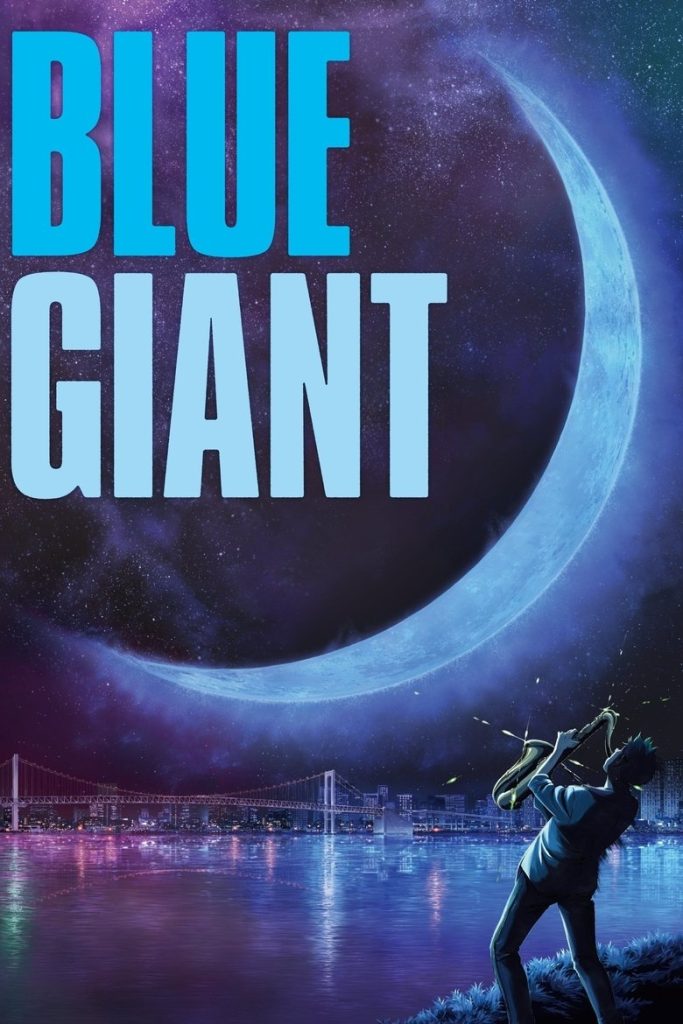
Story overview
Blue Giant follows a high school student named Dai Miyamoto who discovers jazz music and decides to pursue it passionately. He leaves his quiet hometown for Tokyo's vibrant music scene, determined to become a professional saxophonist. The film explores his journey as he learns that achieving greatness in music requires dedication, perseverance, and confronting personal challenges.
Parent Guide
An animated drama about a teenager's journey to become a professional jazz musician, focusing on dedication, growth, and artistic pursuit.
Content breakdown
No violence or physical peril depicted.
No scary or disturbing content; the film focuses on character development and musical themes.
No strong or offensive language noted.
No sexual content or nudity.
No depiction of substance use.
Contains emotional moments related to pursuing dreams, facing challenges, and personal growth, but nothing overwhelming.
Parent tips
This animated drama focuses on a teenager's pursuit of musical excellence and personal growth. The film portrays the challenges of pursuing a creative career, including intense practice sessions, performance anxiety, and the competitive nature of professional music. Parents should note the emotional intensity as the main character faces setbacks and self-doubt while chasing his dream.
The 120-minute runtime and mature themes about artistic dedication make this more suitable for older children and teens who can appreciate character-driven stories. While there's no concerning content, younger viewers might find the pacing slow and the focus on musical development less engaging than typical animated films.
Parent chat guide
During viewing, you could point out how the film shows the main character's growth through practice and perseverance. Note how he handles frustration and setbacks, which can lead to conversations about resilience.
After the movie, ask your child what they thought about the character's journey. Discuss whether pursuing excellence in any field requires similar dedication, and how the film portrays the balance between passion and the challenges of real life.
Parent follow-up questions
- What instrument did the main character play?
- Did you like the music in the movie?
- What was your favorite part?
- How did the character feel when he played music?
- What colors did you see in the animation?
- Why did the main character move to Tokyo?
- What does it mean to practice something a lot?
- How did the character feel when things were difficult?
- What did you learn about jazz music?
- What makes someone good at something like music?
- What challenges did the main character face in pursuing music?
- How does the film show what dedication to a skill requires?
- What did you think about the character's decision to leave home?
- How does the movie portray the difference between hobby and profession?
- What messages about following dreams did you notice?
- How does the film explore the concept of artistic greatness?
- What sacrifices do creative professionals often make according to the story?
- How realistic do you find the portrayal of the music industry?
- What does the film suggest about passion versus practical life choices?
- How does the main character's journey reflect broader themes about growing up?
🎭 Story Kernel
At its core, Blue Giant is an exploration of the monomaniacal pursuit of greatness and the "blue heat" of absolute passion. It transcends the typical underdog trope by framing jazz not just as a genre, but as a high-stakes emotional battlefield. The narrative centers on Dai Miyamoto’s unwavering conviction, which acts as a catalyst for his bandmates, Yukinori and Tamada. It interrogates the cost of ambition—the physical toll of practice, the social isolation, and the brutal honesty required to reach the pinnacle of an art form. The film expresses that true mastery isn't just about technical proficiency; it’s about the vulnerability of baring one's soul through an instrument, even when the world isn't listening, and the transformative power of a shared, fleeting moment of perfection that justifies every sacrifice made along the way.
🎬 Visual Aesthetics
Director Yuzuru Tachikawa employs a daring, expressionistic visual language to translate the invisible medium of sound into a tangible experience. While the film utilizes traditional 2D animation for character-driven moments, the performance sequences pivot into stylized, often polarizing 3D CGI and rotoscoping to capture the frantic, kinetic energy of jazz improvisation. These segments frequently dissolve into abstract metaphors—swirling colors, cosmic imagery, and jagged lines—that represent the internal emotional landscapes of the musicians. The cinematography mimics the spontaneity of a live recording, using aggressive camera movements and tight close-ups on sweat-slicked faces and vibrating reeds. This visual dissonance mirrors the nature of jazz itself: a disciplined structure that constantly threatens to break apart into beautiful, chaotic fragments of raw human expression, making the music feel physically present.
🔍 Details & Easter Eggs
💡 Behind the Scenes
The film’s musical backbone was composed and performed by world-renowned jazz pianist Hiromi Uehara, who also provided the piano parts for Yukinori. To ensure authenticity, professional musicians were recorded for each character: Tomoaki Baba for Dai’s saxophone and Shun Ishiwaka for Tamada’s drums. Director Yuzuru Tachikawa, known for Mob Psycho 100, spent years developing the project to ensure the animation synchronized perfectly with the complex jazz rhythms. The film adapts the 'Tokyo' arc of the manga, culminating in a performance at the fictional 'So Blue' club, which is modeled after the real-life Blue Note Tokyo.
Where to watch
Choose region:
- Netflix
- Netflix Standard with Ads
- Amazon Video
- Apple TV
- Google Play Movies
- YouTube
- Fandango At Home
- Plex
Trailer
Trailer playback is unavailable in your region.