
Blue, Painful, Fragile (2020)
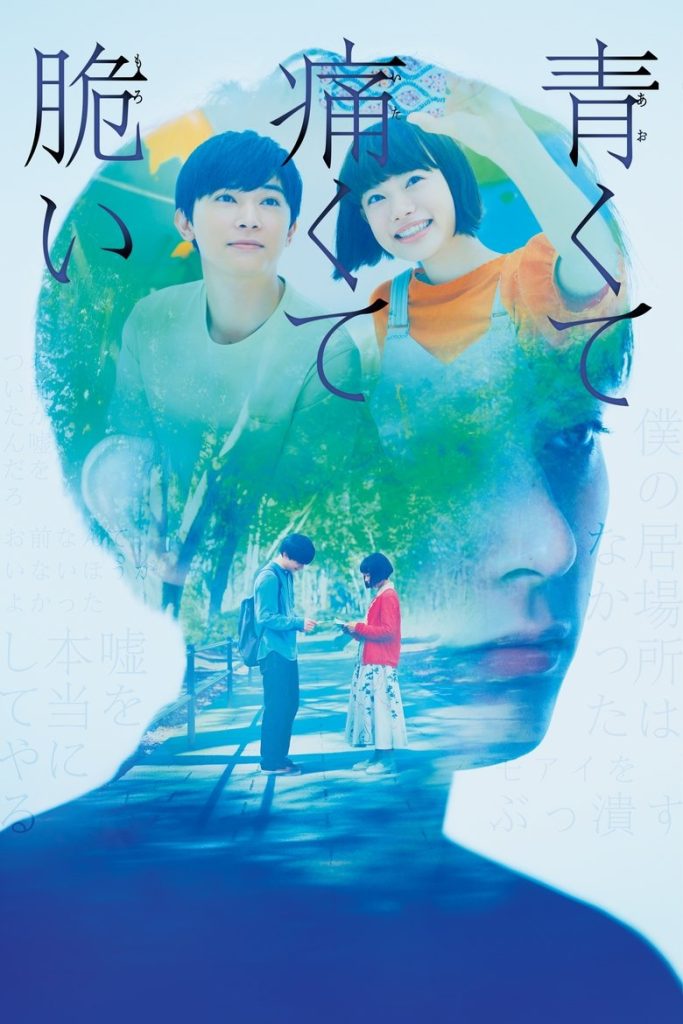
Story overview
Two college students who feel like outsiders form a secret society called 'Moai' with the ambitious goal of changing the world. Their plans take an unexpected turn when one of them mysteriously disappears, leading the other on a journey to uncover the truth while grappling with themes of friendship, purpose, and the challenges of young adulthood.
Parent Guide
A thoughtful Japanese drama about college students forming a secret society and dealing with a friend's disappearance. While not graphic, it deals with mature themes suitable for pre-teens and up who can handle emotional complexity and uncertainty.
Content breakdown
No physical violence shown. The primary peril comes from the mystery of a character's disappearance, which creates suspense but isn't depicted as violent or dangerous.
The disappearance creates a sense of unease and mystery. Some scenes may be emotionally intense as characters grapple with loss and uncertainty, but nothing is graphically disturbing or horror-oriented.
No strong language noted in the Japanese dialogue (with English subtitles). The conversation is typical of college-aged characters discussing philosophical and personal matters.
No sexual content or nudity. The focus is on platonic friendship and intellectual pursuits.
No depiction of alcohol, drugs, or tobacco use. Characters are shown in typical college settings without substance-related scenes.
Emotional intensity comes from themes of friendship, loss, identity, and the search for meaning. Characters experience anxiety, sadness, and uncertainty related to the disappearance and their personal journeys. Suitable for viewers who can handle emotional complexity.
Parent tips
This Japanese drama-adventure explores themes of friendship, identity, and ambition through the lens of college students. The disappearance plot creates suspense but isn't graphic. The emotional intensity comes from character relationships and the search for meaning. Suitable for mature children who can handle themes of loss and uncertainty.
Parent chat guide
Parent follow-up questions
—
- What do you think the 'Moai' group wanted to change about the world?
- How would you feel if your friend disappeared like in the movie?
- Why do you think the characters felt like outsiders? Have you ever felt that way?
- What do you think happened to the missing character? What clues did you notice?
- How does the film portray the transition from adolescence to adulthood? What pressures do the characters face?
- What commentary might the film be making about idealism versus reality? How do the characters' ambitions affect their relationships?
🎭 Story Kernel
The film explores how emotional trauma becomes a structural element in relationships, not as a flaw but as a defining characteristic. The central couple's dynamic isn't about healing or overcoming pain, but about learning to inhabit their shared fragility as a legitimate state of being. Their arguments follow precise, almost mathematical patterns - each escalation reveals another layer of their emotional blueprint. The movie suggests that some relationships aren't built on foundations but on fault lines, and that authenticity lies in acknowledging the seismic activity rather than pretending it doesn't exist. The ending's quiet acceptance of ongoing pain feels more revolutionary than any conventional resolution.
🎬 Visual Aesthetics
Director Yuki Yamada employs a desaturated blue-gray palette that makes the rare moments of warmth feel almost painful in their intensity. The camera maintains a clinical distance during emotional scenes, using static wide shots that force viewers to sit with discomfort rather than offering comforting close-ups. Action is minimal but deliberate - a teacup placed too firmly on a table carries more weight than any shouted argument. The recurring visual motif of cracked but repaired pottery serves not as a metaphor for healing, but as documentation of damage that remains visible. Windows and doorframes create natural frames within frames, emphasizing the characters' self-imposed emotional boundaries.
🔍 Details & Easter Eggs
💡 Behind the Scenes
Lead actors Riko Narumi and Kento Yamazaki reportedly lived together in character for two weeks before filming to develop their uncomfortable intimacy. The apartment set was built with intentionally uneven floors to create subtle physical discomfort during scenes. Director Yamada banned the color red from all sets and costumes, forcing the production design team to work within a narrow emotional spectrum. The film's quietest scene - a seven-minute sequence of shared silence - required 42 takes to achieve the precise balance of connection and distance Yamada demanded.
Where to watch
Choose region:
- Netflix
- Netflix Standard with Ads
Trailer
Trailer playback is unavailable in your region.