
Bone Trouble (1940)
Story overview
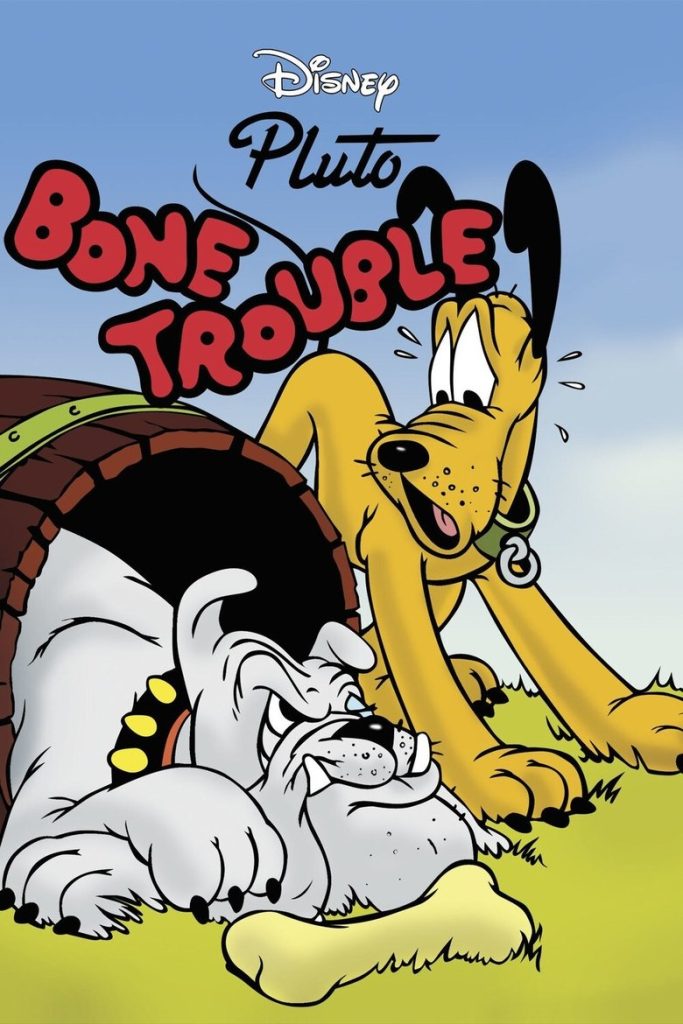
This short animated comedy from 1940 features Pluto the dog getting into mischief. After taking a bone from another dog, Pluto finds himself being chased and seeks shelter in a carnival funhouse. The cartoon uses slapstick humor and visual gags as Pluto navigates the Hall of Mirrors environment. It's a classic Disney short that showcases Pluto's playful personality in a lighthearted adventure.
Parent Guide
A brief, classic Disney cartoon with mild chase sequences and visual humor suitable for young children.
Content breakdown
Cartoonish chasing and mild peril as Pluto runs from another dog; no physical contact or injury shown.
Hall of Mirrors creates amusing distorted reflections rather than frightening imagery; tone is consistently playful.
No dialogue beyond typical cartoon sound effects and expressive noises.
No sexual content or nudity; characters are animated animals.
No references to or depiction of substance use.
Brief moments of excitement during chase scenes, but resolution is quick and positive.
Parent tips
This 9-minute cartoon is appropriate for most children, featuring classic Disney animation with minimal concerning content. The chase sequence involves cartoonish pursuit without real danger, and the Hall of Mirrors setting creates amusing visual distortions rather than scary imagery. Parents should note this was made in 1940, so animation style and pacing may differ from modern cartoons, but the simple story and physical comedy remain accessible to young viewers.
Parent chat guide
Parent follow-up questions
- What was your favorite funny part?
- How did the mirrors make Pluto look different?
- Why do you think Pluto took the bone?
- What would you do if someone was chasing you?
- Did you think Pluto was scared or having fun?
- Why do you think the cartoon shows chasing as funny?
- How did the Hall of Mirrors help Pluto hide?
- What lesson might Pluto learn about taking things?
- How does the animation make the chase exciting but not scary?
- What would you do differently if you were Pluto?
- How does this 1940s animation style compare to modern cartoons?
- What makes cartoon violence different from real violence?
- Why might the filmmakers have chosen a carnival setting?
- How does the short film create humor without dialogue?
- What messages about consequences does the story suggest?
- How does this cartoon reflect entertainment values of its time period?
- What techniques create physical comedy without real peril?
- How might different audiences interpret the 'stealing' premise?
- What makes classic animation like this enduringly appealing?
- How does the film balance mischief with lighthearted tone?
🎭 Story Kernel
At its core, 'Bone Trouble' explores the psychological weight of guilt and the human tendency to bury trauma rather than confront it. The protagonist's obsession with uncovering literal bones serves as a metaphor for unearthing repressed memories of a past accident they feel responsible for. The narrative cleverly subverts the typical 'whodunit' structure—the mystery isn't about identifying a killer, but about the protagonist's own complicity in a tragedy they've spent years rationalizing. The driving force isn't justice, but a desperate need for self-absolution that ultimately proves destructive when the truth offers no catharsis, only confirmation of their worst fears about themselves.
🎬 Visual Aesthetics
The film employs a desaturated, almost sepia-toned color palette for present-day scenes, visually mirroring the dusty, forgotten nature of the buried secrets. This contrasts sharply with the brief, saturated flashbacks, making the past feel more vivid and haunting than the present. The camera work is deliberately shaky and claustrophobic during excavation scenes, using tight close-ups on hands sifting through dirt and extreme angles within the dig site to amplify anxiety. The most striking visual motif is the recurring shot of skeletal shadows—cast by ordinary objects like tree branches or fence posts—which blurs the line between reality and the protagonist's bone-focused paranoia, suggesting the past is always present, just beneath the surface.
🔍 Details & Easter Eggs
💡 Behind the Scenes
The lead actor, known for comedic roles, reportedly insisted on performing all the strenuous digging scenes themselves to authentically capture the physical exhaustion, leading to genuine blisters that are visible on screen. The primary dig site was a real archaeological excavation on a filmmaker's private property, repurposed after a dig was completed. Notably, the prop skeletons were created by a retired forensic anthropologist to ensure anatomical accuracy, and the sound of bones being handled was foleyed using a mix of dried pasta and chicken wings to achieve the perfect brittle, unsettling crunch.
Where to watch
Choose region:
- Disney Plus