
Born in China (2016)
Story overview
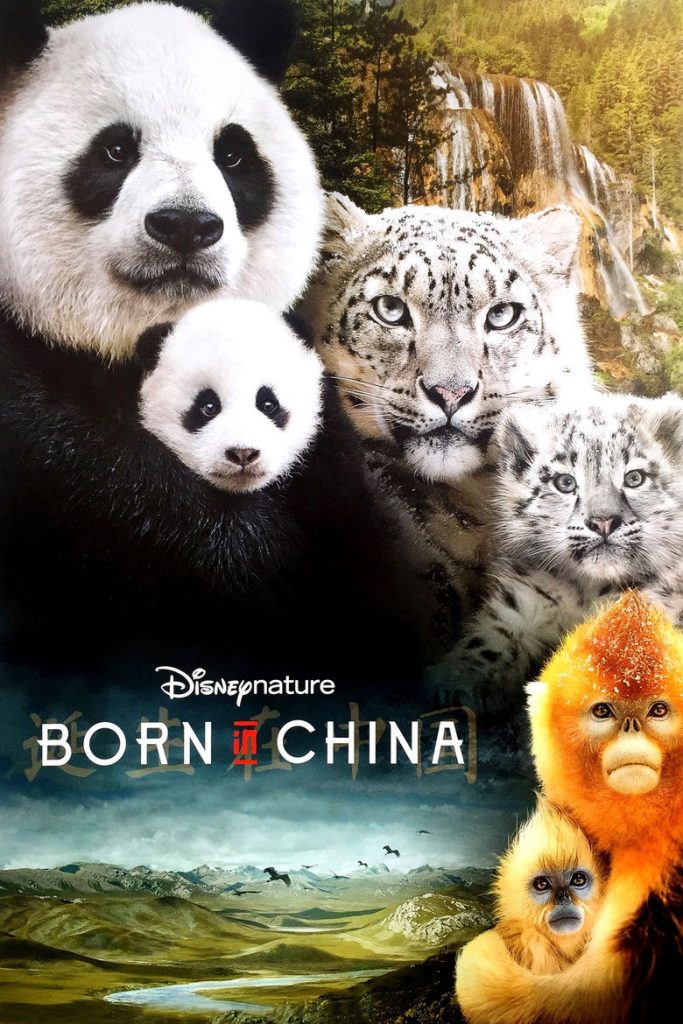
Born in China is a 2016 nature documentary that explores the lives of three animal families in China's wilderness: a panda bear and her cub, a golden monkey adjusting to a new sibling, and a snow leopard mother raising her two cubs. Narrated by John Krasinski, the film offers intimate, family-friendly insights into these animals' daily struggles and triumphs.
Parent Guide
A gentle, educational documentary suitable for most children, with minimal concerning content.
Content breakdown
Brief scenes of snow leopard hunting small prey (non-graphic, no blood shown). Mild peril as animals face natural dangers like harsh weather.
Younger viewers might find the snow leopard's hunting or animal struggles briefly intense. The golden monkey's sibling displacement could evoke mild sadness.
No offensive language; narration is educational and family-appropriate.
No sexual content; animals are shown naturally without focus on mating.
No depiction of substance use.
Emotional moments related to animal family bonds and survival, but handled gently. Suitable for sensitive viewers with parental guidance.
Parent tips
This G-rated documentary is generally safe for all ages but contains mild emotional moments. Watch with young children to discuss animal behaviors and natural cycles. The snow leopard's hunting scenes are brief and non-graphic. Ideal for nature-loving families.
Parent chat guide
Parent follow-up questions
- Which animal was your favorite?
- What did the baby panda learn from its mom?
- How do the animals show they love their families?
- Why did the golden monkey feel left out?
- How does the snow leopard protect her cubs?
- What can we learn from how these animals live?
- How does the film show the balance of nature?
- What challenges do the animals face in their habitats?
- Why is it important to protect these species?
- How does the documentary portray animal emotions and intelligence?
- What conservation issues are implied in the film?
- How does the cinematography enhance the storytelling?
🎭 Story Kernel
At its core, 'Born in China' is less about wildlife spectacle and more about universal family dynamics playing out in extreme environments. The film expresses the relentless cycle of life, death, and survival through intimate animal portraits. What drives the characters—a snow leopard mother protecting her cubs, a panda mother learning to let go, a golden snub-nosed monkey finding belonging—are the same fundamental needs that drive humans: protection, independence, and connection. The documentary uses these animal families as mirrors for human experiences, showing how survival instincts and emotional bonds intersect across species in China's diverse ecosystems.
🎬 Visual Aesthetics
The film employs breathtaking cinematography that alternates between epic landscape shots and incredibly intimate close-ups. The camera language is patient and observational, often using telephoto lenses to capture natural behaviors without intrusion. Color palettes shift dramatically between environments: the stark blue-whites of Tibetan plateaus, the lush greens of bamboo forests, and the golden hues of central China's forests. Action sequences—particularly the snow leopard hunts and monkey troop conflicts—are shot with documentary realism rather than dramatic flair, creating tension through natural pacing rather than editing tricks. Symbolism emerges through seasonal transitions that mirror life cycles.
🔍 Details & Easter Eggs
💡 Behind the Scenes
Filmed over three years across China's most remote regions, the production involved Chinese and international crews using specialized equipment to withstand extreme conditions. The snow leopard sequences required particular innovation—crews used camouflaged camera hides and spent months tracking the elusive cats in Qinghai's 4,500-meter altitudes. Interestingly, the panda footage was shot at the Chengdu Research Base, while other animals were filmed entirely in the wild. Voice actor John Krasinski recorded narration after seeing rough cuts, with his delivery specifically calibrated to avoid anthropomorphizing while maintaining emotional resonance. The film represents DisneyNature's first China-focused documentary collaboration.
Where to watch
Choose region:
- Disney Plus
- Amazon Video
- Apple TV Store
- Google Play Movies
- YouTube
- Fandango At Home
Trailer
Trailer playback is unavailable in your region.