
Boyz n the Hood (1991)
Story overview
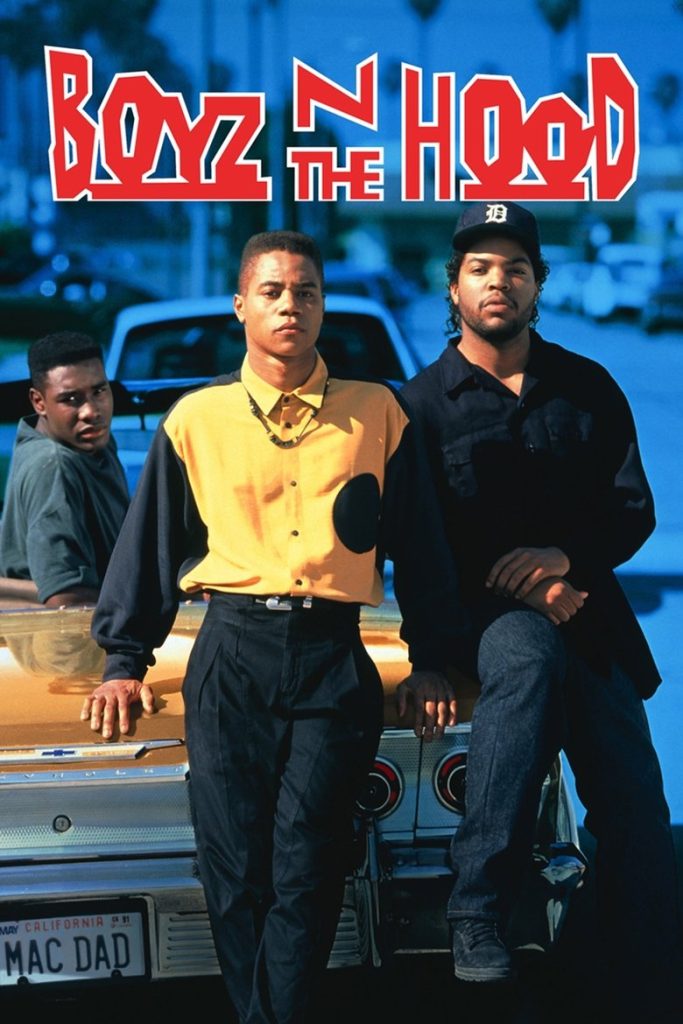
Boyz n the Hood is a 1991 crime drama film that follows three young men growing up in a South Central Los Angeles neighborhood. The story explores their experiences with friendship, family, and the challenges of urban life, including violence and systemic issues. It portrays their coming-of-age journey as they navigate personal choices and societal pressures in their community.
Parent Guide
This R-rated film contains mature content including violence, strong language, and substance use. It deals with serious themes of urban life, violence, and systemic challenges that require parental guidance for teenage viewers.
Content breakdown
Contains realistic violence including shootings and confrontations that result in serious consequences.
Includes tense situations and realistic depictions of urban violence that may be disturbing.
Frequent strong language including racial slurs and profanity throughout the film.
Contains some sexual references and situations but no explicit nudity.
Includes depictions of alcohol consumption and drug references.
Deals with heavy themes including loss, violence, and systemic injustice that create emotional intensity.
Parent tips
This R-rated film contains mature themes including violence, strong language, and substance use that make it unsuitable for younger viewers. Parents should preview the movie to assess its appropriateness for their teenagers, as it deals with serious social issues and realistic depictions of urban life. Consider watching together with older teens to facilitate discussions about the film's themes and messages.
Parent chat guide
Parent follow-up questions
- What did you notice about how the friends treated each other?
- How did the families in the movie show they cared?
- What places did you see in the neighborhood?
- What colors or sounds did you remember from the movie?
- How did people help each other in the story?
- How did the friends support each other through challenges?
- What choices did the characters make that affected their lives?
- How did family relationships influence the characters?
- What did you learn about different neighborhoods?
- What emotions did you notice the characters feeling?
- How did peer pressure affect the characters' decisions?
- What community challenges did the film highlight?
- How did the characters balance friendship with personal goals?
- What systemic issues did the movie suggest exist?
- How did different parenting approaches impact the characters?
- How does the film portray the cycle of violence in communities?
- What commentary does the movie make about systemic inequalities?
- How do the characters' aspirations conflict with their circumstances?
- What role does personal responsibility play versus societal factors?
- How does the film use setting to enhance its themes?
🎭 Story Kernel
At its core, 'Boyz n the Hood' is a raw examination of the systemic forces that shape—and often prematurely end—Black male life in South Central Los Angeles. It's not merely a story about gang violence, but a tragic exploration of how poverty, absent fatherhood, and institutional neglect conspire to limit choices and dictate fates. Tre's journey is defined by the tension between his father Furious's guiding, disciplined presence and the gravitational pull of the streets embodied by his friends Ricky and Doughboy. The film argues that survival isn't just about avoiding bullets; it's a daily psychological battle to maintain one's humanity and future in an environment engineered for failure. The climactic violence isn't senseless—it's the logical, heartbreaking outcome of this engineered pressure cooker.
🎬 Visual Aesthetics
Director John Singleton employs a grounded, almost documentary-like visual style that roots the film in stark reality. The camera often sits static, observing domestic scenes and neighborhood life with an unflinching gaze, making the sudden bursts of violence feel all more jarring and real. The color palette is dominated by the sun-bleached concrete, dusty skies, and the muted greens of struggling lawns, visually emphasizing the harsh, drained environment. Symbolism is direct and powerful: the ever-present ice cream truck's jingle becomes a chilling auditory motif of normalcy masking danger, while the recurring shots of airplanes flying overhead symbolize the distant, unreachable world beyond the confines of the hood.
🔍 Details & Easter Eggs
💡 Behind the Scenes
John Singleton was only 23 years old when he wrote and directed the film, making him the youngest person ever nominated for the Best Director Oscar at the time. The iconic 'Crenshaw Mafia' crew jackets worn by Doughboy and his friends were not props; they were real jackets from the neighborhood, borrowed from local residents to ensure authenticity. Cuba Gooding Jr. (Tre) and Ice Cube (Doughboy) were both relatively unknown at the time, with Ice Cube's casting marking a significant, and critically acclaimed, transition from rap music to acting. Much of the film was shot on location in South Central LA, often using real neighborhood residents as extras.
Where to watch
Choose region:
- Netflix
- Starz Apple TV Channel
- Amazon Video
- Apple TV
- Google Play Movies
- YouTube
- Fandango At Home
Trailer
Trailer playback is unavailable in your region.