
Breaker Morant (1980)
Story overview
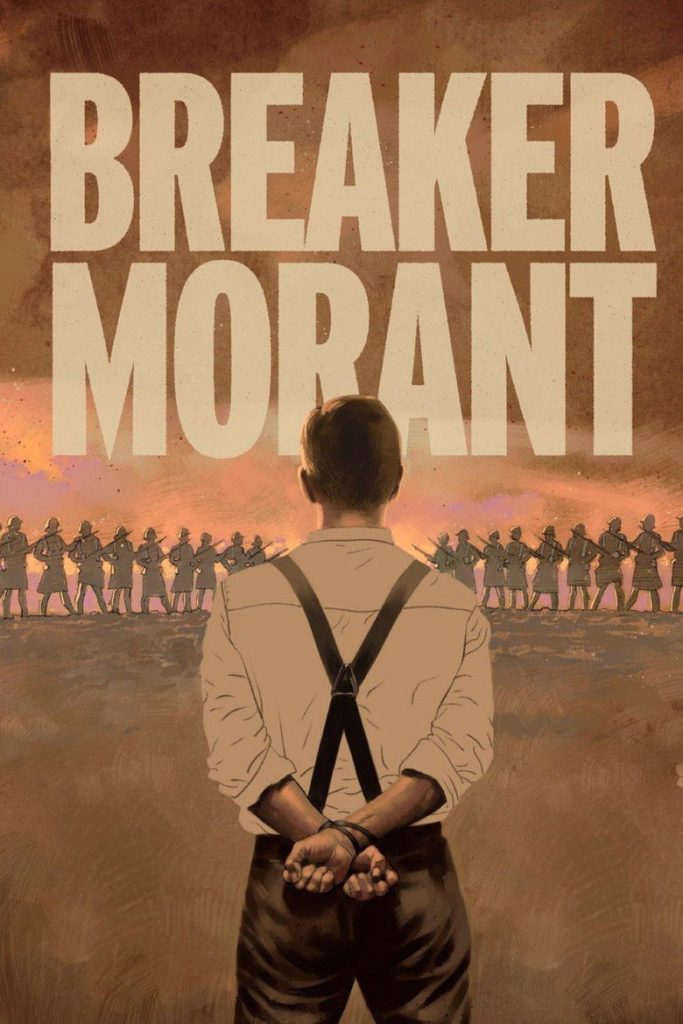
Breaker Morant is a 1980 Australian historical drama set during the Boer War, focusing on the court-martial of three Australian lieutenants accused of executing Boer prisoners. The film explores themes of military justice, scapegoating, and the moral complexities of war, as the defense challenges the proceedings to reveal political motivations behind the trial.
Parent Guide
Breaker Morant is a thought-provoking historical drama that deals with mature themes of war, justice, and morality. It is best suited for teenagers and adults due to its complex narrative and moderate violent content. The film offers educational value in understanding historical events and ethical debates, but younger children may find the courtroom setting and war themes confusing or intense.
Content breakdown
Includes war-related violence such as battlefield scenes with gunfire, explosions, and soldiers in peril. There are depictions of executions (off-screen or implied) and discussions of killing prisoners. No graphic gore is shown, but the violence is integral to the plot and historical context.
Some scenes may be tense or disturbing due to the trial's high stakes and themes of injustice. The portrayal of soldiers facing execution and the emotional weight of the courtroom drama could be unsettling for sensitive viewers, but there are no jump scares or horror elements.
Contains occasional mild language typical of war settings, such as 'damn' or 'hell.' No strong profanity or offensive slurs are present. The dialogue is mostly formal and focused on legal and historical discussions.
No sexual content or nudity. The film is centered on military and courtroom events without romantic or intimate scenes.
Includes social drinking in a few scenes, such as characters having alcohol in military settings. No depiction of drunkenness or substance abuse.
Emotionally intense due to the serious themes of betrayal, justice, and life-and-death stakes in the trial. Characters show strong emotions like anger, frustration, and resignation, which may resonate with viewers but are not overly distressing. The film encourages reflection rather than causing high anxiety.
Parent tips
This film is suitable for mature children and teens due to its historical and courtroom drama themes. It contains moderate violence related to war, including battlefield scenes and discussions of executions, but no graphic gore. The dialogue is complex, dealing with legal and ethical issues, making it more appropriate for older viewers who can understand the context. Parents may want to watch with younger teens to discuss the historical events and moral questions raised.
Parent chat guide
Parent follow-up questions
—
—
- What did you learn about the Boer War from this movie?
- Why do you think the soldiers were put on trial?
- How did the lawyers try to help the soldiers in court?
- How does the film critique the military justice system?
- What are the moral implications of following orders in war?
- Discuss the political motivations behind the trial. How does this relate to modern conflicts?
- How does the film portray the tension between duty and conscience?
🎭 Story Kernel
The film's core is a brutal deconstruction of imperial hypocrisy. It's not about whether Morant and his men are guilty, but about the necessity of their guilt for the British Empire's political convenience. The characters are driven by the collision between the brutal, unwritten rules of colonial warfare and the sanitized legal fictions required for diplomacy. Morant, Handcock, and Witton become sacrificial pawns—scapegoats for a failed military strategy and a government desperate for a truce with the Boers. Their trial exposes how justice is subordinated to political expediency, where the real crime isn't murder, but getting caught doing the empire's dirty work.
🎬 Visual Aesthetics
The film employs a stark, sun-bleached visual palette that mirrors its moral desolation. The courtroom scenes are claustrophobic, shot with tight framing and harsh lighting that feels interrogative, trapping the defendants. In contrast, the flashbacks to the veldt are expansive yet equally harsh, using wide shots to emphasize the characters' isolation and the brutal, ungovernable nature of guerrilla war. The transition between these two worlds—the chaotic reality of combat and the ordered fiction of the courtroom—is the film's central visual metaphor. The action is blunt and unglamorous, emphasizing the grim practicality of the Bushveldt Carbineers' methods.
🔍 Details & Easter Eggs
💡 Behind the Scenes
The film is based on the true story of the 1902 court-martial. Actor Edward Woodward, who played Breaker Morant, reportedly found the role so emotionally draining he would often isolate himself between takes. The courtroom scenes were filmed in the actual Old Adelaide Gaol in South Australia, adding a layer of authentic grimness. Director Bruce Beresford insisted on historical accuracy in uniforms and settings, but took creative license with the dialogue to sharpen the philosophical and political arguments, drawing heavily from the play by Kenneth Ross. The film was a major success in Australia but faced distribution challenges internationally, eventually becoming a cult classic through critical acclaim.
Where to watch
Choose region:
- Amazon Prime Video
- HBO Max
- HBO Max Amazon Channel
- Criterion Channel
- Amazon Prime Video with Ads
- Shout! Factory Amazon Channel
- Shout! Factory TV
- Amazon Prime Video Free with Ads
- Tubi TV
- Amazon Video
Trailer
Trailer playback is unavailable in your region.