
Breslin and Hamill: Deadline Artists (2018)
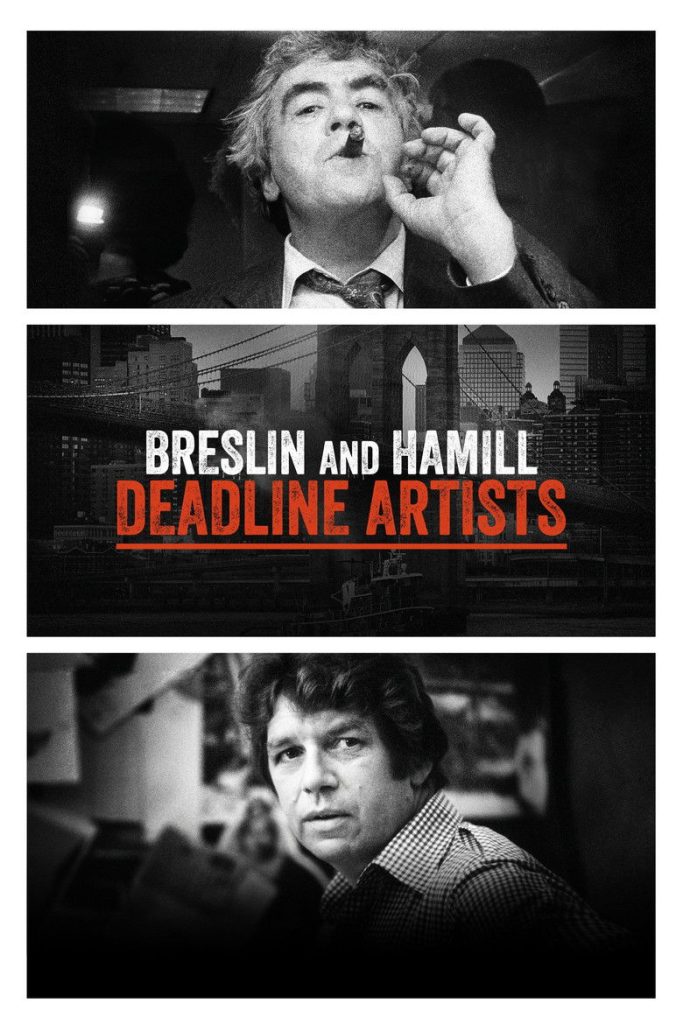
Story overview
This 2018 documentary celebrates the lives and work of legendary New York City newspaper columnists Jimmy Breslin and Pete Hamill. Through archival footage, interviews with colleagues and admirers, and readings of their work, the film explores how these journalists captured the spirit of New York City during turbulent times from the 1960s onward. It focuses on their courageous writing, their connection to the city's working-class communities, and their impact on journalism and public discourse.
Parent Guide
A thoughtful documentary about influential journalists that's most appropriate for mature teenagers due to adult themes and language. The film celebrates writing and civic engagement but requires context about historical social issues.
Content breakdown
Discussions of real-world violence including riots, crime, and political violence from the 1960s-1990s. No graphic violence shown, but archival footage may include protest scenes and brief news clips. References to assassinations and urban unrest.
Some disturbing themes discussed including racism, poverty, political corruption, and social injustice. Historical footage of urban decay and protests might be unsettling for sensitive viewers. No horror elements or jump scares.
Strong language used in direct quotes from the columnists' work (including occasional profanity). Interviews may include mild to moderate cursing. The language reflects the gritty, authentic style of the journalists being profiled.
No sexual content or nudity. The focus is entirely on journalism and social history.
Brief references to the journalists' social drinking culture (bars, newspaper offices). No glorification or explicit substance use shown. Some discussion of urban problems related to drugs in historical context.
Emotionally weighty discussions of social injustice, urban decline, and political turmoil. Passionate arguments about civic issues. Nostalgic tone mixed with serious social commentary. May evoke strong feelings about injustice or urban change.
Parent tips
This documentary is best suited for mature teens interested in journalism, history, or New York City culture. The TV-MA rating primarily reflects strong language used in direct quotes from the columnists' work and discussions of adult themes like crime and social unrest. Parents should be aware that the film includes discussions of real-world violence, political corruption, and social issues from the 1960s-1990s. While there's no graphic violence shown, the subject matter requires emotional maturity to process.
Parent chat guide
Parent follow-up questions
—
—
- What do you think a newspaper columnist does?
- Have you ever read a newspaper or news website?
- What makes a city special to the people who live there?
- How does this documentary show the power of writing to create change?
- What contemporary journalists remind you of Breslin and Hamill's approach?
- How has New York City changed since the periods shown in the film?
- Why do you think these journalists focused on ordinary people's stories?
- How does social media today compare to newspaper columns in influencing public opinion?
🎭 Story Kernel
The film isn't a nostalgic eulogy for print journalism, but a visceral study of character forged in deadline pressure. It expresses how identity becomes inseparable from the craft—Breslin's pugnacious voice and Hamill's literary conscience weren't just tools, but their very selves. What drives them is not merely the pursuit of truth, but the compulsion to bear witness and shape the narrative of their city in real-time. Their rivalry and kinship reveal that journalism, at its best, is a form of deeply personal, accountable storytelling where the writer's soul is on the line with every column.
🎬 Visual Aesthetics
The visual language mirrors the tactile, gritty world of mid-century newsrooms. Archival footage is presented with a graininess that feels earned, not filtered, immersing us in the ink-and-smoke atmosphere. Interviews are tightly framed, often in the subjects' personal spaces filled with books and memorabilia, emphasizing how their work consumed their lives. The editing rhythm mimics a newspaper's pace—brisk montages of printing presses and bustling cityscapes alternate with slower, reflective moments, visually contrasting the chaos of the deadline with the solitude of writing.
🔍 Details & Easter Eggs
💡 Behind the Scenes
The documentary was directed by Jonathan Alter, John Block, and Steve McCarthy. It features never-before-seen archival footage from personal collections and local New York TV stations. Notably, the film includes audio recordings of Breslin and Hamill reading their own work, captured later in life, adding a poignant layer of their reflective voices. Much of the contemporary interviewing was done in the subjects' homes and old haunts in New York, blending past and present seamlessly.
Where to watch
Choose region:
- HBO Max
- HBO Max Amazon Channel
Trailer
Trailer playback is unavailable in your region.