
Bright Lights: Starring Carrie Fisher and Debbie Reynolds (2017)
Story overview
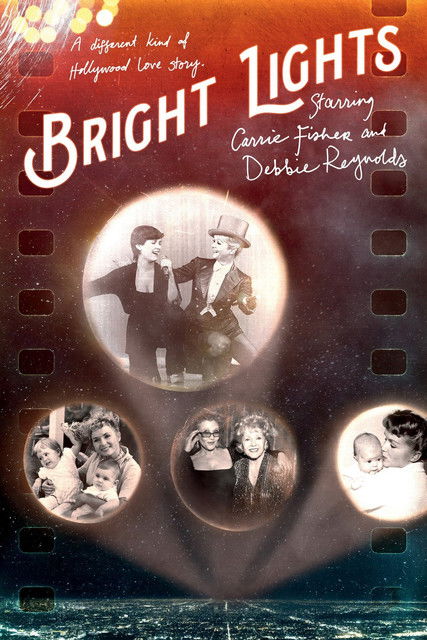
This documentary provides an intimate look at the lives of Hollywood icons Debbie Reynolds and her daughter Carrie Fisher, exploring their close but complex relationship, careers, and personal struggles through interviews, archival footage, and behind-the-scenes moments.
Parent Guide
A thoughtful documentary about Hollywood's most famous mother-daughter duo that explores complex family dynamics, mental health, and the price of fame. While not visually intense, the emotional content and mature themes make it most appropriate for mature middle schoolers and older.
Content breakdown
No violence or peril depicted. The film focuses on personal and emotional challenges rather than physical danger.
Some emotionally intense discussions about mental health struggles (bipolar disorder), addiction, and family conflicts. Archival footage shows Carrie Fisher's struggles with substance abuse, but nothing graphic. The deaths of both women shortly after filming may be emotionally affecting.
Occasional mild profanity (e.g., 'hell,' 'damn'). Carrie Fisher uses some stronger language in archival interviews, but it's infrequent and not extreme.
No sexual content or nudity. Brief discussion of Eddie Fisher's infidelity, but presented in a factual, non-explicit manner.
Discussion of Carrie Fisher's past drug use and addiction. Some archival footage shows her discussing substance abuse issues. Also references to prescription medication for mental health. Presented as part of her life story rather than glorified.
High emotional content exploring complex family relationships, mental health challenges, and the pressures of fame. The knowledge that both women died shortly after filming adds poignancy. Some scenes show emotional vulnerability and family tensions.
Parent tips
This documentary deals with mature themes including mental health, addiction, and family dysfunction. While not graphic, it discusses Carrie Fisher's bipolar disorder and substance abuse, and touches on Eddie Fisher's infidelity. The tone is often candid and emotional, with some strong language. Best for mature tweens and teens who can handle discussions of adult issues.
Parent chat guide
Parent follow-up questions
—
- What did you learn about being in movies?
- How were Debbie and Carrie similar or different?
- Why do you think Carrie Fisher was so open about her struggles?
- How did fame affect this family's relationships?
- What did you think about how they supported each other?
- How does this documentary challenge Hollywood glamour stereotypes?
- What insights does it provide about intergenerational trauma?
- How did Carrie Fisher use humor to cope with difficult situations?
- What does this film reveal about the pressures of celebrity families?
🎭 Story Kernel
At its core, 'Bright Lights' explores the symbiotic yet strained relationship between Carrie Fisher and Debbie Reynolds—not just as mother and daughter, but as two women navigating the complexities of fame, aging, and legacy. The film drives home how their identities are inextricably linked to their public personas, yet they yearn for private, unvarnished connection. Debbie's declining health and Carrie's role as her caretaker add layers of role reversal, highlighting the cyclical nature of their dependency. It's less about Hollywood glamour and more about the raw, often messy reality of familial love under the microscope of stardom.
🎬 Visual Aesthetics
The cinematography employs intimate, handheld shots that create a fly-on-the-wall feel, emphasizing the documentary's raw authenticity. The color palette is warm and nostalgic, with golden hues in their home contrasting with the stark, clinical lighting of backstage areas, symbolizing the divide between private life and public performance. Visual symbolism is subtle but powerful—like the cluttered memorabilia in their house representing the weight of their past. The camera often lingers on quiet moments, such as Debbie's frail movements or Carrie's weary expressions, underscoring the vulnerability beneath their iconic facades.
🔍 Details & Easter Eggs
💡 Behind the Scenes
The documentary was filmed over several years, capturing candid moments between Fisher and Reynolds as their health issues progressed. It was initially intended as a TV special but expanded into a feature after the directors, Alexis Bloom and Fisher Stevens, realized the depth of the material. Much of the footage was shot in their shared Beverly Hills compound, which was filled with Hollywood memorabilia, adding an authentic backdrop. The film's release was posthumous for both women—Carrie Fisher died in December 2016, and Debbie Reynolds passed away just one day later, making the documentary a poignant, unintended farewell.
Where to watch
Choose region:
- HBO Max
- Google Play Movies
- YouTube
- Amazon Video
Trailer
Trailer playback is unavailable in your region.