
Buffalo Kids (2024)
Story overview
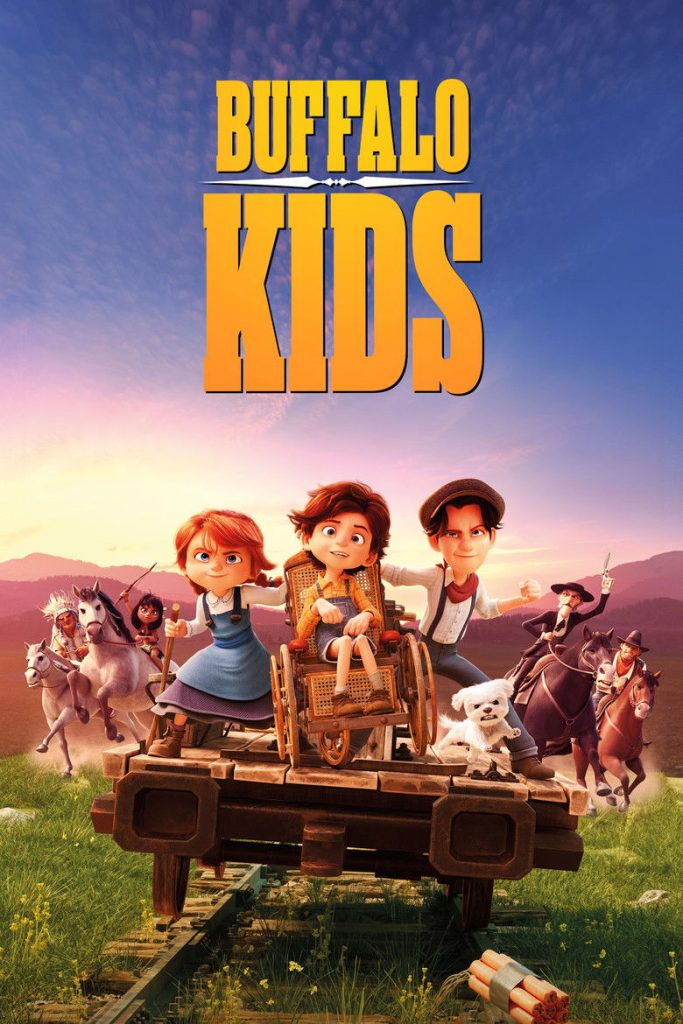
In 1886, orphaned Irish siblings Mary and Tom arrive in New York City by ship and soon embark on a thrilling cross-country adventure aboard a transcontinental 'Orphan Train.' Along the way, they meet an extraordinary new friend who profoundly impacts their lives, leading to heartwarming discoveries and exciting escapades.
Parent Guide
A wholesome animated adventure with positive themes, suitable for most children. Mild peril and emotional moments are balanced with humor and heartwarming friendship.
Content breakdown
Some suspenseful sequences involving train travel, minor accidents, and characters in brief danger (e.g., slipping, near-misses). No physical violence or injuries shown.
Mildly intense scenes related to orphanhood and separation; some dark or stormy settings during travel. Nothing graphic or nightmare-inducing.
No offensive language; dialogue is family-friendly with occasional mild exclamations (e.g., 'oh no!').
No sexual content, nudity, or romantic elements beyond innocent friendships.
No depiction of alcohol, drugs, or smoking.
Emotional themes of loss, loneliness, and finding belonging; balanced with uplifting moments of joy and friendship. May evoke empathy but not distress.
Parent tips
This animated family adventure features themes of friendship, resilience, and finding home. Expect mild peril during travel sequences and emotional moments related to orphanhood. The film's positive messages about courage and connection make it suitable for most children, but younger viewers might need reassurance during tense scenes.
Parent chat guide
Parent follow-up questions
- What was your favorite part of the train ride?
- How did the friends help each other?
- What made you laugh in the movie?
- Why were Mary and Tom traveling alone?
- What challenges did they face on their journey?
- How did meeting their new friend make things better?
- What can we learn from how the siblings adapted to new situations?
- How does the film portray historical orphan trains?
- What does the story say about creating your own family?
- How does the film handle themes of loss and resilience?
- What historical accuracy or creative liberties did you notice?
- How might this story relate to modern immigration experiences?
🎭 Story Kernel
At its heart, Buffalo Kids is a poignant exploration of resilience and the redefinition of family. Following Irish orphans Mary and Tom as they navigate the treacherous 1880s American West, the narrative transcends a simple adventure tale by introducing Nick, a boy with cerebral palsy. The film moves beyond the tropes of the Orphan Train era to examine how shared vulnerability creates unbreakable connections. It expresses the idea that belonging is not a destination found on a map, but a community built through empathy and mutual support. By centering a character with significant physical challenges in a rugged Western setting, the story challenges traditional notions of heroism, suggesting that true strength lies in the spirit's ability to adapt and the heart's capacity to include those often left behind by society.
🎬 Visual Aesthetics
The visual language of Buffalo Kids balances the gritty reality of the 19th-century frontier with a vibrant, stylized 3D animation palette. Directors Solís and Galocha utilize wide-angle shots to capture the intimidating vastness of the American plains, contrasting the claustrophobic, soot-stained streets of New York with the golden, open horizons of the West. Symbolism is woven into the character designs; Nick’s specialized wheelchair is not just a prop but a marvel of period-appropriate engineering that symbolizes his agency and the group's ingenuity. The lighting often shifts from the harsh, high-contrast sun of the desert to soft, warm campfire glows, mirroring the emotional transition from the cold uncertainty of orphanhood to the burgeoning warmth of a found family. The animation of Nick’s expressions is particularly nuanced, conveying deep emotion without relying on traditional physical mobility.
🔍 Details & Easter Eggs
💡 Behind the Scenes
Buffalo Kids marks another collaboration between Pedro Solís and Juan Jesús García Galocha, who previously worked together on the successful animated feature Mummies. Produced by 4 Cats Pictures alongside Core Animation, the film was highly anticipated following the viral global success of Solís's short film Cuerdas, which holds a Guinness World Record for the most awards won by an animated short. The production team focused heavily on historical research to ensure the 1880s setting felt authentic, from the locomotive designs to the specific cultural clashes inherent in the westward expansion, all while maintaining a family-friendly tone.
Where to watch
Choose region:
- Now TV Cinema
- Google Play Movies
- YouTube
- Apple TV Store
- Rakuten TV
- Amazon Video
- Sky Store
Trailer
Trailer playback is unavailable in your region.