
Buried Truth of the Maya (2020)
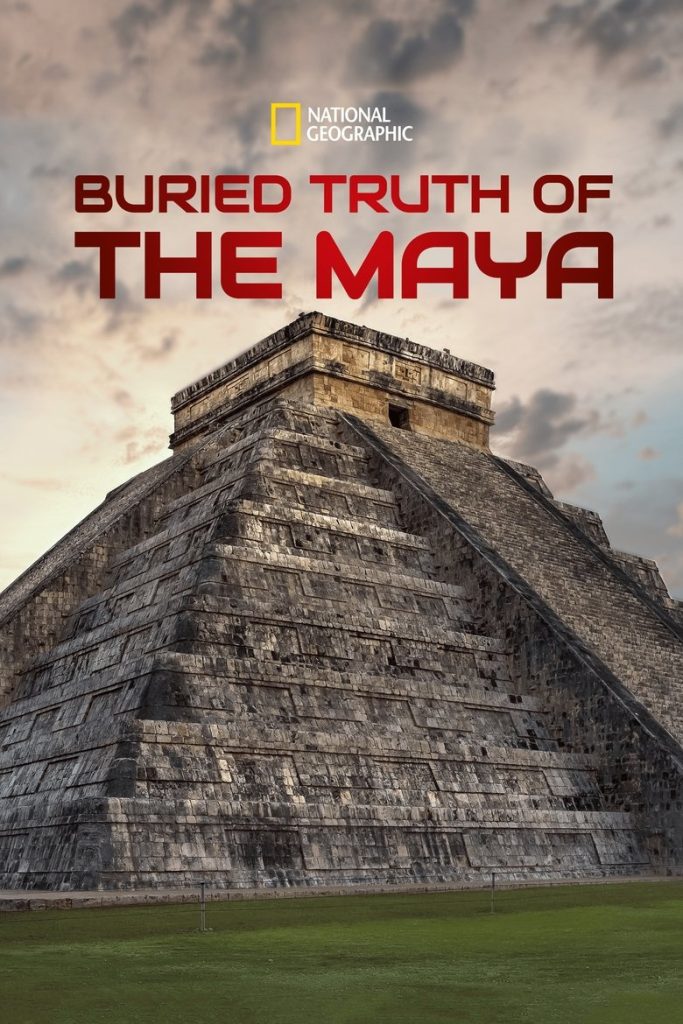
Story overview
This documentary explores the search for a legendary underground cave beneath the ancient Maya city of Chichen Itza, using modern archaeological technology to investigate historical mysteries.
Parent Guide
Educational documentary suitable for school-age children interested in history and archaeology.
Content breakdown
No violence or peril depicted. Focus is on archaeological exploration and historical investigation.
No scary or disturbing content. The documentary maintains an educational tone throughout.
No concerning language. All dialogue is professional and educational in nature.
No sexual content or nudity present.
No depiction of substance use.
Mild excitement around archaeological discoveries, but no intense emotional content.
Parent tips
This educational documentary focuses on archaeology and history without concerning content. It's suitable for children interested in ancient civilizations, science, and exploration.
Parent chat guide
Parent follow-up questions
- What tools do you think archaeologists use?
- What would you look for if you were exploring an ancient city?
- Why do you think the Maya built underground caves?
- How does technology help us learn about ancient civilizations?
- What challenges might archaeologists face when searching for hidden caves?
- Why is it important to preserve archaeological sites like Chichen Itza?
- How does this documentary approach separating Maya legend from historical fact?
- What ethical considerations should guide archaeological exploration of sacred sites?
🎭 Story Kernel
The film's core isn't about uncovering ancient Mayan secrets, but about the psychological excavation of its protagonist, Dr. Elena Vargas. Her obsession with the 'Buried Truth' becomes a mirror for her own repressed trauma—the death of her mentor during their first expedition. The narrative cleverly parallels the Mayan belief in cyclical time with Elena's forced confrontation with her past. Each artifact she discovers functions less as historical evidence and more as a trigger, peeling back layers of denial until she must accept that the 'truth' she seeks is her own complicity in the tragedy she's spent years running from. The Maya's 'truth' is ultimately a metaphor for the inescapable past.
🎬 Visual Aesthetics
The cinematography masterfully employs a dual visual language. Above ground, the Yucatán jungle is shot with saturated greens and golden hour warmth, creating a false sense of archaeological wonder. Once the action descends into the cenote and tunnels, the palette shifts to oppressive blues, grays, and the stark white of flashlight beams. The camera becomes handheld and claustrophobic, often placing Elena in extreme close-ups, her face smeared with dirt and sweat, making the audience feel the weight of the earth. Key symbols, like the recurring image of water slowly seeping through cracks, visually reinforce the theme of truths that cannot be contained.
🔍 Details & Easter Eggs
💡 Behind the Scenes
Lead actress Valeria García undertook intensive spelunking training for the role, spending days in a controlled cave set built in a Spanish studio that replicated the cenote's conditions. The production collaborated with Mayan cultural consultants to ensure glyphs and artifacts, though fictionalized, were stylistically accurate. Several exterior jungle scenes were filmed on location in Quintana Roo, Mexico, near actual archaeological sites, with strict supervision to avoid damage. The sound design team recorded unique acoustics in real limestone caves to create the film's immersive, echoing underground atmosphere.
Where to watch
Choose region:
- Disney Plus