
BURN·E (2008)
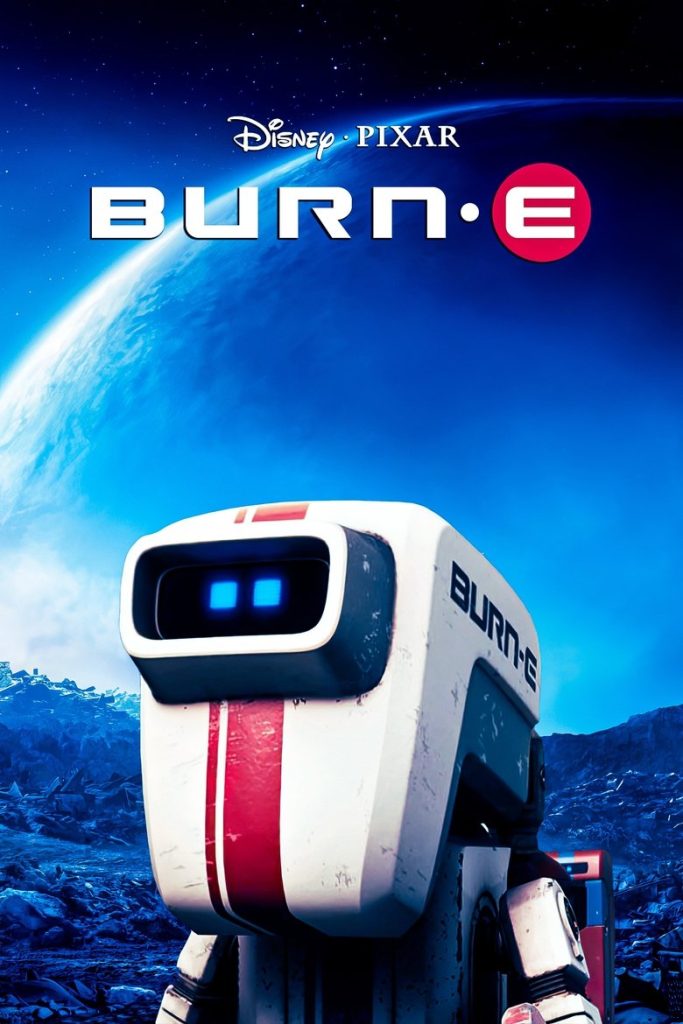
Story overview
BURN·E is a short animated film about a dedicated robot who gets accidentally locked out of his spaceship while trying to complete a simple repair task. The story humorously follows his persistent efforts to overcome various obstacles and return to his duties. Through gentle comedy and visual storytelling, it explores themes of perseverance, problem-solving, and finding humor in frustrating situations.
Parent Guide
A completely harmless, gentle animated short suitable for all ages with positive themes of perseverance.
Content breakdown
No violence or physical conflict. The robot experiences minor accidents and frustrations but isn't harmed.
Nothing scary or disturbing. All situations are played for gentle comedy.
No dialogue beyond robot sounds and minimal background voices. No inappropriate language.
No sexual content, references, or nudity.
No substance use, references, or imagery.
Mild frustration experienced by the robot, but everything resolves positively with gentle humor.
Parent tips
This 8-minute Pixar short is completely family-friendly with no concerning content. The G rating is appropriate as there's no violence, scary moments, or inappropriate material. The humor is gentle and visual, focusing on the robot's comical struggles rather than conflict. Very young children might find some of the robot's frustrations relatable, but everything resolves positively.
The film's short runtime makes it perfect for brief viewing sessions or as an introduction to animated storytelling. Since there's no dialogue beyond robot sounds and minimal background voices, it's accessible to viewers of all language backgrounds. The themes of persistence and problem-solving provide good discussion points for families.
Parent chat guide
After watching, focus conversations on perseverance and problem-solving. Ask how BURN·E felt during his challenges and how he kept going. Relate this to times your child has faced frustrating situations. For older children, you could discuss how the film uses visual storytelling without words to convey emotions and humor.
Parent follow-up questions
- What was your favorite part about the robot?
- How did BURN·E feel when he couldn't get back inside?
- What would you do if you were stuck outside like BURN·E?
- Did you laugh when things went wrong for the robot?
- What color was the robot?
- Why do you think BURN·E kept trying even when things went wrong?
- What problems did the robot have to solve?
- How did the movie make you feel without using many words?
- What would you have done differently if you were BURN·E?
- What does this story teach us about not giving up?
- How does the film use visual comedy instead of dialogue to tell the story?
- What does BURN·E's persistence say about his character?
- Why do you think the filmmakers made this story about a robot?
- How might this short connect to larger themes in the WALL·E universe?
- What techniques did the animators use to show the robot's emotions?
- How does this short film explore themes of purpose and dedication through comedy?
- What commentary might the film be making about work and problem-solving?
- How effective is the visual storytelling without dialogue?
- How does this short complement or contrast with feature-length animated films?
- What film techniques contribute to the humor and emotional impact?
🎭 Story Kernel
At its core, 'BURN·E' is a brilliant deconstruction of the 'hero's journey' through the lens of cosmic insignificance. The film explores what happens when you're not the protagonist of the grand narrative but a maintenance worker trying to fix a lightbulb while gods battle around you. BURN·E's entire motivation is simple professionalism - he just wants to complete his assigned task (replacing a faulty exterior light) in a universe that treats him as collateral damage. This creates a profound commentary on labor, purpose, and how individual agency collapses when you're trapped in someone else's epic story. The film's genius lies in making us root for completion of the most mundane task against impossible cosmic odds.
🎬 Visual Aesthetics
The visual language masterfully contrasts scale and perspective. BURN·E's world is shown through tight, claustrophobic shots inside his repair pod, while WALL·E and EVE's epic romance unfolds in sweeping, cinematic wide shots that literally push BURN·E to the margins of the frame. The color palette shifts from the warm, nostalgic sepia of Earth scenes to the sterile blues and grays of the Axiom's exterior, emphasizing BURN·E's isolation. Action sequences use exaggerated physics - BURN·E bounces between spaceships like a pinball - to visually represent his lack of control. The recurring visual motif of the faulty light becoming a beacon against the starfield transforms mundane maintenance into accidental heroism.
🔍 Details & Easter Eggs
💡 Behind the Scenes
Originally conceived as a DVD extra for 'WALL·E,' director Angus MacLane expanded the short after realizing the comic potential of showing what happened to that poor repair robot viewers briefly saw in the main film. The entire seven-minute short was animated by a surprisingly small team who used modified versions of the main film's Axiom exterior assets. BURN·E's design came from early WALL·E concepts - he's essentially what WALL·E might have looked like if he'd been assigned to exterior maintenance instead of waste compaction. The sound design uses exaggerated metallic clangs and vacuum sounds to emphasize his mechanical nature amid the silent romance of the main characters.
Where to watch
Choose region:
- Disney Plus
- Google Play Movies
- YouTube
Trailer
Trailer playback is unavailable in your region.