
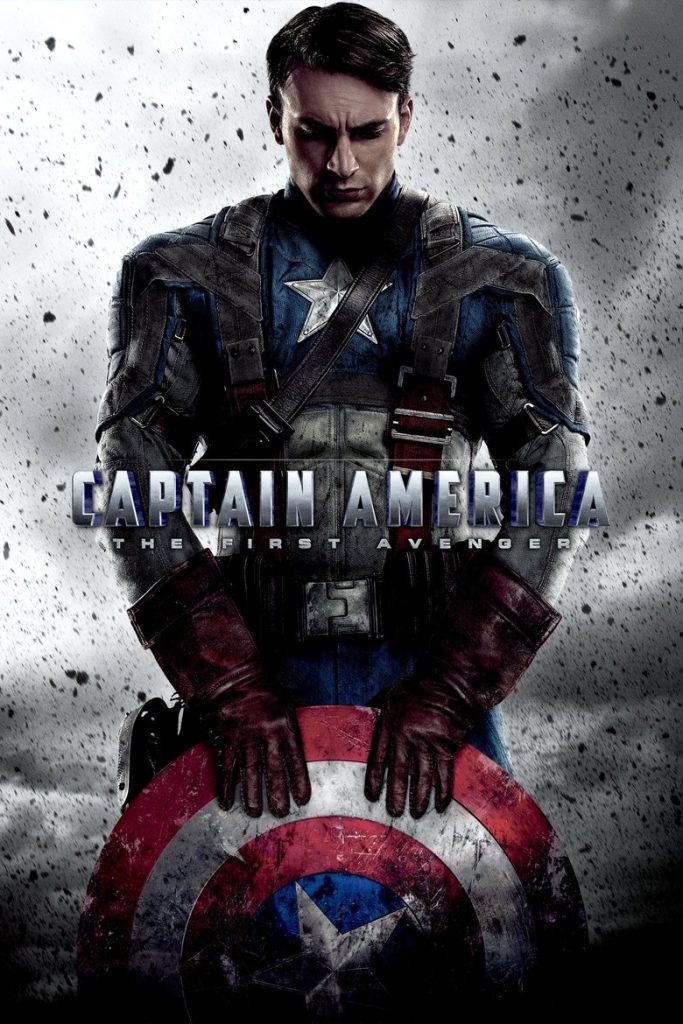
Captain America: The First Avenger (2011)
Story overview
Captain America: The First Avenger is a superhero origin story set during World War II. It follows Steve Rogers, a frail young man who is transformed into a super-soldier to fight against the villainous Red Skull and his Hydra organization. The film blends historical wartime settings with science fiction elements as Captain America battles to protect the world from advanced weapons.
Parent Guide
A superhero origin story with moderate action violence and wartime themes suitable for older children and teens.
Content breakdown
Combat scenes with punches, kicks, and weapon use; explosions and perilous situations; no graphic injuries shown.
Villain with red skull appearance may be frightening to sensitive viewers; tense moments during battles.
Occasional mild language typical of PG-13 films; no strong profanity.
No sexual content or nudity; mild romantic tension.
No substance use depicted; social drinking in background scenes.
Themes of war, sacrifice, and friendship; some tense action sequences.
Parent tips
This PG-13 rated film contains moderate action violence typical of superhero movies, including combat scenes, explosions, and perilous situations. The wartime setting involves themes of patriotism, sacrifice, and good versus evil that may require context for younger viewers. While there's no graphic content, the intensity of action sequences and some frightening villain appearances make it more suitable for older children and teens.
Parent chat guide
Parent follow-up questions
- What made Steve a good friend to Bucky?
- How did Steve show he was brave even before he became strong?
- What colors did you see on Captain America's uniform?
- Why was Steve chosen to become Captain America besides his physical strength?
- How did Peggy treat Steve differently than other people did?
- What made the Red Skull a scary villain?
- What does the film show about how people treat others who look different?
- How does the movie balance historical events with fictional superhero elements?
- What qualities make someone a true hero in this story?
- How does the film portray the ethics of human experimentation and enhancement?
- What commentary does the movie make about propaganda and patriotism?
- How does Steve Rogers' character challenge traditional notions of masculinity and strength?
🎭 Story Kernel
The film's core tension isn't between Captain America and Red Skull, but between Steve Rogers' authentic morality and the manufactured heroism the U.S. government wants to sell. Rogers becomes physically powerful but remains psychologically unchanged - he was always a hero. The real transformation happens in how society perceives and uses him. The film explores how genuine virtue gets packaged, marketed, and weaponized, asking whether a symbol can retain its original meaning once it becomes propaganda. Rogers' journey from rejected soldier to performing monkey to actual warrior mirrors how institutions co-opt individual goodness for their own ends.
🎬 Visual Aesthetics
The film employs a distinct two-part visual language. Pre-serum scenes use desaturated colors, tight framing, and Dutch angles to emphasize Rogers' physical limitations and the claustrophobia of 1940s New York. Post-serum, the palette shifts to vibrant primary colors reminiscent of comic book panels and wartime propaganda posters. Action sequences feature clean, geometric compositions - the circular shield motif appears everywhere from Hydra bases to camera movements. The most striking visual choice is how Rogers is literally framed: first as too small for the screen, then as a perfect specimen, and finally as a man out of time, visually isolated in the final scene's anachronistic Times Square.
🔍 Details & Easter Eggs
💡 Behind the Scenes
Chris Evans turned down the role three times before accepting, fearing the multi-film commitment. The skinny Steve Rogers effect combined CGI head replacement with body double Leander Deeny's physical performance. Director Joe Johnston deliberately modeled the film's aesthetic on his work on 'The Rocketeer,' creating a unified 'pulp adventure' visual language. The Times Square finale was shot on the same Liverpool set used for 'The Dark Knight,' redressed with 1940s facades that were then digitally replaced with modern advertisements.
Where to watch
Choose region:
- Disney Plus
- Amazon Video
- Apple TV
- Google Play Movies
- YouTube
- Fandango At Home
Trailer
Trailer playback is unavailable in your region.