
Capturing the Friedmans (2003)
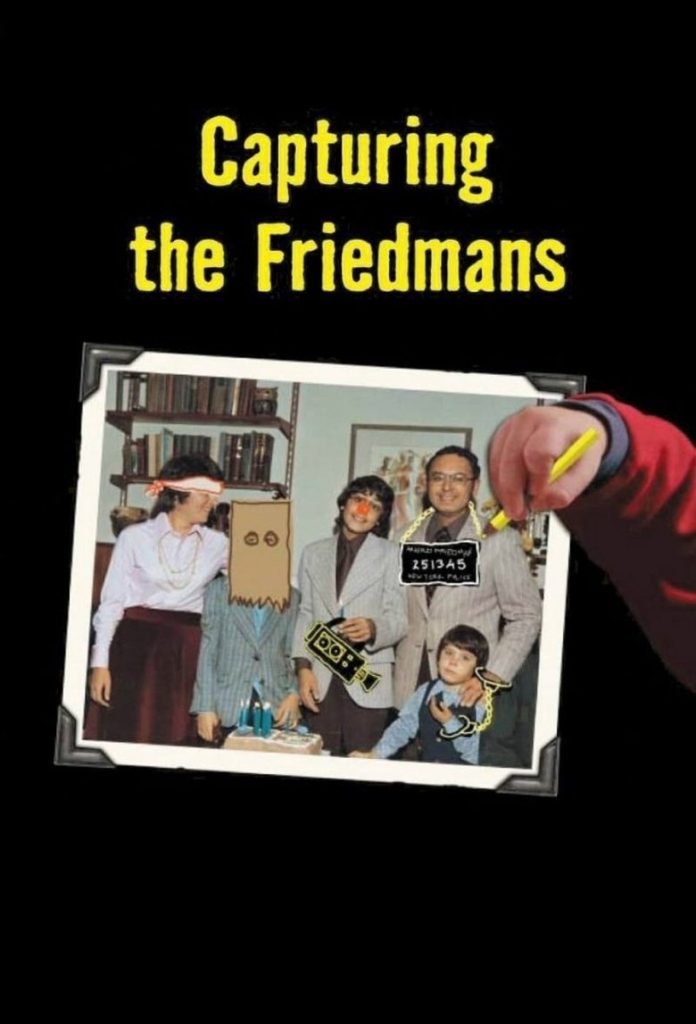
Story overview
Capturing the Friedmans is a documentary that explores the case of Arnold and Jesse Friedman, a father and son from Great Neck, New York, who were accused of child sexual abuse in the 1980s. The film presents conflicting perspectives from family members, investigators, and alleged victims, examining how memory, media, and community pressure can shape perceptions of truth. Through home videos, interviews, and archival footage, it raises complex questions about justice, family dynamics, and the reliability of evidence in controversial cases.
Parent Guide
A documentary examining serious allegations of child sexual abuse, featuring discussions of legal proceedings, family conflict, and community response without graphic depictions.
Content breakdown
No physical violence shown, but discussions of alleged abuse and legal consequences.
Themes of child sexual abuse allegations and family trauma are emotionally disturbing.
Occasional strong language in interviews and home video footage.
Discussions of sexual abuse allegations without explicit descriptions or depictions.
No notable substance use content.
High emotional intensity due to serious allegations, family conflict, and legal proceedings.
Parent tips
This documentary deals with serious allegations of child sexual abuse, which may be deeply disturbing for viewers of any age. The content includes discussions of abuse, legal proceedings, and family trauma without graphic depictions, but the subject matter itself is emotionally heavy. Parents should be prepared to discuss difficult topics about justice, truth, and how communities respond to allegations.
Parent chat guide
Parent follow-up questions
- What is a documentary?
- What do you think the family in the movie was feeling?
- How do people tell stories about things that happened?
- What makes a documentary different from other movies?
- Why do you think people remember things differently?
- How can we be fair when listening to different stories?
- How do documentaries try to show different sides of a story?
- What challenges might investigators face when looking at old cases?
- Why is it important to think carefully about what we see in media?
- How does this documentary explore the concept of truth and memory?
- What role does community pressure play in legal cases?
- How might different editing choices affect how viewers interpret the events presented?
🎭 Story Kernel
The film isn't about determining guilt or innocence in the Friedman child molestation case, but about how truth becomes fragmented through memory, media, and family mythology. It explores how the Friedmans' compulsive documentation—their home videos—created both a shield and a trap, revealing a family performing normalcy while collapsing internally. The driving force is the human need for narrative coherence; each family member constructs their own version of events to survive the trauma, leaving us with competing realities rather than a single truth. The documentary becomes a mirror for our own biases, asking what we choose to believe when evidence is contradictory and memory is unreliable.
🎬 Visual Aesthetics
The film's aesthetic is deliberately raw and unstable, blending grainy home videos, news footage, and contemporary interviews without polish. The home movies—often shaky, poorly lit, and intimate—contrast sharply with the formal talking heads, highlighting the gap between private performance and public testimony. Director Andrew Jarecki uses close-ups on faces during interviews, capturing micro-expressions of doubt, pain, and defiance. The color palette is muted, dominated by the beige and brown tones of 1980s suburbia, emphasizing the mundane setting where extraordinary allegations unfolded. This visual rawness reinforces the film's theme of imperfect recollection and mediated reality.
🔍 Details & Easter Eggs
💡 Behind the Scenes
Director Andrew Jarecki initially planned a documentary about New York City clowns, focusing on David Friedman, who worked as a party entertainer. During interviews, David revealed his family's history, leading Jarecki to pivot entirely to the Friedman case. The home videos were provided by the family themselves, who had meticulously documented their lives. The film faced legal challenges and controversy upon release, with some accusing it of bias. It was shot on a modest budget and relied heavily on archival footage, with Jarecki spending years gaining the family's trust to access their personal materials.
Where to watch
Choose region:
- HBO Max
- HBO Max Amazon Channel
Trailer
Trailer playback is unavailable in your region.