
Cars (2006)
Story overview
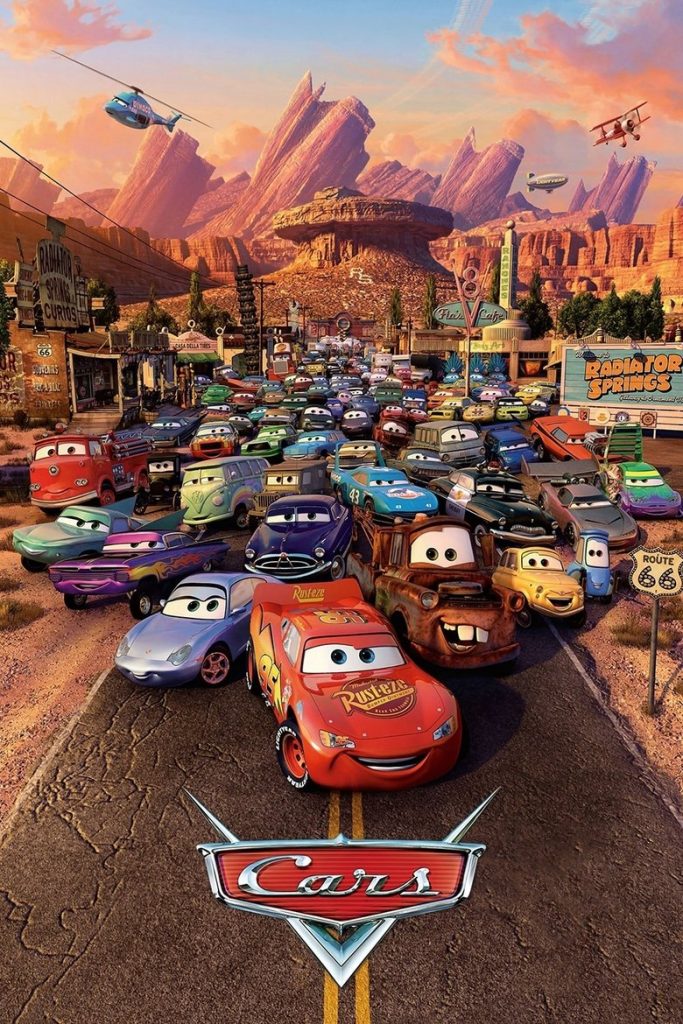
Cars follows a talented but arrogant race car who learns important life lessons about friendship, community, and humility when he gets stranded in a small town. Through his interactions with the town's quirky residents, he discovers that success isn't just about winning races but about the connections you make along the way. This animated adventure combines exciting racing sequences with heartfelt moments about personal growth and finding your place in the world.
Parent Guide
A wholesome animated film with positive messages about friendship and community, suitable for most children with minimal concerns.
Content breakdown
Some racing crashes and vehicular peril, but no injuries or serious consequences shown. Action sequences are exciting but not graphic.
No frightening or disturbing content. Some tense racing moments might briefly concern very young children.
No offensive language. Some mild automotive-themed expressions like 'holy piston rods' that are creative and inoffensive.
No sexual content or nudity. Some mild flirtation between car characters that's presented humorously and age-appropriately.
No substance use depicted. Characters occasionally consume motor oil in a manner analogous to food/drink.
Some emotional moments related to friendship and personal growth, but nothing overwhelming. The film maintains an overall upbeat tone.
Parent tips
Cars is a family-friendly animated film that teaches valuable lessons about humility, friendship, and community. The racing scenes are exciting but not overly intense, with some minor car crashes and peril that are typical for the genre. The film's G rating makes it appropriate for most children, though very young viewers might need reassurance during the racing sequences.
The movie's themes about slowing down and appreciating life's journey rather than rushing to the finish line provide excellent conversation starters for families. The characters model positive behaviors like helping others, admitting mistakes, and learning from experience. Parents should note that the film's runtime of nearly two hours might be long for some younger children.
Parent chat guide
After watching, talk about the main character's journey from being self-centered to caring about others. Ask your children about times they've had to slow down and appreciate something they might have rushed past. Discuss how the film shows that everyone has something valuable to contribute, even if they're not in the spotlight.
Parent follow-up questions
- What was your favorite car in the movie?
- How did the race car learn to be a better friend?
- What do you think makes someone a good helper?
- What was the funniest part of the movie?
- How do you think the cars felt when they helped each other?
- Why do you think the main character changed his attitude?
- What does it mean to be part of a community?
- How did the different cars help each other in the story?
- What lesson did the race car learn about winning?
- How can we slow down and appreciate things like the characters did?
- What does the film suggest about balancing ambition with caring for others?
- How do the characters show that everyone has value regardless of their status?
- What real-life situations might be similar to the race car's journey?
- How does the film use racing as a metaphor for life's journey?
- What qualities make someone a true winner beyond just competitions?
- How does the film comment on modern society's focus on speed and achievement?
- What cultural or social themes does the small town vs. big city dynamic represent?
- How does the animation style contribute to the storytelling and character development?
- What does the film suggest about finding purpose beyond personal success?
- How might the film's messages apply to your own goals and relationships?
🎭 Story Kernel
At its core, 'Cars' is a meditation on the erosion of authentic connection in a speed-obsessed culture. Lightning McQueen's journey isn't about winning races—it's about discovering that true success requires roots. The film critiques modern America's bypassing of its own history and community values, showing how Route 66's forgotten towns represent what we sacrifice for efficiency. Doc Hudson's hidden past as the Fabulous Hudson Hornet mirrors how society discards its elders when they're no longer 'useful,' while Sally's decision to leave the corporate world for Radiator Springs embodies the film's central question: what are we racing toward, and what are we leaving behind?
🎬 Visual Aesthetics
Pixar's animation creates a world where vehicles are living landscapes—their metallic surfaces catching the Southwest's golden hour glow with breathtaking realism. The racing sequences employ dynamic, low-angle shots that make viewers feel the asphalt's texture, while Radiator Springs is rendered in warm, nostalgic tones that contrast sharply with the cold, sterile blues of modern interstate highways. The camera lingers on details like rust patches and peeling paint to emphasize age and history. Most powerfully, the visual storytelling shows how Lightning's pristine red finish gradually accumulates the dust and scratches of genuine experience, mirroring his character development.
🔍 Details & Easter Eggs
💡 Behind the Scenes
Director John Lasseter took the entire Pixar creative team on a real Route 66 road trip to capture the highway's authentic atmosphere—they stayed in small motels and documented every decaying neon sign. Paul Newman, who voiced Doc Hudson, initially turned down the role but changed his mind after seeing storyboards and recognizing the film's deeper themes about legacy and redemption. The radiator cap on Lightning McQueen's transport truck bears the number '95'—the year Pixar released 'Toy Story.' Real NASCAR drivers provided engine sounds by revving their cars at specific RPMs to create authentic audio textures.
Where to watch
Choose region:
- Disney Plus
- fuboTV
- Amazon Video
- Apple TV
- Google Play Movies
- YouTube
- Fandango At Home
Trailer
Trailer playback is unavailable in your region.