
Century of Animation Showcase: 1922 (2022)
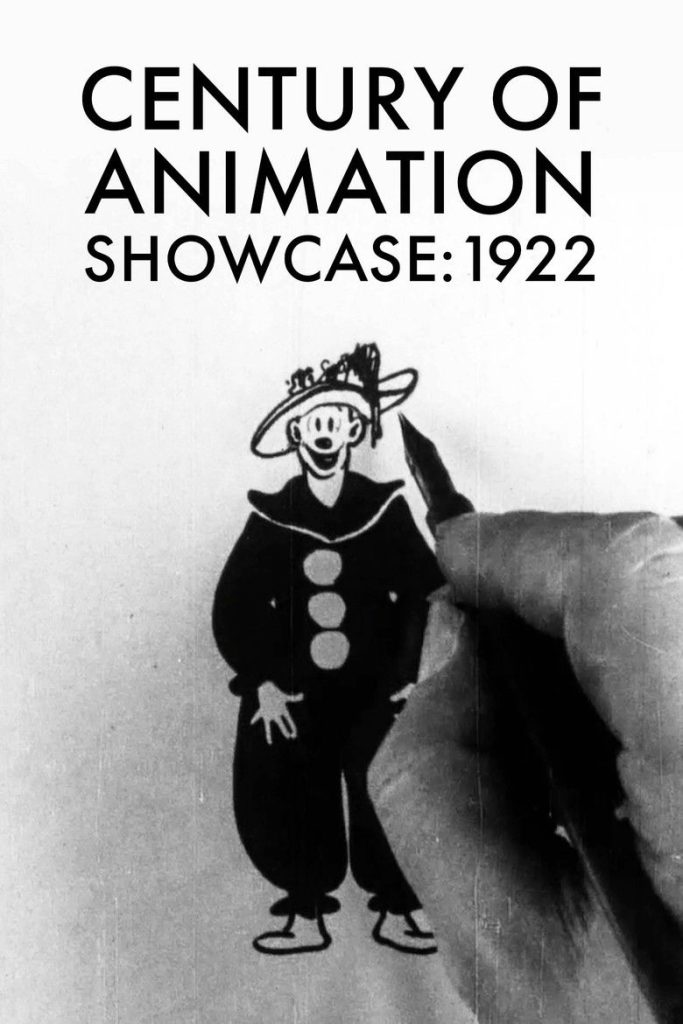
Story overview
This documentary presents a curated collection of animated short films from 1922, offering a glimpse into the early days of animation. It features works from pioneering animators like Walt Disney, Dave Fleischer, Otto Messmer, and Paul Terry, showcasing the artistic styles and storytelling techniques of the era. The compilation serves as an educational exploration of animation history, highlighting the creativity and innovation that laid the foundation for modern animated filmmaking.
Parent Guide
Educational documentary featuring vintage animated shorts from 1922 with mild, age-appropriate content.
Content breakdown
May contain cartoonish slapstick or mild peril typical of early animation, but nothing graphic or intense.
Content is historical and educational, with no intentionally scary or disturbing elements.
Silent films with no dialogue or written text requiring language assessment.
No sexual content or nudity present in these historical animations.
No depiction or reference to substance use in these early animated works.
May evoke mild curiosity or historical interest, but no intense emotional themes.
Parent tips
This documentary is suitable for children interested in animation history or art, as it presents early animated works without modern digital effects. Parents should note that the silent film format and vintage animation style might require some explanation for younger viewers unfamiliar with this era of cinema. The content is generally mild and educational, focusing on artistic techniques rather than complex narratives.
Parent chat guide
Parent follow-up questions
- What was your favorite animal in the cartoons?
- Did you like the way the characters moved?
- What colors did you see in the films?
- Was it fun to watch without words?
- Which cartoon made you smile the most?
- How were these cartoons different from ones you watch today?
- What do you think was hardest to draw or animate in 1922?
- Why do you think they didn't have voices or sound effects?
- Which animator's style did you like best and why?
- What story was easiest to understand without words?
- What animation techniques from 1922 do you still see in modern cartoons?
- How do you think limited technology affected the storytelling?
- What creative solutions did animators use to show emotions without dialogue?
- Why might these early animations be important to preserve?
- How did different animators develop unique styles with similar tools?
- How did these early animations establish conventions that still influence animation today?
- What cultural or historical context might have influenced these 1922 animations?
- How does the silent film format affect narrative pacing and character development?
- What artistic innovations from this era paved the way for later animation breakthroughs?
- How might the technical limitations of 1922 have actually fostered creativity?
🎭 Story Kernel
The film is not a narrative in the conventional sense but an expression of animation's foundational impulse: to breathe life into the inanimate. The 'characters' are forms—geometric shapes, fluid lines, anthropomorphized objects—driven by the pure, unadulterated joy of motion itself. There is no conflict or resolution, only the exploration of possibility. It asks what it means to make a drawing not just represent action, but become action. The core theme is the medium's primal celebration of its own existence, a meta-commentary on creation that predates narrative complexity. It's the story of animation discovering its own voice, one frame at a time.
🎬 Visual Aesthetics
The visual language is one of stark, high-contrast black and white, where form is defined entirely by line and the absence of light. The camera is static, focusing all attention on the frame-by-frame metamorphosis within it. Action is rhythmic and often cyclical, relying on principles like squash-and-stretch and anticipation that would become animation's bedrock. Symbolism is abstract; a bouncing ball isn't a ball but a study in physics and personality. The aesthetic is one of laboratory experimentation, where every jump, wiggle, and transformation feels like a documented discovery in the science of bringing drawings to life.
🔍 Details & Easter Eggs
💡 Behind the Scenes
This 1922 showcase is a compilation of works from pioneering animators like Walt Disney (with his early Laugh-O-Gram films) and Max Fleischer, who patented the rotoscope technique. It was likely assembled for theatrical exhibition to demonstrate the novelty of animated shorts. The production process was grueling, requiring thousands of hand-drawn cels per minute of screen time, often by small teams working with basic lightboxes. Many of the animators featured were literally inventing the rulebook as they drew, establishing foundational techniques through trial and error in studios that were more like workshops.
Where to watch
Choose region:
- HBO Max
- HBO Max Amazon Channel