
Changeling (2008)
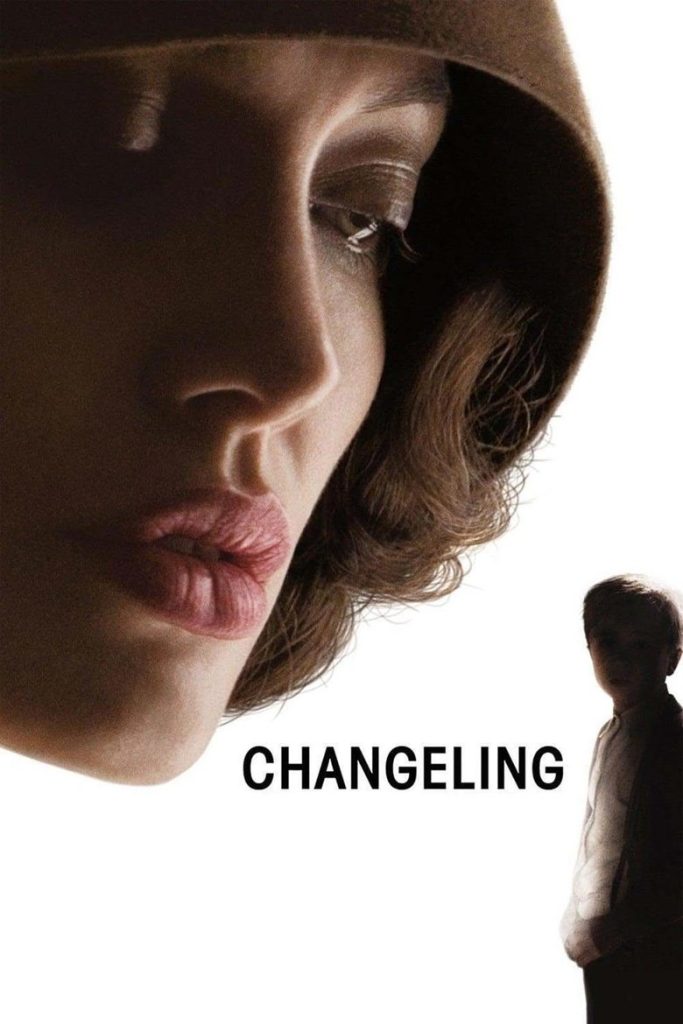
Story overview
Changeling is a 2008 crime drama mystery film based on true events. It follows a mother's desperate search for her missing son in 1920s Los Angeles, uncovering corruption and injustice within the police department. The story explores themes of maternal determination, institutional failure, and the fight for justice against powerful systems.
Parent Guide
Mature drama dealing with child abduction and institutional corruption. Recommended for older teens with parental guidance due to intense themes and emotional content.
Content breakdown
Scenes of peril involving missing children and institutional threats. Some tense confrontations and implied violence, though not graphically depicted.
Themes of child abduction, psychological manipulation, and institutional betrayal create sustained tension and emotional distress.
Period-appropriate language with occasional mild profanity.
No sexual content or nudity present.
Social drinking in period settings, consistent with 1920s depiction.
High emotional intensity throughout, dealing with grief, frustration, maternal determination, and systemic injustice.
Parent tips
This R-rated film deals with mature themes including child abduction, police corruption, and psychological trauma. The emotional intensity is high throughout, with scenes depicting grief, frustration, and institutional betrayal. While not graphically violent, the subject matter and emotional weight make it unsuitable for younger viewers.
Parent chat guide
Parent follow-up questions
- What does it mean when someone is missing?
- How do people help each other when they're sad?
- What makes a good helper like a police officer?
- Why is it important to tell the truth?
- How can grown-ups make mistakes even when they're trying to help?
- What are some ways people show they care about each other?
- What responsibilities do police officers have to the community?
- How can people work together to solve difficult problems?
- What does it mean to stand up for what's right even when it's hard?
- How do institutions balance power and accountability?
- What historical factors influenced women's ability to challenge authority in the 1920s?
- How does the film portray the psychological impact of trauma and loss?
- What ethical dilemmas arise when personal truth conflicts with official narratives?
- How can media and public attention influence justice systems?
🎭 Story Kernel
At its core, 'Changeling' is less about a missing child and more about the systemic gaslighting of a woman by the very institutions meant to protect her. Christine Collins's battle with the LAPD isn't driven by maternal instinct alone, but by a profound refusal to accept a false reality imposed by patriarchal authority. The film exposes how power structures—police, press, psychiatry—collude to erase inconvenient truths, weaponizing bureaucracy and public perception to break individual will. Walter Collins's real fate, tied to the Wineville Chicken Coop murders, reveals the horrifying underbelly the LAPD desperately tried to conceal by offering Christine a 'changeling.' Her fight becomes a quest to reclaim narrative control in a world determined to write her story for her.
🎬 Visual Aesthetics
Clint Eastwood employs a muted, desaturated color palette of browns, grays, and sickly yellows, visually mirroring the moral decay of 1928 Los Angeles. The camera often observes Christine from a distance or through barriers—windows, fences, doorways—emphasizing her isolation. In stark contrast, the sequences at the psychiatric hospital are clinically bright and sterile, a visual manifestation of institutional cruelty masquerading as care. The most powerful visual motif is the recurring use of radio broadcasts and newspapers, framing the public narrative that constantly threatens to overwrite Christine's personal truth. The film's aesthetic is one of restrained horror, where the true violence occurs in boardrooms and typed reports.
🔍 Details & Easter Eggs
💡 Behind the Scenes
Angelina Jolie, nominated for an Oscar for her role, based her performance on silent film techniques, using exaggerated period-appropriate gestures to convey emotion without dialogue. The psychiatric hospital scenes were filmed at the now-closed Metropolitan State Hospital, a real asylum, adding palpable authenticity. Composer Clint Eastwood (who also directed) wrote the film's sparse, piano-driven score himself. The script is based on the true 'Wineville Chicken Coop Murders,' and screenwriter J. Michael Straczynski conducted extensive research using primary sources like court transcripts and newspaper archives from the period.
Where to watch
Choose region:
- Peacock Premium
- Peacock Premium Plus
- Amazon Video
- Apple TV
- Google Play Movies
- YouTube
- Fandango At Home
Trailer
Trailer playback is unavailable in your region.