
Chasing the Equinox (2019)
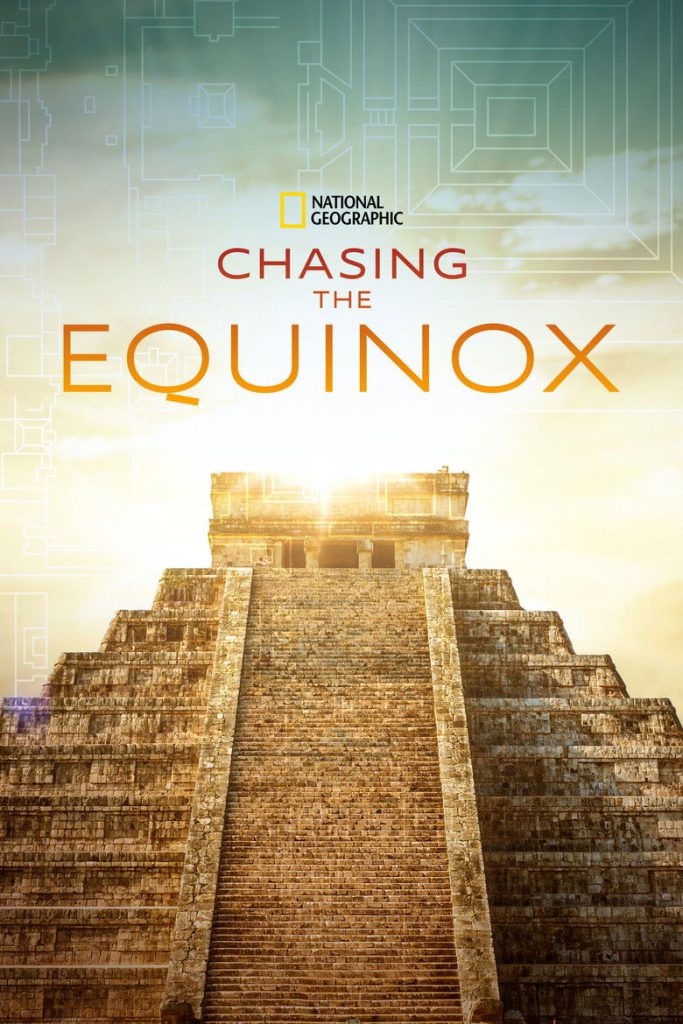
Story overview
Chasing the Equinox is a 2019 documentary TV movie exploring historical and cultural aspects related to equinox events. It examines how ancient civilizations tracked and celebrated these astronomical occurrences across different regions. The film likely combines historical reenactments, expert interviews, and visual representations of equinox phenomena.
Parent Guide
Educational documentary suitable for family viewing with no concerning content expected. Focuses on historical and astronomical themes.
Content breakdown
As a historical documentary, no violence or peril is expected.
Content is educational and non-threatening.
Documentary language is expected to be academic and appropriate.
No sexual content or nudity expected in this educational documentary.
No substance use depicted.
May include dramatic recreations of historical events but maintains educational tone.
Parent tips
This documentary provides educational content about astronomy and ancient history that can spark curiosity about science and different cultures. Since it's a TV movie documentary, it's likely structured for general audiences with straightforward presentation. Consider watching together to discuss the historical and scientific concepts presented, as some abstract ideas about time and astronomy might benefit from explanation for younger viewers.
Parent chat guide
Parent follow-up questions
- What was your favorite part of the movie?
- Did you see any pictures of the sun or moon?
- What colors did you see in the movie?
- Can you point to the sky like they did in the movie?
- What is an equinox and why was it important to ancient people?
- How do you think people long ago knew when seasons were changing?
- What tools do we use today that ancient people didn't have for watching the sky?
- Why do you think different cultures celebrated the equinox in different ways?
- How did ancient civilizations use astronomy in their daily lives and calendars?
- What scientific methods do historians use to learn about ancient astronomical practices?
- How does understanding ancient astronomy help us appreciate different cultures?
- What connections can you make between ancient equinox celebrations and modern seasonal traditions?
- How did different geographical locations influence how cultures observed and celebrated equinoxes?
- What can ancient astronomical knowledge teach us about the development of scientific thinking?
- How do documentaries balance historical accuracy with engaging storytelling?
- What modern scientific discoveries have changed our understanding of astronomical events that ancient people observed?
🎭 Story Kernel
At its core, 'Chasing the Equinox' is a meditation on the illusion of balance and the human compulsion to correct perceived cosmic injustices. The protagonist's relentless pursuit isn't driven by greed or revenge, but by a philosophical obsession with symmetry—the belief that a life-altering event on an equinox demands a counterbalance on another. This transforms the plot from a simple thriller into a character study of someone trying to impose order on a chaotic universe, making their ultimate realization that some scales can't be balanced the film's true, devastating climax.
🎬 Visual Aesthetics
The film's visual language is built on a stark, deliberate duality. The color palette rigidly separates warm, golden-hour tones for 'past' memories and a cold, sterile blue-grey for the present-day chase. Camera work is equally divided: steady, wide shots during moments of reflection contrast with frantic, handheld close-ups during pursuit, visually externalizing the protagonist's fractured mental state. Key symbolic objects, like a broken sundial or a perpetually tilting horizon line in compositions, subtly reinforce the theme of disrupted equilibrium without overt exposition.
🔍 Details & Easter Eggs
💡 Behind the Scenes
The film's most challenging sequence—a dialogue-heavy scene during an actual equinox sunset—had to be shot in a single 48-hour window to capture the perfect natural light, requiring the crew and actors to perform over 30 takes. Lead actor Aris Servetalis, known for intense method preparation, reportedly spent weeks studying the physics of celestial mechanics to inform his character's obsession. Several key exterior scenes were filmed on location in the meteorite-rich fields of Nördlinger Ries, Germany, chosen for its otherworldly landscape that subtly underscores the story's cosmic themes.
Where to watch
Choose region:
- Disney Plus