Cheetah (1989)
Story overview
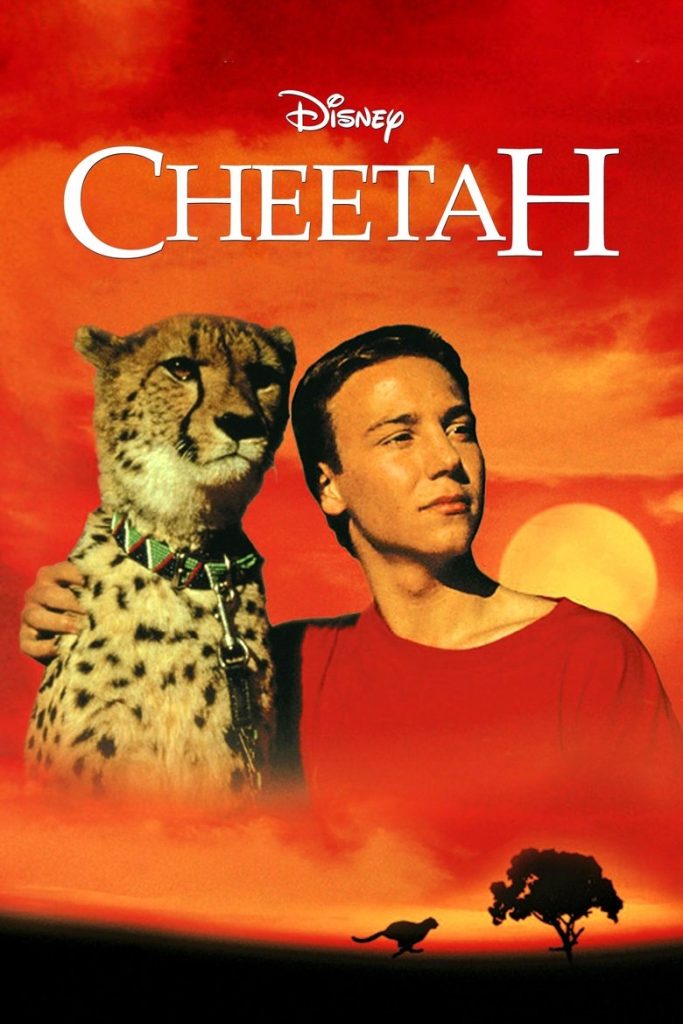
Cheetah (1989) is a family drama about two American children, Ted and Susan, who move to Kenya with their scientist parents for six months. They adopt a cheetah cub named Duma, but soon realize they must release it into the wild so it can learn to hunt and live freely. When Duma is captured by poachers who plan to race it against greyhounds, Ted, Susan, and their new friend Morogo, a young African goat herder, embark on an adventurous journey through the Kenyan wilderness to rescue the cheetah. The film explores themes of friendship, responsibility, wildlife conservation, and cultural understanding, set against the backdrop of Africa's natural beauty.
Parent Guide
A wholesome family film with positive messages about friendship, responsibility, and wildlife conservation. Suitable for most children, with only mild peril elements.
Content breakdown
Mild peril involving the cheetah being captured by poachers and placed in a cage; children face non-threatening adventure risks during their rescue mission. No physical violence or injuries shown.
Mildly tense scenes when the cheetah is in danger from poachers, but nothing graphic or overly frightening. The G rating ensures content is gentle.
No offensive or inappropriate language; dialogue is family-friendly throughout.
No sexual content, nudity, or romantic elements; focus is on platonic friendships and family.
No depiction of alcohol, drugs, or smoking; characters are children and positive adult role models.
Mild emotional moments related to separating from the cheetah and concern for its safety, but overall uplifting and resolved happily.
Parent tips
This G-rated film is generally suitable for all ages, but parents should note: 1) Some scenes show the cheetah in captivity and peril from poachers, which might be mildly distressing for very young children. 2) The children's journey involves mild adventure risks like crossing rough terrain. 3) It portrays positive messages about animal welfare, friendship across cultures, and bravery. 4) No inappropriate content, making it a safe choice for family viewing. 5) Great for discussions about wildlife conservation and respecting nature.
Parent chat guide
Parent follow-up questions
- What was your favorite animal in the movie?
- How did the kids help the cheetah?
- What colors did you see in Kenya?
- Why do you think the cheetah needed to learn to hunt?
- How were Ted and Susan's lives in Kenya different from their home?
- What made Morogo a good friend?
- What does the movie teach about animal captivity vs. freedom?
- How did the children show bravery during their rescue mission?
- What real-world issues about poaching does the film highlight?
- Analyze the cultural dynamics between the American children and Morogo.
- How does the film portray environmental conservation? Is it effective?
- What ethical questions does raising wild animals as pets raise?
🎭 Story Kernel
At its core, 'Cheetah' is less about animal conservation and more a poignant study of cultural dislocation and the illusion of belonging. The protagonist, Ted, is driven by a romanticized, colonialist fantasy of 'returning' to a 'wild' Africa he never truly knew. His journey exposes this as a naive projection; the real Africa he encounters is one of complex social bonds and modern realities, not an untouched Eden. The cheetah cub becomes a symbolic bridge he tries to build, but his ultimate act—releasing it—is an admission that his place is as a respectful visitor, not a rightful inheritor. The film quietly argues that true connection requires letting go of ownership.
🎬 Visual Aesthetics
The cinematography employs a stark, almost documentary-like contrast. The lush, sun-drenched Kenyan landscapes are shot with wide, awe-inspiring angles, emphasizing nature's scale and Ted's smallness within it. Conversely, the American sequences feel cooler, more confined, and artificially lit, visually coding his home as alienating. The action style is grounded and earnest, avoiding spectacle for quiet moments of observation—like the careful, hesitant interactions with the cheetah cub. This visual restraint makes the eventual release feel earned, not melodramatic, with the final wide shot of the cheetah running free serving as a silent, powerful metaphor for relinquished control.
🔍 Details & Easter Eggs
💡 Behind the Scenes
The film was shot on location in Kenya, utilizing the landscapes around Mount Kenya and the Samburu National Reserve. The young cheetahs used were trained animal actors, requiring careful, patient filming to capture their natural behaviors. Actor Keith Coogan, who played Ted, had to undergo specific training to interact safely with the young cheetahs, building a rapport crucial for their on-screen bond. The production aimed for authenticity, consulting with wildlife experts, which contributes to the film's grounded, less sensationalized portrayal of animal care compared to other family adventures of its era.
Where to watch
Choose region:
- Disney Plus
- Amazon Video
- Apple TV Store
- Google Play Movies
- YouTube
- Fandango At Home
Trailer
Trailer playback is unavailable in your region.