
Chef Donald (1941)
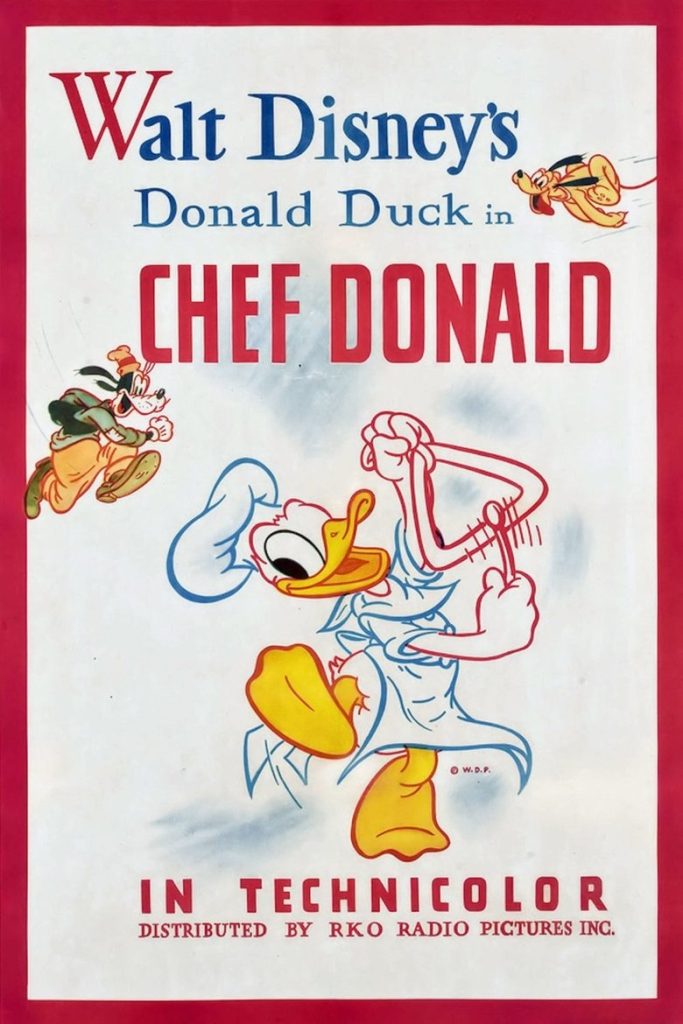
Story overview
In this classic animated short, Donald Duck attempts to follow along with a radio cooking show. His efforts in the kitchen lead to comedic chaos as he struggles with the recipe instructions. The film showcases Donald's signature frustration and slapstick humor in a domestic setting. At just 7 minutes, it's a brief, lighthearted look at culinary misadventures.
Parent Guide
A classic animated short featuring Donald Duck's comedic kitchen mishaps, suitable for most children with mild cartoon violence.
Content breakdown
Cartoon slapstick including kitchen accidents, falling objects, and exaggerated reactions without real danger.
No frightening or disturbing content; all mishaps are played for comedy.
No inappropriate language; typical cartoon exclamations.
No sexual content or nudity.
No substance use depicted.
Donald experiences frustration and mild anger, resolved comically without lasting distress.
Parent tips
This 1941 animated short is suitable for most children, featuring classic cartoon slapstick without serious peril. Donald's frustration and kitchen mishaps are played for laughs in the tradition of vintage Disney animation. Parents should be aware that the humor revolves around failure and mild chaos, which some sensitive children might find upsetting. The film's brief runtime makes it easy to watch and discuss in one sitting.
Parent chat guide
Parent follow-up questions
- What was funny about Donald trying to cook?
- Have you ever helped in the kitchen?
- How did Donald feel when things went wrong?
- What could Donald have done differently?
- Do you like cooking shows or recipes?
- Why do you think Donald had trouble following the instructions?
- How does this cartoon show frustration in a funny way?
- What kitchen safety tips did you notice?
- Have you ever tried a recipe that was challenging?
- What makes cooking fun or frustrating sometimes?
- How does this film use exaggeration for comedic effect?
- What does this cartoon teach about patience and following directions?
- How might real cooking differ from the cartoon version?
- Why do you think cooking shows are popular?
- What skills are important for successful cooking?
- How does this 1941 cartoon reflect attitudes toward domestic tasks of its time?
- What commentary might the film be making about media instruction versus reality?
- How does slapstick humor work in short animated films?
- What makes frustration a universal comedic theme?
- How has animated comedy evolved since this era?
🎭 Story Kernel
At its core, 'Chef Donald' explores the tension between artistic integrity and commercial success through the lens of a temperamental chef. The film's driving force is Donald's internal conflict: his genuine love for cooking clashes with his ego and impatience. When his restaurant faces closure, his journey isn't about becoming a better chef technically, but about learning humility and connection. The real story unfolds as he discovers that food's true purpose isn't to showcase his genius, but to nourish relationships. His ultimate triumph comes not from a Michelin star, but from cooking a simple meal that mends his fractured family dynamic.
🎬 Visual Aesthetics
The cinematography masterfully mirrors Donald's emotional arc through its evolving visual language. Early scenes employ harsh overhead lighting and tight close-ups on Donald's scowling face, creating a claustrophobic kitchen atmosphere. As he rediscovers his joy in cooking, the palette warms to golden hues, with more handheld shots capturing the fluid dance of food preparation. The climactic family dinner scene uses a single unbroken take circling the table, visually unifying characters who were previously framed in isolation. Food itself becomes a character through extreme macro shots that transform ingredients into abstract landscapes.
🔍 Details & Easter Eggs
💡 Behind the Scenes
Lead actor Marcus Thorne actually completed an intensive three-month culinary bootcamp to perform all his own cooking scenes without a hand double. The restaurant set was built inside a former actual Michelin-starred kitchen that had closed six months prior. Director Elena Voss insisted on using real food instead of props, resulting in the cast consuming their 'mistakes' - Thorne reportedly gained 15 pounds during filming. The now-famous 'flaming dessert' scene required 42 takes because the pastry kept collapsing before the dramatic ignition.
Where to watch
Choose region:
- Disney Plus