Chicken Run: Dawn of the Nugget (2023)
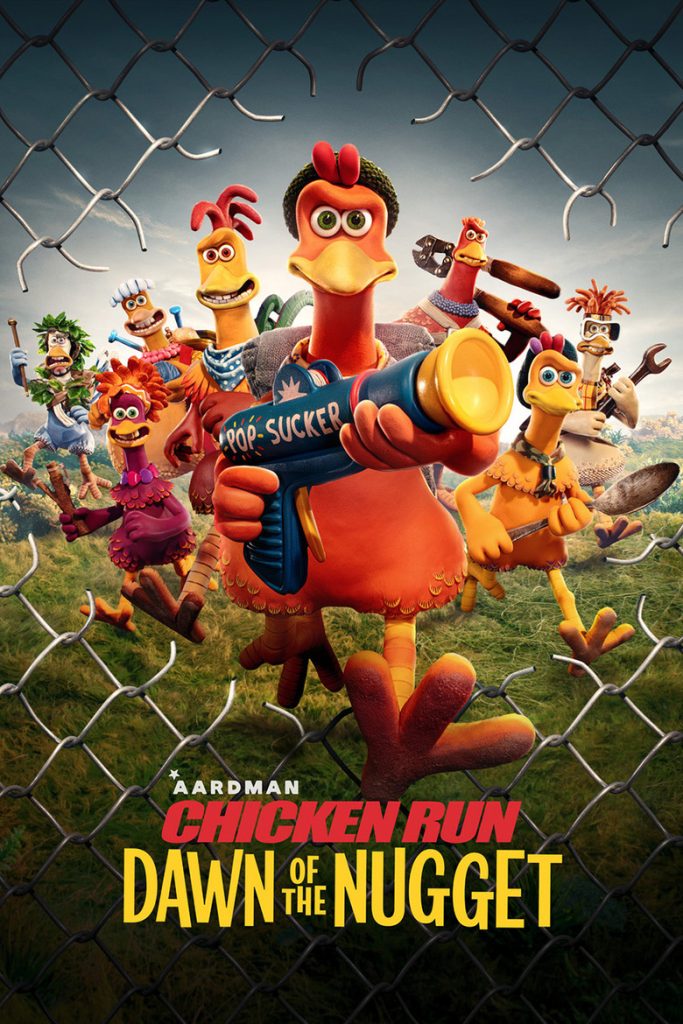
Story overview
This animated sequel follows a group of brave chickens who unite to protect their community from a mysterious new danger emerging from a nearby farm. The chickens work together using teamwork and clever strategies to investigate the suspicious activities threatening poultry-kind. The story emphasizes themes of friendship, courage, and standing up against threats to one's home and family.
Parent Guide
A family-friendly animated adventure with mild peril and positive messages about teamwork and courage.
Content breakdown
Cartoon-style action with chickens in peril from humans and machinery, but no graphic violence.
Some suspenseful moments and threats to characters, but resolved in a lighthearted manner.
No offensive language noted in family animation.
No sexual content or nudity in this family film.
No depiction of substance use.
Moments of tension balanced with humor and positive outcomes.
Parent tips
This PG-rated animated adventure contains mild peril and comedic action sequences that might be slightly intense for very young viewers. The chickens face threats from humans and machinery, but the tone remains lighthearted with plenty of humor. The film's messages about teamwork, problem-solving, and protecting one's community provide good discussion opportunities for families.
Parent chat guide
Parent follow-up questions
- What was your favorite chicken character?
- How did the chickens help each other?
- What was the funniest part?
- What would you do if you saw something suspicious?
- How did the chickens stay brave?
- Why was teamwork important for the chickens?
- What strategies did the chickens use to solve problems?
- How did different characters contribute to the group?
- What does it mean to protect your community?
- What would you have done differently?
- What makes an effective team leader?
- How did the chickens balance caution with action?
- What real-world situations might require similar problem-solving?
- How did humor help during tense moments?
- What values were most important to the characters?
- How does the film approach the concept of collective action?
- What commentary might exist about food production systems?
- How did the film balance entertainment with its messages?
- What leadership qualities were demonstrated?
- How might this story connect to real community challenges?
🎭 Story Kernel
The film shifts the stakes from the collective survival of the original to a more intimate, generational struggle. Ginger, once the revolutionary leader, has become a cautious parent, inadvertently creating the same walls she once fought to tear down. The narrative explores the irony of safety as a form of stagnation. When her daughter Molly is lured into the sinister Fun-Land Farms, the film transforms into a reverse-heist. It critiques the modern food industry’s sanitization of slaughter, where the happy chicken marketing trope is literalized through mind-control collars. Ultimately, it is a story about the impossibility of isolationism in a predatory world, suggesting that true freedom requires constant vigilance and the courage to confront the ghosts of the past, embodied by the return of a modernized, corporate Mrs. Tweedy.
🎬 Visual Aesthetics
Aardman Animations elevates their signature claymation with a vibrant, mid-century modern aesthetic that feels like a poultry-themed Bond film. The contrast between the warm, organic textures of the chickens' island sanctuary and the cold, sterile, neon-lit geometry of Fun-Land Farms is striking. The facility itself is a masterpiece of visual irony, using bright colors and amusement park imagery to mask a mechanized death trap. The cinematography utilizes more dynamic camera movements than its predecessor, blending traditional stop-motion with seamless digital set extensions. Symbolically, the happy collars serve as a glowing visual shorthand for the loss of autonomy, turning the expressive, hand-sculpted characters into vacant-eyed drones, highlighting the tension between individual identity and industrial uniformity. This visual duality underscores the film's critique of manufactured happiness.
🔍 Details & Easter Eggs
💡 Behind the Scenes
This sequel arrived 23 years after the original Chicken Run, marking one of the longest gaps between a film and its successor in animation history. While Peter Lord and Nick Park remained involved as executive producers, Sam Fell took the directorial reins. Notably, the lead voice roles were recast, with Thandiwe Newton and Zachary Levi replacing Julia Sawalha and Mel Gibson as Ginger and Rocky. The production utilized over 800 chicken puppets and required a crew of more than 350 people. To achieve the massive scale of the Fun-Land facility, Aardman combined traditional physical sets with advanced CGI.
Where to watch
Choose region:
- Netflix
- Netflix Standard with Ads
Trailer
Trailer playback is unavailable in your region.