
Chickenhare and the Hamster of Darkness (2022)
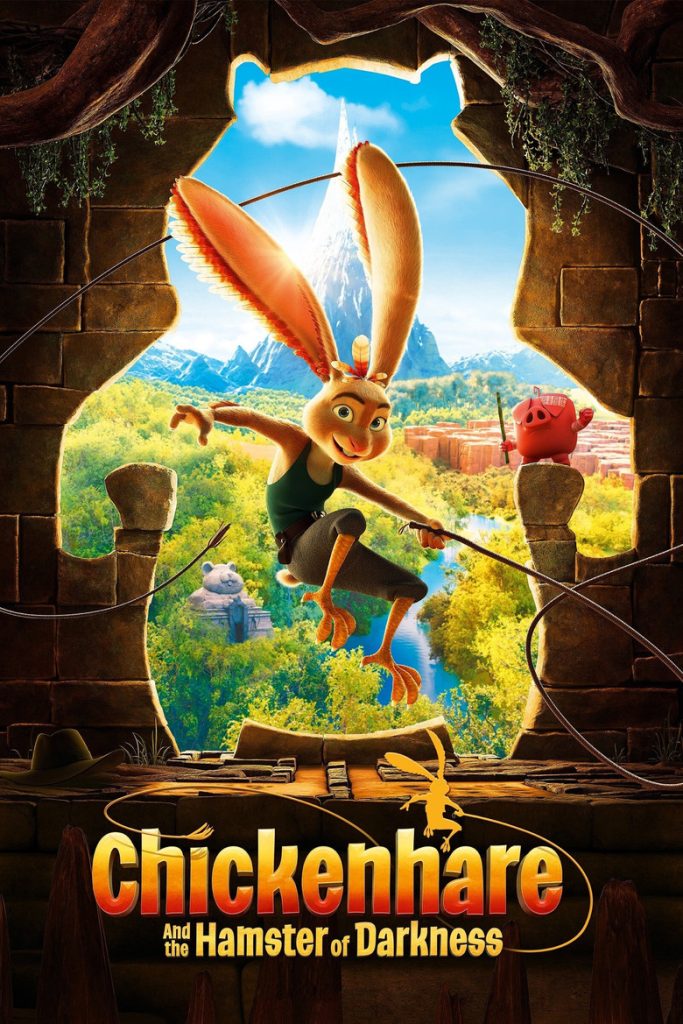
Story overview
Chickenhare and the Hamster of Darkness is an animated adventure comedy about a young hybrid creature who struggles with his identity while trying to prove himself as an adventurer. The story follows Chickenhare's quest to find a powerful scepter before his evil uncle can obtain it, accompanied by loyal animal companions. This family-friendly film explores themes of self-acceptance, friendship, and perseverance through an entertaining fantasy journey.
Parent Guide
Family-friendly animated adventure with positive messages about self-acceptance and teamwork.
Content breakdown
Fantasy action sequences with characters in mild peril, typical of animated adventure films.
Some scenes with an evil character and moments of tension, but nothing graphic or overly frightening.
No inappropriate language noted.
No sexual content or nudity.
No substance use depicted.
Mild emotional moments related to identity struggles and friendship, handled in an age-appropriate way.
Parent tips
This animated adventure is rated TV-Y7, making it suitable for most children ages 7 and up. The film contains mild fantasy action and peril typical of animated quest stories, with some scenes of characters in danger that might be intense for very young viewers. The humor is family-appropriate, and the positive messages about embracing one's uniqueness and working as a team make it a good choice for family viewing.
Parent chat guide
Parent follow-up questions
- What was your favorite animal in the movie?
- How did Chickenhare feel when people made fun of him?
- What does it mean to be a good friend?
- What was the funniest part of the movie?
- What adventure would you like to go on?
- Why do you think Chickenhare pretended to be something he wasn't?
- How did the characters help each other during their quest?
- What does it mean to be brave even when you're scared?
- What lesson did Chickenhare learn about himself?
- What makes someone a good adventurer?
- How does the movie show that everyone has unique strengths?
- What does the story teach us about facing our fears?
- How do the characters grow and change throughout their journey?
- What does it mean to be true to yourself?
- How does teamwork help the characters achieve their goal?
- How does the film explore themes of identity and self-acceptance?
- What commentary does the movie make about societal expectations?
- How do the characters demonstrate resilience in the face of challenges?
- What does the quest represent metaphorically?
- How does the film balance humor with meaningful messages?
🎭 Story Kernel
At its core, 'Chickenhare and the Hamster of Darkness' explores the tension between societal acceptance and authentic selfhood. Chickenhare's journey isn't just about retrieving a magical artifact; it's about reconciling his hybrid nature in a world that demands categorical purity. The film cleverly subverts traditional hero narratives by making its protagonist's greatest strength his perceived weakness—being neither fully chicken nor hare. The supporting characters, particularly the cynical turtle Abe and the fiercely loyal Meg, mirror different responses to marginalization: cynical withdrawal versus defiant pride. Ultimately, the movie argues that true belonging comes not from conforming to existing categories, but from creating spaces where hybridity can thrive.
🎬 Visual Aesthetics
The film employs a vibrant, almost exaggerated color palette that shifts with emotional tone—warm golds and reds during moments of camaraderie, cold blues during isolation scenes. Character designs emphasize their hybrid natures through clever visual puns (Chickenhare's feathered ears, the hamster's oversized cheeks containing literal darkness). Action sequences utilize dynamic camera angles that emphasize scale differences between characters, particularly during chase scenes through the forest. The 'Hamster of Darkness' itself is rendered with a swirling, ink-like texture that contrasts sharply with the otherwise crisp animation, visually representing corruption versus natural order.
🔍 Details & Easter Eggs
💡 Behind the Scenes
The film is based on the Belgian comic series 'Chickenhare' by Chris Grine, though it takes significant creative liberties with the source material. Voice actor Mark Hamill brings particular depth to the villainous King Peter, using vocal tones that subtly shift between regal authority and desperate insecurity. Production involved animators from multiple countries coordinating through remote work during pandemic restrictions, which influenced the film's themes of connection across differences. The forest environments were partially inspired by Black Forest regions in Germany, with animators taking virtual tours to capture specific lighting effects through dense foliage.
Where to watch
Choose region:
- Netflix
- Netflix Standard with Ads
Trailer
Trailer playback is unavailable in your region.