
Child’s Play (1988)
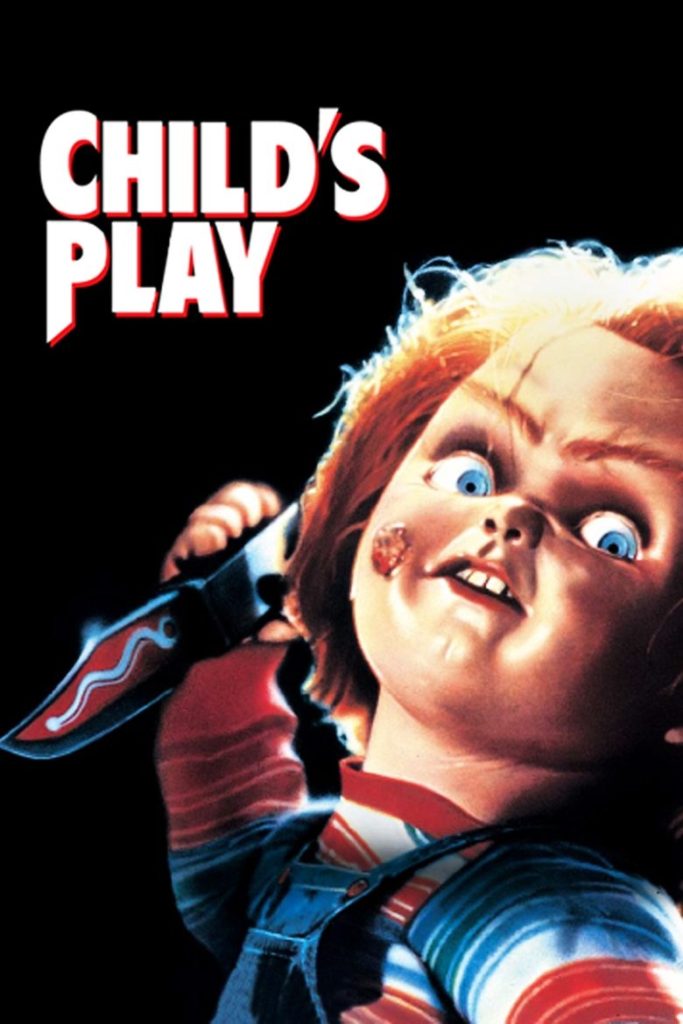
Story overview
A serial killer named Charles Lee Ray, mortally wounded during a police chase in a toy store, uses a voodoo ritual to transfer his soul into a 'Good Guy' doll named Chucky. The doll is then given as a birthday gift to 6-year-old Andy Barclay by his mother. Unbeknownst to them, Chucky is alive and malicious, embarking on a murderous rampage while trying to transfer his soul into Andy's body to become human again. The film blends horror with dark humor as Andy struggles to convince adults that his doll is evil, leading to escalating violence and suspense.
Parent Guide
This film contains strong horror elements, including violence, peril, and disturbing imagery, making it inappropriate for young children. It is best suited for mature teenagers with parental discretion.
Content breakdown
Multiple murders with weapons like knives and hammers; characters are electrocuted, shot, and pushed from heights; intense chase scenes; a character's death by voodoo doll; peril to a child protagonist.
A living doll with a sinister personality; jump scares; suspenseful sequences; themes of possession and supernatural evil; dark and tense atmosphere; scenes of implied or shown death.
Some profanity, including 'hell', 'damn', and 'bastard'; occasional crude language.
Brief sexual references or innuendos; no nudity or explicit scenes.
Adult characters are shown drinking alcohol in social settings; no drug use depicted.
High tension and fear throughout; themes of betrayal and isolation as the child is not believed; emotional distress for characters in peril.
Parent tips
This classic horror film features intense scenes that may be too frightening for younger viewers. Consider watching it first to gauge appropriateness for your child. Discuss the difference between fantasy and reality, emphasizing that dolls cannot come to life. Be prepared for questions about death and violence. The film's R rating is due to strong horror violence, language, and brief sexual references. It may be suitable for mature teens but is generally not recommended for children under 13 without parental guidance.
Parent chat guide
Parent follow-up questions
- What makes Chucky scary?
- How can we tell if something is real or pretend?
- What would you do if your toy seemed scary?
- Why do you think Andy had trouble convincing adults about Chucky?
- What are some ways the movie tried to make you feel scared?
- How is Chucky different from a regular doll?
- What does the movie say about trust between kids and adults?
- How does the film use humor alongside horror?
- What are the consequences of violence in the story?
- How does 'Child's Play' comment on consumerism or toy culture?
- What makes Chucky an iconic horror villain?
- Discuss the ethical implications of the soul-transfer plot.
🎭 Story Kernel
At its core, 'Child's Play' is a dark satire of 1980s consumer culture and parental anxiety. The film isn't about a haunted doll, but about technology and corporate greed gone monstrously wrong. The driving force isn't supernatural evil, but a corporation's negligence—the soul of a serial killer is accidentally transferred into a mass-produced toy during a botched quality control ritual. Andy's mother Karen, struggling financially, buys the discounted Good Guy doll to fulfill her son's Christmas wish, making her desperation the catalyst for the horror. Chucky's motivation stems from his human consciousness trapped in plastic—he wants to transfer his soul into a living child, making Andy both his target and his potential vessel. The real horror emerges from how easily evil infiltrates the domestic sphere through commercial products.
🎬 Visual Aesthetics
The film employs a clever visual duality: bright, saturated colors of childhood (Andy's room, toy packaging) contrasted with the gritty, shadowy urban reality of Chicago. Director Tom Holland uses deliberate camera placement to create unease—Chucky is often shot from low angles when he's 'alive,' giving him imposing presence despite his small size. The doll's movements evolve from subtle, barely-noticeable shifts in early scenes to full-blown physicality, mirroring his growing power. Practical effects by Kevin Yagher remain remarkably effective, particularly in the climactic factory scene where Chucky's burned, plastic-melting face reveals the grotesque fusion of man and toy. The color red dominates key moments—from the Good Guy doll's signature sweater to blood and fire—creating visual continuity between childhood innocence and violence.
🔍 Details & Easter Eggs
💡 Behind the Scenes
Brad Dourif, who voices Chucky, recorded all his lines in just two days. The doll itself required three separate versions: a 'hero' doll for close-ups, a mechanical version for limited movement, and a stunt doll for action scenes. Director Tom Holland insisted on practical effects over stop-motion, leading to the creation of elaborate puppetry systems. The film was shot in Chicago during winter, requiring heated sets for child actor Alex Vincent. Interestingly, the original script featured a more supernatural explanation before being revised to the voodoo/technology hybrid. The Good Guy doll jingle ('You are my best friend to the end') was composed specifically for the film and became ironically menacing.
Where to watch
Choose region:
- Peacock Premium
- Amazon Video
- Apple TV Store
- Google Play Movies
- YouTube
- Fandango At Home
- Plex
Trailer
Trailer playback is unavailable in your region.