
Christopher Robin (2018)
Story overview
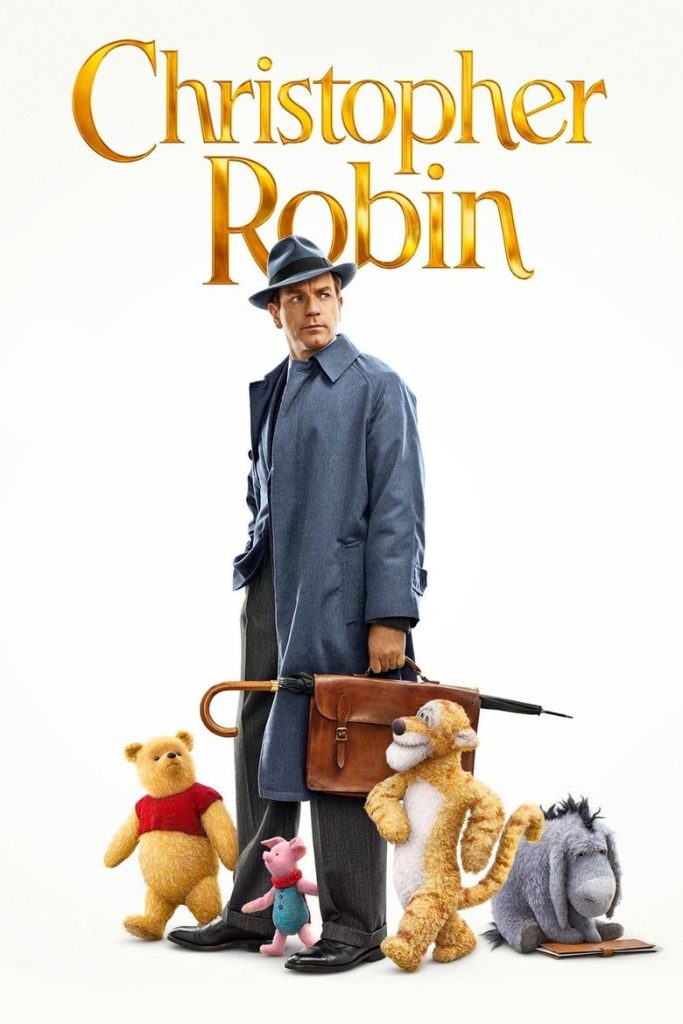
Christopher Robin is a live-action fantasy adventure that follows the grown-up Christopher Robin, now a stressed businessman who has lost touch with his childhood imagination. When his old friends from the Hundred Acre Wood—including Winnie the Pooh, Piglet, and Eeyore—reappear in his life, they help him rediscover joy and balance. The film blends whimsical fantasy elements with heartfelt themes about family, responsibility, and reconnecting with what truly matters.
Parent Guide
A heartwarming family film with positive messages about imagination, friendship, and work-life balance. Suitable for most children with parental guidance for mild emotional moments.
Content breakdown
Some mild peril when characters face challenges or get into minor scrapes. No physical violence.
Mildly tense moments when characters are in minor danger or facing problems. Nothing truly frightening.
No offensive language.
No sexual content or nudity.
No substance use depicted.
Some emotional scenes dealing with nostalgia, stress, and family relationships. Generally uplifting tone.
Parent tips
This gentle family film offers positive messages about balancing work and family life while valuing imagination and friendship. Parents should know that while it's generally lighthearted, there are moments of mild peril when characters face challenges, and some emotional scenes where Christopher Robin grapples with adult responsibilities. The PG rating reflects these elements, making it suitable for most children with parental guidance.
The movie provides excellent opportunities to discuss themes like nostalgia, the importance of play, and managing stress in healthy ways. Younger children might need reassurance during slightly tense moments, but overall the film maintains a warm, reassuring tone.
Parent chat guide
You might also explore how different characters like Pooh, Eeyore, and Tigger represent different personality traits and coping styles. This can help children understand emotional diversity and how friends support each other through challenges.
Parent follow-up questions
- Which animal friend from the Hundred Acre Wood did you like best and why?
- What was your favorite funny moment in the movie?
- How did Christopher Robin's family help him feel better?
- What games would you play with Pooh and his friends?
- How did the movie make you feel?
- Why do you think Christopher Robin forgot about his friends from the Hundred Acre Wood?
- What lesson did Christopher Robin learn about work and family?
- How did the different animal friends help solve problems together?
- What would you do if you found your old toys came to life?
- How does the movie show that grown-ups can still have fun?
- How does the movie contrast childhood imagination with adult responsibilities?
- What does the film suggest about the importance of maintaining connections from our past?
- How do the animal characters represent different aspects of Christopher Robin's personality?
- What strategies does the movie show for dealing with stress and overwork?
- How does the setting (both real world and Hundred Acre Wood) contribute to the story's themes?
- How does the film comment on modern work-life balance challenges?
- What does the movie suggest about the psychological value of nostalgia and childhood memories?
- How are themes of loss and rediscovery handled in the narrative?
- In what ways does the film update the classic Winnie the Pooh characters for contemporary audiences?
- How does the cinematography and visual style contribute to the emotional impact of the story?
🎭 Story Kernel
The film explores the tension between adult responsibility and childlike wonder through Christopher Robin's midlife crisis. Having abandoned the Hundred Acre Wood for corporate drudgery, he rediscovers his essence when Pooh reappears. This isn't about nostalgia for childhood, but about reclaiming imagination as a tool for adult problem-solving. The narrative critiques how modern productivity culture squeezes out creativity, suggesting that 'doing nothing' with Pooh is actually the most productive state for genuine solutions. Christopher's journey shows that maturity isn't about outgrowing play, but integrating it wisely into adult life.
🎬 Visual Aesthetics
The film employs a deliberate visual dichotomy: Christopher's London is desaturated, with rigid compositions and cold lighting reflecting his constrained life. In contrast, the Hundred Acre Wood bursts with warm, golden-hour hues and fluid camera movements. Pooh's entrance into London creates magical realism—a stuffed bear in a gray train station becomes visual poetry. The transition sequences between worlds use subtle visual echoes, like office paperwork morphing into forest leaves. Director Marc Forster uses close-ups on Ewan McGregor's face to chart his emotional thawing, while wide shots of the woods emphasize the expansive freedom Christopher has lost.
🔍 Details & Easter Eggs
💡 Behind the Scenes
Ewan McGregor performed most scenes opposite a stuffed Pooh stand-in, with Jim Cummings' voice added later. The Hundred Acre Wood scenes were filmed in Ashdown Forest, the actual inspiration for A.A. Milne's stories. Pooh's minimalist animation required 18 months of development to balance realism with nostalgic charm. Director Marc Forster insisted on practical effects where possible, using puppeteers for Pooh's physical presence. The film's script went through 12 revisions to balance adult themes with the property's family-friendly legacy.
Where to watch
Choose region:
- Disney Plus
- Amazon Video
- Apple TV
- Google Play Movies
- YouTube
- Fandango At Home
Trailer
Trailer playback is unavailable in your region.