
Cinderella (1950)
Story overview
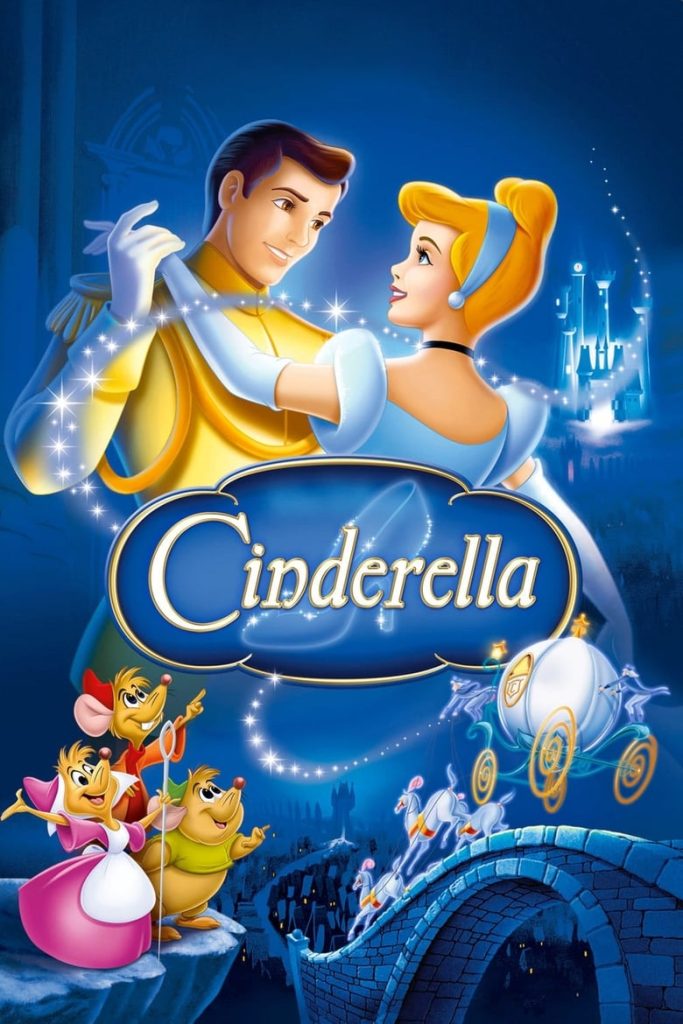
This classic animated fairy tale follows a kind-hearted young woman named Cinderella who endures mistreatment from her stepmother and stepsisters while maintaining hope for a better life. With magical assistance from her Fairy Godmother and support from animal friends, she attends a royal ball where she captures the prince's attention. The story emphasizes themes of perseverance, kindness, and believing in dreams despite difficult circumstances.
Parent Guide
A gentle, classic fairy tale with positive messages suitable for most children.
Content breakdown
No physical violence, but characters are sometimes mean to each other through words and actions.
Some children might find the stepfamily's mistreatment emotionally challenging, and the midnight transformation scene involves dramatic magical effects.
No offensive language present.
No sexual content or nudity; includes romantic elements like dancing and a kiss on the hand.
No substance use depicted.
Contains emotional moments related to mistreatment and separation, balanced with joyful magical sequences.
Parent tips
This G-rated Disney classic is generally appropriate for all ages, featuring gentle fantasy elements and positive messages about kindness and hope. Parents should be aware that some children might find the scenes of Cinderella being mistreated by her stepfamily emotionally challenging, though these moments are not graphic. The magical transformation sequences and animal characters provide delightful entertainment while reinforcing the value of friendship and maintaining optimism.
Parent chat guide
Parent follow-up questions
- What was your favorite animal friend in the movie?
- How did Cinderella feel when she couldn't go to the ball?
- What was the prettiest part of the magic transformation?
- Why do you think the Fairy Godmother helped Cinderella?
- What made you happy in the story?
- Why do you think Cinderella stayed kind even when others weren't kind to her?
- What do you think the story teaches about dreams and wishes?
- How did the animals help Cinderella throughout the movie?
- What would you do if you had a Fairy Godmother for one day?
- Why is it important to be hopeful even when things are difficult?
- How does the movie show the difference between being treated unfairly and responding with kindness?
- What do you think about the stepmother's behavior toward Cinderella?
- How does the magical help in the story compare to real-life ways people help each other?
- What qualities made Cinderella and the prince connect at the ball?
- What messages about inner beauty versus outward appearance does the story convey?
- How does this classic fairy tale reflect societal expectations about women and marriage in its time period?
- What psychological effects might prolonged mistreatment like Cinderella's have on a person?
- How do the magical elements serve as metaphors for hope and transformation in difficult circumstances?
- What commentary does the story offer about class differences and social mobility?
- How might this story be interpreted differently through modern versus historical lenses?
🎭 Story Kernel
At its core, 'Cinderella' explores the tension between external oppression and internal resilience. Cinderella's journey isn't about waiting for rescue but about maintaining her identity under systematic erasure. The stepmother represents institutional cruelty—methodical, psychological destruction disguised as domestic order. What drives Cinderella isn't romantic longing but the preservation of her mother's legacy of kindness. The fairy godmother's intervention isn't magic as deus ex machina but as symbolic representation of how suppressed virtues manifest when given space. The midnight deadline creates urgency not for romance but for Cinderella to claim her narrative before the system reasserts control.
🎬 Visual Aesthetics
Kenneth Branagh's direction employs a painterly visual language where composition reflects power dynamics. Early scenes use tight framing and low angles to visually compress Cinderella in her attic, while the stepmother occupies expansive, symmetrical spaces. The color palette evolves from muted grays and browns of oppression to the saturated golds and blues of the ball—not as fantasy escape but as visual representation of emotional expansion. Costume design functions as character armor: Cinderella's simple dresses versus the stepfamily's constricting, excessive fabrics. The glass slipper becomes a visual metaphor for transparency and fragility in a world of deception.
🔍 Details & Easter Eggs
💡 Behind the Scenes
Lily James trained for months to achieve Cinderella's distinctive running style in the glass slippers, which were actually made from Swarovski crystals and extremely fragile. The famous blue dress required 18 layers of fabric and took 16 people to lift. Director Kenneth Branagh insisted on practical effects over CGI for the transformation scenes, using puppetry and clever editing. Helena Bonham Carter's fairy godmother was originally written as a more traditional character, but she improvised much of the quirky, scattered performance that became iconic.
Where to watch
Choose region:
- Disney Plus
- Amazon Video
- Apple TV
- Google Play Movies
- YouTube
- Fandango At Home
Trailer
Trailer playback is unavailable in your region.