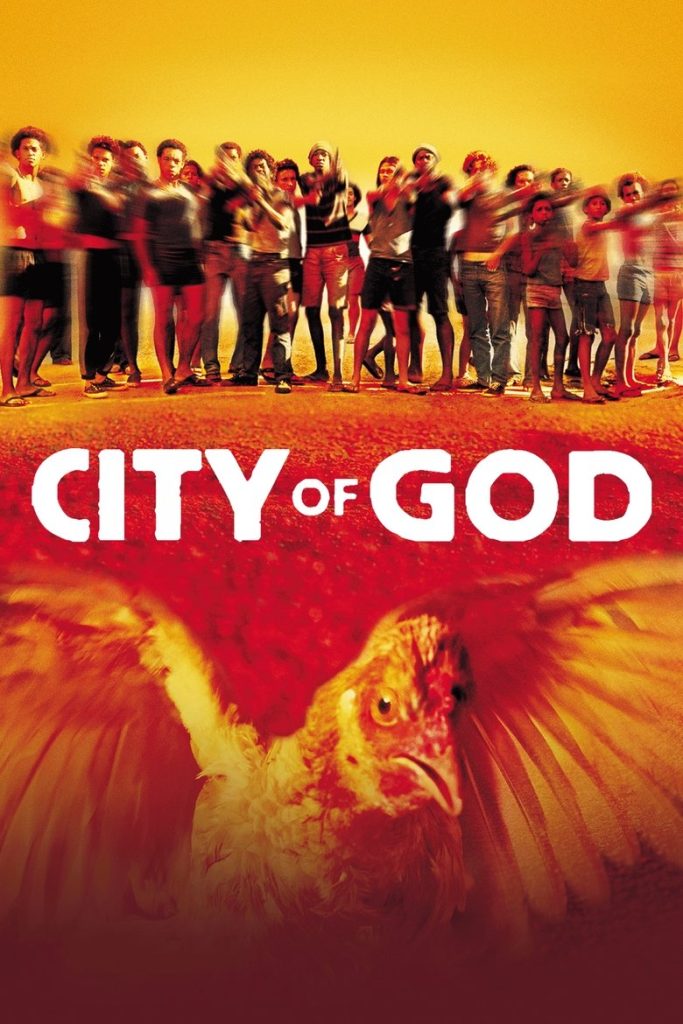
City of God (2002)
Story overview
City of God is a powerful Brazilian drama set in the favelas of Rio de Janeiro during the 1970s. It follows two young men from the same neighborhood who take drastically different paths in life. One becomes a photographer documenting the escalating violence, while the other becomes a drug dealer immersed in criminal activities. The film portrays the harsh realities of poverty, crime, and survival in an urban environment.
Parent Guide
A gritty, realistic portrayal of poverty and crime with intense violence and mature themes throughout. Recommended for mature audiences only.
Content breakdown
Frequent, realistic violence including shootings, gang conflicts, and criminal activities. Some scenes are particularly intense and graphic.
Realistic portrayal of poverty, crime, and violence that may be disturbing. Characters face life-threatening situations regularly.
Frequent strong language throughout the film, consistent with the realistic portrayal of the environment.
Some sexual references and situations, though not the film's primary focus. Occasional suggestive content.
Frequent depiction of drug use, drug dealing, and substance abuse as central elements of the story.
High emotional intensity throughout with themes of survival, moral choices, and systemic injustice.
Parent tips
This film contains intense, realistic violence including shootings, gang conflicts, and criminal activities that are central to the story. The R rating reflects strong language, drug use, and mature themes throughout. The film's documentary-style approach makes the violence feel particularly immediate and disturbing.
Parents should be aware that this is not a typical crime drama but a gritty, unflinching look at systemic poverty and violence. The film doesn't glorify criminal behavior but shows its devastating consequences. The emotional intensity is high throughout, with characters facing life-or-death situations regularly.
Due to the mature content and realistic portrayal of violence, this film is best suited for older teenagers and adults. Younger viewers may find the content overwhelming and disturbing. The film's themes require emotional maturity to process appropriately.
Parent chat guide
During viewing, be available to pause and discuss particularly intense scenes. Ask how they're feeling about what they're seeing and whether they have questions about the situations portrayed. Help them understand the difference between the film's artistic portrayal and real-world consequences of similar actions.
After watching, focus discussions on the film's themes rather than specific violent acts. Talk about the choices characters made, the consequences of those choices, and the social conditions that influenced them. Discuss how communities can address poverty and violence in constructive ways.
Parent follow-up questions
- What did you notice about where the people in the movie lived?
- How did the characters show they cared about each other?
- What colors did you see in the movie?
- What sounds did you hear?
- How did the music make you feel?
- Why do you think the two main characters made different choices?
- How did the neighborhood affect people's lives?
- What did you learn about photography from the movie?
- How did people solve problems in the story?
- What made you feel sad or worried during the movie?
- What factors influenced the characters' decisions about right and wrong?
- How does poverty affect opportunities in communities?
- What role did violence play in the story?
- How did the photographer's perspective differ from others?
- What messages about community did you take from the film?
- How does the film portray the cycle of violence and poverty?
- What social and economic factors contribute to the situations shown?
- How does the film's style affect your emotional response to the content?
- What ethical questions does the film raise about documenting difficult realities?
- How might communities break cycles of violence shown in the film?
🎭 Story Kernel
At its core, 'City of God' explores how systemic poverty and the absence of legitimate opportunity create a self-perpetuating cycle of violence. The film isn't about 'good vs. evil' but about how the environment dictates morality. Characters are driven by a desperate need for power, respect, and agency in a world that offers none through conventional means. Rocket's journey to become a photographer represents the rare path of bearing witness rather than participating, while characters like Li'l Zé are products of a childhood stripped of innocence, molded by the very violence they later perpetuate. The film suggests the favela is not just a location but a character—a hungry entity that consumes its young.
🎬 Visual Aesthetics
The film's visual language is kinetic and visceral, using rapid cuts, handheld cameras, and whip-pans to mirror the chaotic energy of the favela. Director Fernando Meirelles employs a sun-bleached, almost documentary-style color palette that grounds the brutality in a harsh, realistic light. Key sequences, like the apartment shootout, are choreographed with a balletic, yet terrifying precision. Symbolism is potent but not heavy-handed: the recurring motif of chickens (like the one in the opening scene) represents the trapped, frantic nature of the characters, forever running in circles. The camera often adopts the perspective of both predator and prey, refusing to let the audience settle into a comfortable viewing position.
🔍 Details & Easter Eggs
💡 Behind the Scenes
The film's stunning authenticity stems from its casting: most actors were non-professionals recruited from Rio's favelas, including Seu Jorge (Knockout Ned) who was a musician. The production filmed in the actual Cidade de Deus favela, with crew members living on-site during shooting to build trust with the community. The iconic 'Tender Trio' robbery sequence was shot with a custom-made camera rig on a bicycle to achieve its dizzying, chase-like perspective. This immersive approach blurred the line between cinema and documentary, contributing to the film's raw, uncompromising power.
Where to watch
Choose region:
- Amazon Video
- Apple TV
- Google Play Movies
- YouTube
- Fandango At Home
- JustWatchTV
- Spectrum On Demand
- Kanopy
Trailer
Trailer playback is unavailable in your region.