
Cloudy with a Chance of Meatballs (2009)
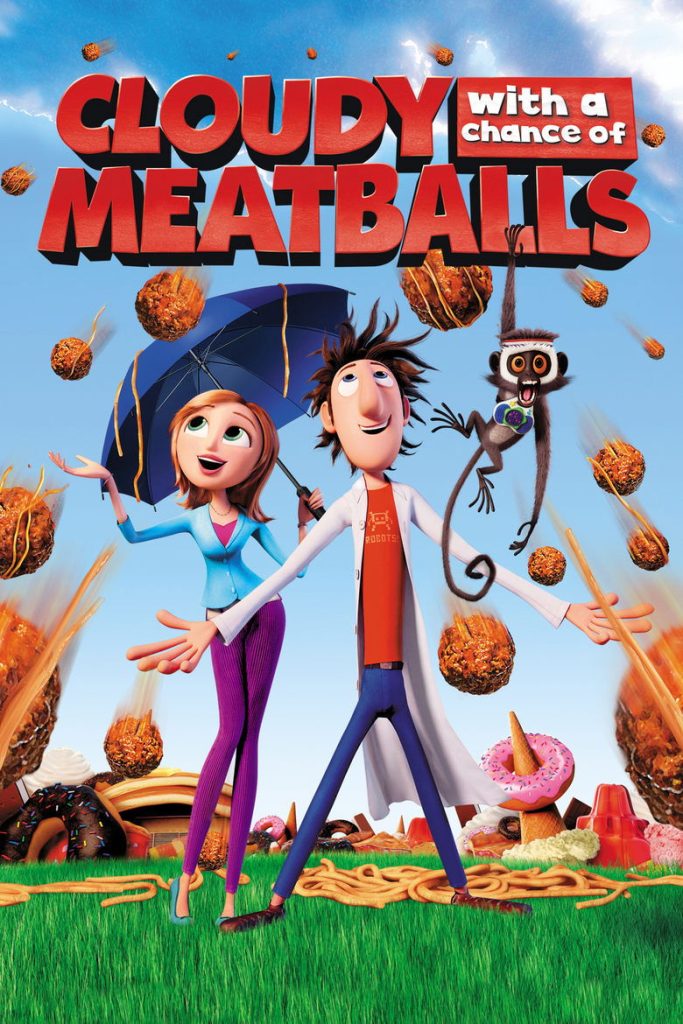
Story overview
Cloudy with a Chance of Meatballs is a 2009 animated comedy about Flint Lockwood, a young inventor who creates a machine that turns water into food, causing it to rain delicious meals over his struggling hometown. Initially celebrated, the invention spirals out of control as the food storms grow massive and chaotic, threatening to destroy the town. Flint must work with friends and family to fix his creation and save everyone from the culinary catastrophe.
Parent Guide
A family-friendly animated comedy with mild action and humor suitable for most children ages 6 and up. Very young or sensitive viewers might find some chaotic scenes overwhelming.
Content breakdown
Cartoonish peril throughout as characters run from giant falling food (e.g., meatballs, pancakes, spaghetti tornadoes). No injuries shown; all action is slapstick and non-graphic. Some destruction of buildings and vehicles in exaggerated, comedic ways.
Intense moments when food storms become monstrous and chaotic, with loud sounds and fast pacing. A giant sentient gelatin might be unsettling for some young kids. Overall tone remains humorous and non-threatening.
Very mild language like 'butt' and silly insults (e.g., 'food dude'). No profanity or harsh words.
No sexual content or nudity. A brief, mild romantic subplot between Flint and Sam is portrayed innocently with hand-holding and caring gestures.
No substance use. Characters drink soda and eat food humorously.
Moderate excitement during action sequences. Some emotional moments when Flint feels like a failure or reconciles with his father, but these are handled lightly. Overall upbeat and comedic tone.
Parent tips
This movie is colorful, fast-paced, and full of slapstick humor that kids enjoy. The food-themed chaos is exaggerated and cartoonish rather than realistic. Some scenes might be intense for very young children due to loud noises, large-scale destruction, and characters in peril. The humor includes mild potty jokes and silly wordplay. Positive themes include creativity, perseverance, friendship, and taking responsibility for mistakes.
Parent chat guide
Parent follow-up questions
- What was your favorite food that fell from the sky?
- How did Flint try to help his town?
- Was the big spaghetti tornado scary or funny?
- What did Flint learn about being a good friend?
- Why did Flint's machine start making giant food? How could he have prevented it?
- What did Sam Sparks teach Flint about science and reporting?
- How did Flint's dad show he cared, even though they argued?
- What does the movie say about trying new things and making mistakes?
- How does the movie use food as a metaphor for technology and consumption?
- What real-world issues might the food storms represent (e.g., waste, climate)?
- Compare Flint's creativity with his responsibility—how do they balance?
- Discuss the humor: is it just silly, or does it have clever moments?
- Analyze the satire of consumer culture and instant gratification in the film.
- How does the animation style enhance the comedic and chaotic tone?
- Discuss the character arcs: Flint's growth, Sam's ambition, the mayor's greed.
- What ethical questions does the movie raise about innovation and unintended consequences?
🎭 Story Kernel
At its core, 'Cloudy with a Chance of Meatballs' is a sharp critique of consumerism and the pursuit of convenience at all costs. Flint Lockwood's invention isn't just about solving hunger—it's about gaining validation in a town that's rejected him. The film explores how technological solutions create new problems when they're driven by ego rather than genuine need. Mayor Shelbourne represents the corrupting influence of power and greed, turning a scientific marvel into a spectacle that nearly destroys everything. Ultimately, it's about Flint learning that real success comes from connection and responsibility, not just invention.
🎬 Visual Aesthetics
The film's visual language is a masterclass in food-as-spectacle, with the FLDSMDFR's creations rendered in mouth-watering detail that borders on food porn. The camera often adopts low angles during food storms, making the meals feel both wondrous and threatening. Swallow Falls' initial gray palette transforms into a vibrant, candy-colored nightmare as the food becomes more monstrous. The spaghetti tornado sequence uses swirling, chaotic motion that mirrors Flint's unraveling control, while the final giant food storm creates a sense of apocalyptic scale through sweeping aerial shots.
🔍 Details & Easter Eggs
💡 Behind the Scenes
The film's unique visual style was achieved through 'squash and stretch' animation principles pushed to extremes, making food physics both realistic and cartoonishly exaggerated. Bill Hader recorded Flint's lines while physically acting out the inventor's frantic movements to capture authentic energy. The town name was changed from 'Chewandswallow' in the book to 'Swallow Falls' for the film, creating a more subtle food-related pun. Directors Phil Lord and Christopher Miller insisted on practical food references, with animators studying how real spaghetti moves and how jelly actually jiggles.
Where to watch
Choose region:
- Netflix
- Netflix Standard with Ads
- Amazon Video
- Apple TV Store
- Google Play Movies
- YouTube
- Fandango At Home
- Spectrum On Demand
Trailer
Trailer playback is unavailable in your region.