
Confirmation (2016)
Story overview
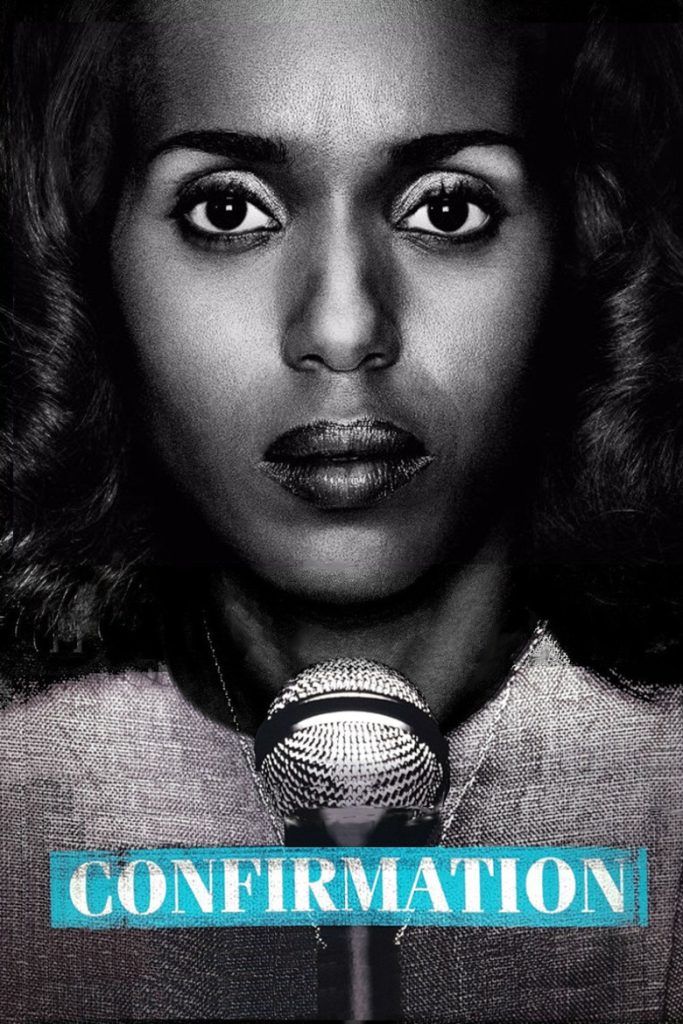
Confirmation (2016) is a historical drama based on the 1991 Senate hearings where law professor Anita Hill testified about sexual harassment allegations against Supreme Court nominee Clarence Thomas. The film explores themes of power, gender dynamics, institutional politics, and truth-seeking through courtroom-style proceedings and personal flashbacks.
Parent Guide
A serious historical drama about sexual harassment allegations in a Supreme Court confirmation hearing. Requires maturity to understand the complex themes of power, gender, and institutional politics.
Content breakdown
No physical violence. Tense confrontations during hearings but no peril situations.
Emotionally intense testimony about workplace harassment. Some viewers may find discussions of sexual misconduct disturbing. Flashbacks show uncomfortable workplace interactions but nothing graphic.
Occasional mild profanity (hell, damn). No strong sexual language or slurs.
Discussions of sexual harassment and inappropriate workplace behavior. References to sexual topics during testimony. No nudity, sexual acts, or explicit descriptions.
No substance use depicted.
High-stakes political drama with emotional testimony. Characters face public scrutiny, professional consequences, and personal distress. Tense courtroom atmosphere throughout.
Parent tips
This film deals with mature themes of sexual harassment, workplace discrimination, and political conflict. While there's no graphic content, the subject matter requires emotional maturity to process. Best for teens who can discuss these issues thoughtfully. Consider watching together to provide context about this historical event and its societal impact.
Parent chat guide
Parent follow-up questions
—
—
- What is a Senate hearing?
- Why was this an important moment in history?
- What does 'testify' mean?
- How did media coverage influence public perception of the hearings?
- What institutional barriers did Anita Hill face?
- How does this historical event connect to current discussions about workplace conduct?
- What ethical responsibilities do employers have regarding harassment claims?
- How might this hearing have been different if it happened today?
🎭 Story Kernel
At its core, 'Confirmation' is less about determining the truth of Anita Hill's allegations against Clarence Thomas and more about dissecting the systemic machinery designed to discredit and silence. The film's true antagonist isn't a person, but the entrenched political and judicial establishment. It explores how character assassination becomes a sanctioned tool, how credibility is weaponized against the accuser, and how the hearing was performative theater long before the verdict. The driving force for Hill is a devastatingly simple principle: telling the truth, despite knowing the cost. For the Senate committee, it's the preservation of institutional power and political expediency over genuine inquiry.
🎬 Visual Aesthetics
The film employs a muted, almost clinical visual palette of grays, browns, and beiges, mirroring the sterile, impersonal nature of Senate hearing rooms and political backrooms. Cinematography favors tight, constrained close-ups during testimonies, trapping characters in the frame and amplifying the claustrophobic pressure. In contrast, wider shots of the grand, empty Senate chambers highlight the isolating scale of the institution against the individual. There's a deliberate lack of stylistic flourish; the camera work is observational, refusing to sensationalize, which makes the emotional weight of the testimonies land with greater, more sobering impact.
🔍 Details & Easter Eggs
💡 Behind the Scenes
Kerry Washington, who portrays Anita Hill, spent significant time with Hill herself to understand her demeanor and cadence, aiming for authenticity over impersonation. The film faced scrutiny for its dramatization, leading the production to meticulously source dialogue from the actual Senate hearing transcripts. Wendell Pierce, who plays Clarence Thomas, studied hours of footage to capture Thomas's specific oratorical style and physical presence. Much of the 'hearing' was shot in sequence to help the actors build the narrative tension authentically.
Where to watch
Choose region:
- HBO Max
- HBO Max Amazon Channel
- Amazon Video
- Apple TV Store
- Google Play Movies
- YouTube
- Fandango At Home
Trailer
Trailer playback is unavailable in your region.