
Conspiracy (2001)
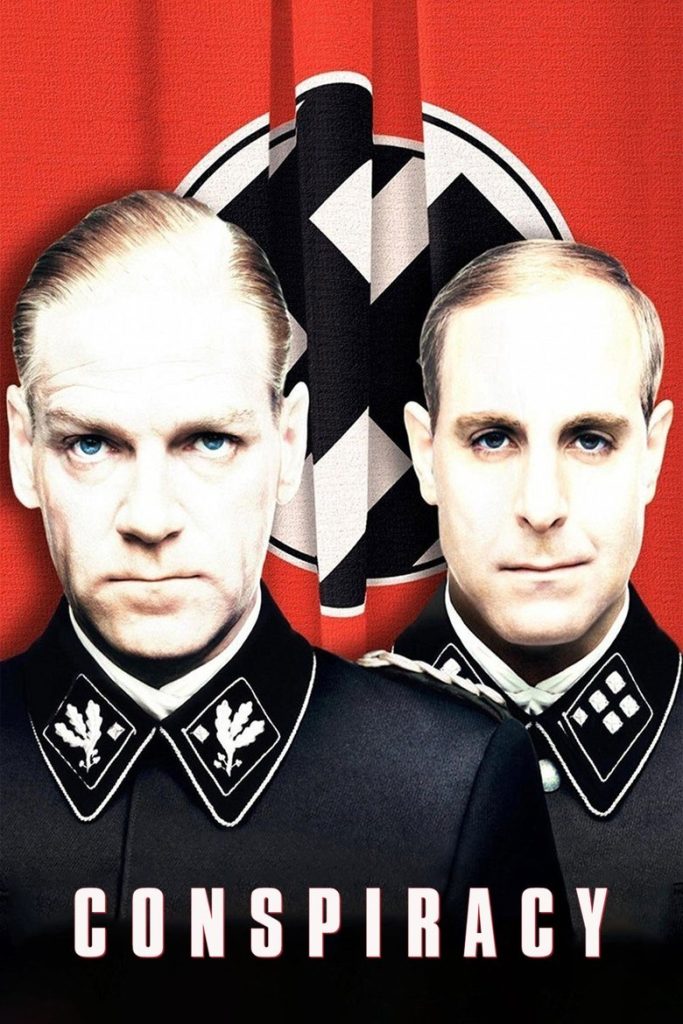
Story overview
Conspiracy is a 2001 historical drama that depicts the 1942 Wannsee Conference, where Nazi officials met to coordinate the implementation of the 'Final Solution' to exterminate European Jews. The film focuses on the bureaucratic discussions and chillingly detached planning of genocide by high-ranking officials. It presents a stark examination of how evil can be systematized through meetings and paperwork rather than overt violence.
Parent Guide
A historically accurate depiction of the Wannsee Conference where Nazi officials planned the Holocaust. Contains no graphic violence but deals with deeply disturbing subject matter through clinical discussions of genocide.
Content breakdown
No physical violence depicted. The peril is entirely psychological and historical, involving discussions of planned genocide.
Extremely disturbing due to the clinical, bureaucratic planning of mass murder. The detached discussions of genocide are psychologically chilling.
No strong language. Uses formal, bureaucratic language typical of official meetings.
No sexual content or nudity.
No substance use depicted.
High emotional intensity due to the horrifying subject matter. The clinical detachment of the discussions adds to the disturbing nature.
Parent tips
This film is rated R for its mature themes and disturbing historical content. It contains no graphic violence, nudity, or strong language, but deals with the systematic planning of genocide in a clinical, bureaucratic manner. The emotional intensity comes from the horrifying subject matter and the detached, business-like discussions about mass murder.
Due to its heavy historical subject matter and complex moral themes, this film is most appropriate for mature teenagers and adults. Younger viewers may find the discussions confusing or emotionally overwhelming without proper historical context and guidance.
Parents should be prepared to discuss the Holocaust, antisemitism, and how ordinary bureaucratic processes can enable horrific crimes. The film serves as an important historical document but requires thoughtful engagement.
Parent chat guide
During viewing, pause if needed to explain the historical significance of what's being discussed. The clinical, detached tone of the discussions is intentionally disturbing - help your child understand why this approach is so chilling.
After watching, focus on discussions about moral responsibility, bureaucratic complicity, and how to recognize and resist systems that enable injustice. Connect the historical events to contemporary issues of discrimination and human rights.
Parent follow-up questions
- What did the people in the movie talk about?
- How did the people in the movie feel about their meeting?
- What is a meeting for?
- Why were these people having a meeting?
- What were they planning to do?
- How did they talk about their plans?
- What was the purpose of the Wannsee Conference?
- How did the officials justify their plans?
- Why is it disturbing that they discussed such terrible things in a normal meeting?
- How does the bureaucratic language used in the conference make the planning of genocide more chilling?
- What does this film reveal about how ordinary people can participate in extraordinary evil?
- How can we recognize and resist similar bureaucratic processes that enable injustice today?
🎭 Story Kernel
The film's core is not about the 'what' of the Holocaust, but the 'how'—the terrifyingly mundane mechanics of industrialized evil. It expresses how atrocity is normalized through language, procedure, and social consensus among educated men. The characters are driven not by cartoonish villainy, but by careerism, bureaucratic duty, ideological conviction, and the primal human desire to conform and not disrupt the room. The real horror lies in watching rational, civilized people logically debate and efficiently plan the logistics of mass murder over coffee and pastries, stripping the unthinkable of all emotional weight until it's just another agenda item.
🎬 Visual Aesthetics
The visual language is one of oppressive, claustrophobic realism. The camera is largely static, framing the conference table like a specimen under glass, forcing us to witness every micro-expression and calculated pause. The color palette is drab—browns, grays, muted wood tones—mirroring the bureaucratic soul of the event. There are no grand, symbolic shots; the power is in the tight close-ups on faces as they speak of millions as a 'problem' to be 'cleared.' The action is the action of words, of a pen scratching on paper, making the final, chilling transition from abstract discussion to signed, actionable order.
🔍 Details & Easter Eggs
💡 Behind the Scenes
The film is a dramatization of the 1942 Wannsee Conference, where Nazi officials coordinated the 'Final Solution.' It was shot almost entirely on one set over two weeks to maintain claustrophobic intensity. Kenneth Branagh (Heydrich) and Stanley Tucci (Eichmann) studied the actual conference minutes and historical profiles to craft their chillingly understated performances. The script hews remarkably close to the surviving transcript, with much of the most horrifying dialogue taken verbatim from the historical record.
Where to watch
Choose region:
- HBO Max
- HBO Max Amazon Channel
- Amazon Video
- Apple TV
- Google Play Movies
- YouTube
- Fandango At Home
Trailer
Trailer playback is unavailable in your region.