
Constantine (2005)
Story overview
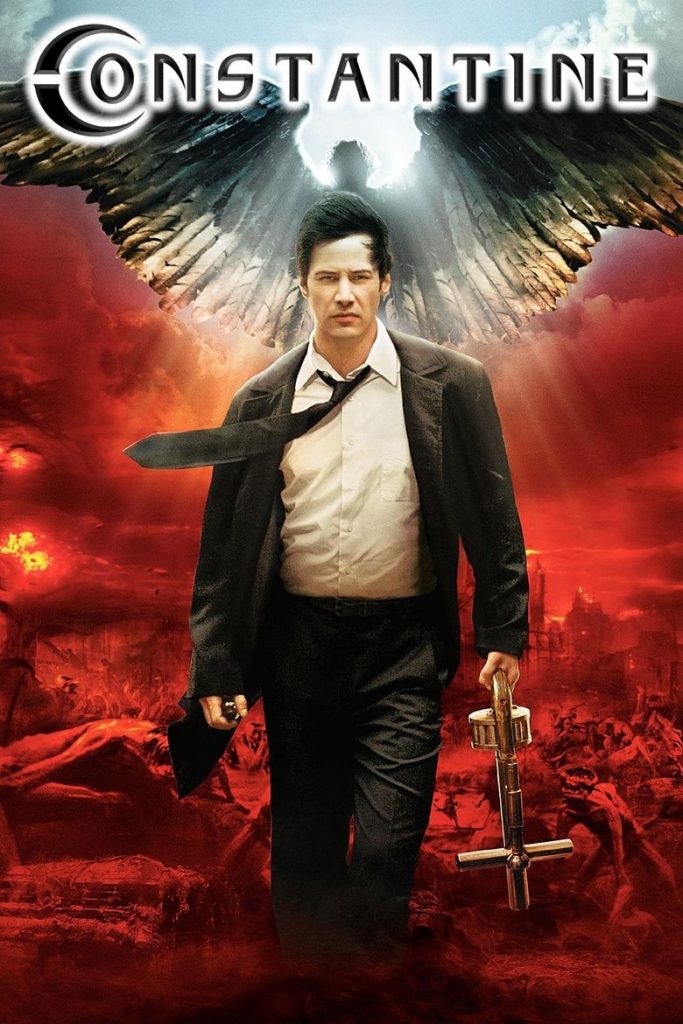
Constantine is a supernatural action-horror film about John Constantine, a cynical exorcist who can see angels and demons walking among humans. He becomes involved in a dangerous investigation when a police detective seeks his help with a mysterious suicide case. The film explores themes of redemption, faith, and the battle between heaven and hell in a dark, urban setting.
Parent Guide
This R-rated supernatural horror film contains intense and graphic content unsuitable for viewers under 17 without parental guidance. It deals with mature themes including demonic forces, mortality, and spiritual warfare.
Content breakdown
Contains graphic supernatural violence including demon attacks, exorcisms, and intense peril scenes. Characters face life-threatening situations with visible injuries and blood.
Features intense horror elements including demonic imagery, possession, and disturbing supernatural occurrences. Themes of death and damnation are central to the plot.
Includes some strong language and profanity throughout the film, consistent with the R rating.
Contains some suggestive dialogue and brief sensual moments, but no explicit sexual content or nudity.
Characters are shown smoking cigarettes regularly, and there are references to alcohol use in social settings.
Deals with heavy themes including suicide, guilt, and eternal consequences. The tone is consistently dark and atmospheric.
Parent tips
This R-rated film contains intense supernatural horror elements, graphic violence, and strong language that make it unsuitable for children and younger teens. Parents should be aware that it deals with mature themes like demonic possession, suicide, and eternal damnation, which could be disturbing or confusing for younger viewers. Consider the emotional maturity and horror tolerance of your teen before viewing, and be prepared to discuss the film's religious and supernatural elements afterward.
Parent chat guide
Parent follow-up questions
- What was your favorite part of the movie?
- Did any parts make you feel scared or worried?
- What do you think the main character was trying to do?
- Can you tell me about one character you remember?
- What colors or sounds did you notice in the movie?
- What did you think about how the characters solved problems in the movie?
- Were there any parts that confused you or made you curious?
- How did the music and sounds make you feel during different scenes?
- What would you do if you met someone like the main character?
- What makes a hero in this kind of story?
- How does this movie's version of heaven and hell compare to what you've learned or imagined?
- What do you think about the way the film shows characters making difficult choices?
- How did the special effects contribute to the scary or exciting moments?
- What messages about good versus evil did you take from the film?
- Would you recommend this to friends, and why or why not?
- How does the film explore themes of faith and skepticism through its characters?
- What did you think about the portrayal of moral ambiguity in the story?
- How effective were the horror elements in creating tension without relying too much on gore?
- What cultural or religious perspectives does the film draw from, and how are they represented?
- How does the film's ending comment on concepts of redemption and sacrifice?
🎭 Story Kernel
At its core, 'Constantine' is a film about a man trying to cheat a cosmic system he understands all too well. John Constantine isn't driven by altruism or faith, but by a transactional desperation to buy his way into Heaven. His terminal lung cancer is the ticking clock, forcing him to accumulate 'good deeds' like a supernatural accountant. The plot about the Spear of Destiny and Mammon's invasion is merely the high-stakes context for his personal negotiation. The real conflict is internal: can a man who has seen the literal machinery of damnation perform an act of genuine, self-sacrificial goodness? The ending, where he trades his suicide—a one-way ticket to Hell—for another's life, is the ultimate loophole he finds, earning his grace not through ledger entries, but through a final, defiant act of love.
🎬 Visual Aesthetics
The film's visual language is a grimy, nicotine-stained neo-noir. Los Angeles is perpetually overcast or drenched in acidic, sickly yellows and greens, making Heaven's brief, blinding white light feel alien and harsh. The camera often adopts a detached, observational quality, mirroring Constantine's jaded perspective, but switches to frenetic, visceral horror during exorcisms—the infamous 'spider-walk' scene is a masterclass in body horror. Symbolism is blunt but effective: water is a barrier against demons (holy water, rain), and Constantine's ever-present cigarette represents his slow, chosen suicide, a tiny hellfire he controls. The action isn't sleek; it's brutal, pragmatic, and often leaves Constantine battered, emphasizing he's no superhero, just a stubborn man in a trench coat.
🔍 Details & Easter Eggs
💡 Behind the Scenes
Keanu Reeves, a practicing Buddhist, took the role seriously, spending time with real-life exorcists to understand the mindset. The iconic 'spider-walk' contortion for the demon-possessed Isabel was performed by a specially-hired contortionist, not CGI. The film's version of Hell, a burnt-out, war-torn version of Los Angeles, was a massive practical set built on a soundstage, with real fire and ash to achieve its apocalyptic look. Interestingly, the role of John Constantine was initially offered to Nicolas Cage, who turned it down. The producers also fought to keep the character's trademark chain-smoking, a core part of his identity from the comics, despite studio concerns.
Where to watch
Choose region:
- HBO Max
- HBO Max Amazon Channel
- Amazon Video
- Apple TV
- Google Play Movies
- YouTube
- Fandango At Home
- Spectrum On Demand
Trailer
Trailer playback is unavailable in your region.