
Coup de Torchon (1981)
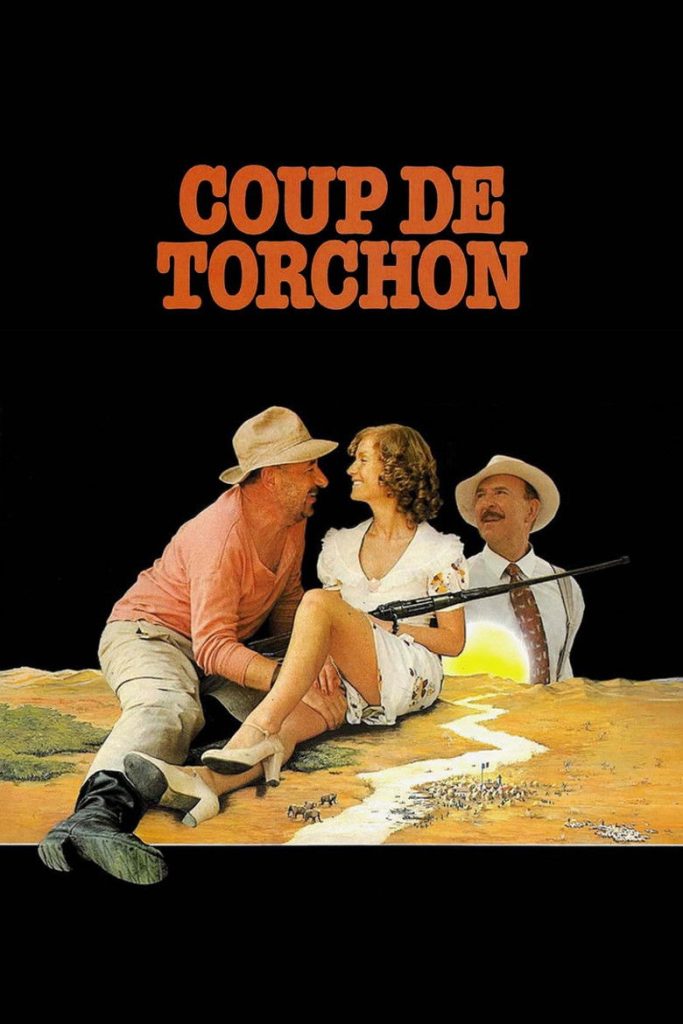
Story overview
Set in 1938 French colonial Africa, this dark comedy-drama follows Lucien Cordier, a meek and ridiculed police chief in a small town. After enduring constant humiliation from his wife, mistress, and corrupt townspeople, he decides to radically change his life by eliminating those who torment him, leading to a series of murders disguised as accidents or justified acts. The film explores themes of power, morality, and existential crisis through a blend of humor and grim violence.
Parent Guide
A sophisticated dark comedy-drama with mature themes including murder, adultery, racism, and moral ambiguity. Not suitable for children under 15 due to complex content and disturbing violence presented with cynical humor.
Content breakdown
Several murders occur, mostly off-screen or implied. Includes shootings (one point-blank), drownings, and poisonings. Violence is stylized rather than graphic, but the casual nature of killings and moral implications are disturbing. Some tense scenes of peril.
Disturbing themes of cold-blooded murder, humiliation, and moral decay. The protagonist's transformation from victim to killer is psychologically unsettling. Colonial racism and oppression are presented matter-of-factly. Some scenes of dead bodies and implied violence.
Some mild profanity and crude language in subtitles. Insults and derogatory terms related to colonial attitudes. No strong or frequent swearing.
Sexual themes throughout including adultery, prostitution, and discussions of sexuality. Brief female nudity (breasts) in non-sexual context. Several scenes of sexual tension and implied sexual relationships. Not graphic but integral to plot.
Social drinking in several scenes (wine, beer). Characters smoke cigarettes periodically. No drunkenness or substance abuse depicted.
Emotionally complex with themes of humiliation, revenge, and existential crisis. The protagonist's psychological unraveling creates tension. Dark humor provides relief but doesn't eliminate the underlying seriousness. Colonial oppression adds historical weight.
Parent tips
This film contains mature themes including murder, adultery, and colonial racism presented with dark humor. Not suitable for young children. Best viewed with teens 15+ for discussion of moral ambiguity and historical context. The violence is stylized but includes shootings and implied killings. Strong sexual themes and some nudity are present. The cynical tone and complex characters require emotional maturity.
Parent chat guide
Parent follow-up questions
—
—
- What did you think about the main character's job as a police officer?
- How did the setting in Africa look different from where we live?
- How does the film use humor to discuss serious topics like murder and racism?
- What do you think the director is saying about human nature through Lucien's transformation?
- How does the colonial setting affect the power dynamics between characters?
- Do you think Lucien's actions are justified? Why or why not?
🎭 Story Kernel
Coup de Torchon is a scathing critique of colonialism's corrosive effect on morality, using the guise of a crime thriller. The film's real subject is the absurdity of imposing European order on a landscape that renders all such constructs meaningless. Lucien Cordier, the corrupt police chief, isn't driven by greed or ambition but by a profound nihilism born from his environment. His descent into murder isn't a moral collapse but a logical conclusion—when the system is a joke, why play by its rules? The characters are all trapped in this vacuum: the colonizers clinging to hollow rituals, the colonized navigating survival, and Cordier who decides the only authentic response is to dismantle the charade through violence. The film asks what happens to ethics when they're transplanted to a place where they have no roots.
🎬 Visual Aesthetics
Bertrand Tavernier uses the blinding white light of colonial Senegal not as exotic backdrop but as an existential glare. The cinematography is flat and washed-out, mirroring the moral emptiness of the setting. There are no dramatic shadows or chiaroscuro—everything is exposed, yet nothing is revealed. The camera often observes from a detached middle distance, emphasizing the characters' isolation in the vast, indifferent landscape. Action is presented with unsettling casualness; murders happen in broad daylight with bureaucratic efficiency. The color palette leans into bleached yellows and dusty browns, avoiding any romanticism of the African setting. This visual austerity makes the sporadic bursts of violence feel both shocking and mundane—the perfect aesthetic for a world where evil has lost its drama.
🔍 Details & Easter Eggs
💡 Behind the Scenes
The film is adapted from Jim Thompson's American crime novel 'Pop. 1280,' but director Bertrand Tavernier transposed the setting from the American South to French colonial Africa, finding parallels in both systems' corruption. Philippe Noiret prepared for his role as Cordier by studying the mannerisms of colonial administrators, capturing their peculiar blend of incompetence and entitlement. Shooting in Senegal presented challenges with the extreme heat affecting both equipment and actors, which Tavernier incorporated into the film's oppressive atmosphere. Interestingly, the novel's ending differs significantly—Thompson's protagonist gets away with everything, while Tavernier's version leaves Cordier's fate more ambiguous, reflecting the director's more pessimistic view of colonial consequences.
Where to watch
Choose region:
- HBO Max
- HBO Max Amazon Channel
- Criterion Channel
Trailer
Trailer playback is unavailable in your region.